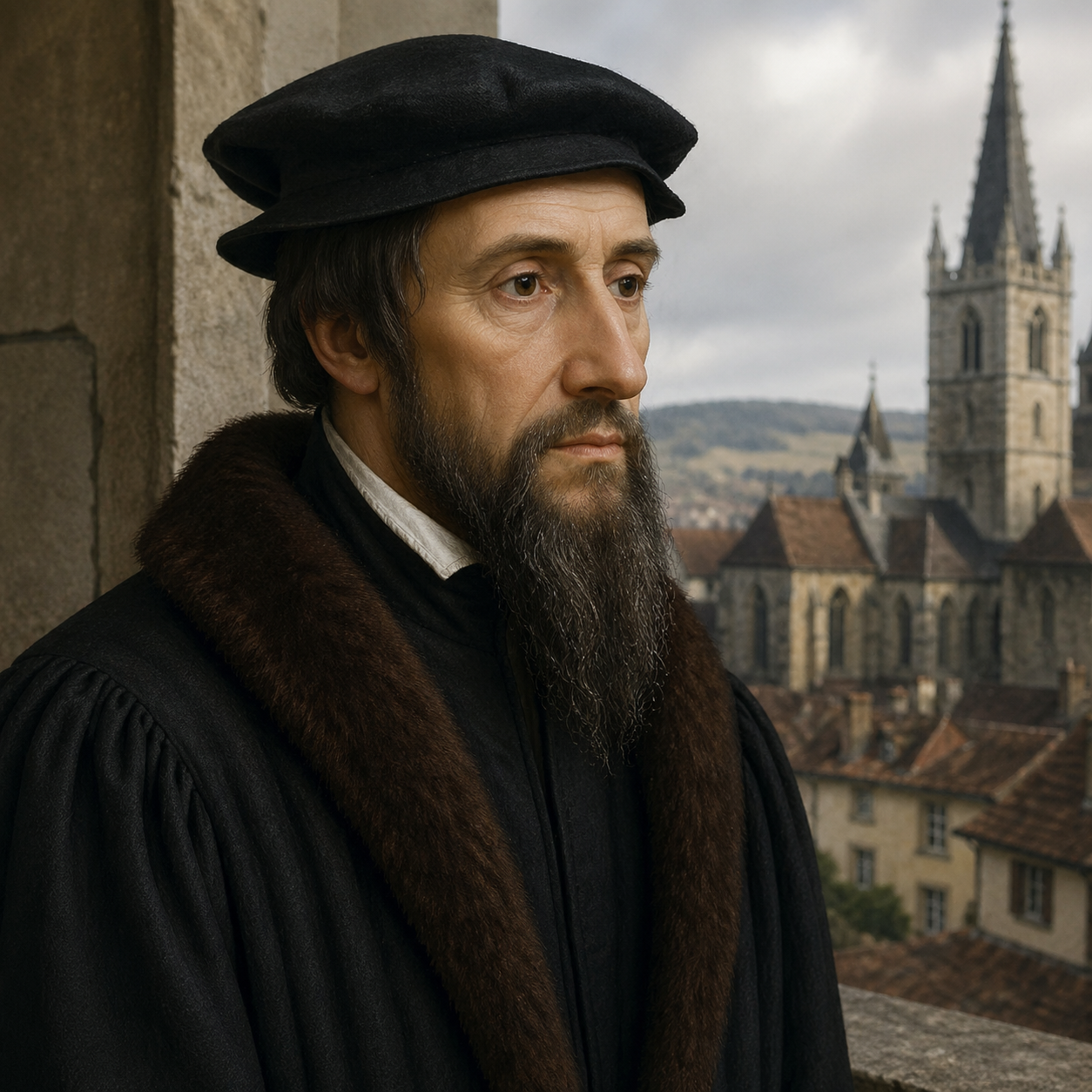
John Calvin — "The greater part of the world, because it despises the Word of God, despises als…"
The greater part of the world, because it despises the Word of God, despises also the whole of true religion.
The greater part of the world, because it despises the Word of God, despises also the whole of true religion.
Click any product to generate a realistic preview. Up to 3 at a time.
* Initial load can take up to 90 seconds — revising the preview in another color is nearly instant.
"The Christian life is a perpetual exercise of repentance."
"God's decree is the cause of all things, so that nothing happens but by his will and appointment."
"The reprobate are vessels of wrath fitted for destruction."
"The reprobate are not only destitute of the Spirit, but are also given up to a reprobate mind."
"The knowledge of God without the knowledge of ourselves is vain."
French theologian whose Institutes of the Christian Religion (1536) systematized Protestant Reformed doctrine, including predestination. Closely associated with Martin Luther (Reformation founder, Calvin's predecessor). For an intellectual contrast, see Jacobus Arminius, Dutch Reformed theologian (1560-1609) — Arminius's rejection of strict double-predestination founded Arminianism — the theological tradition modern Methodism, most evangelicalism, and Pentecostalism descend from. The Calvinist-Arminian debate has divided Protestantism for 400 years.
Found in 1 providers: grok
1 source checked
Most of humanity, Calvin argues, rejects genuine Christian faith precisely because it rejects the authority of Scripture. The connection is direct: God's Word is the foundation of true religion, so dismissing one means dismissing the other. This is a diagnosis — widespread spiritual indifference stems not from ignorance of God's existence but from active rejection of his revealed Word as the governing authority over belief and life.
Calvin built his entire career on sola scriptura — Scripture alone as supreme authority in faith. He spent decades in Geneva preaching through nearly every biblical book and writing commentaries on most of the Bible. His Institutes of the Christian Religion systematized theology from Scripture outward. Having faced opposition from Catholic authorities, Genevan libertines, and rival reformers alike, Calvin traced all such resistance back to one root: refusal to submit to God's Word.
The 16th-century Reformation shattered Europe's religious unity precisely over scriptural authority. The printing press put vernacular Bibles in ordinary hands for the first time, making this a live public controversy. Catholic tradition held that the Church interpreted Scripture; reformers insisted Scripture judged the Church. Religious wars, heresy executions, and the Council of Trent (1545–1563) defined the stakes. Calvin's Geneva was a flashpoint where biblical authority governed theology, law, and civic life simultaneously.
AI-generated insights based on extensive research and information for context. Factual errors? Email [email protected].
Your cart is empty