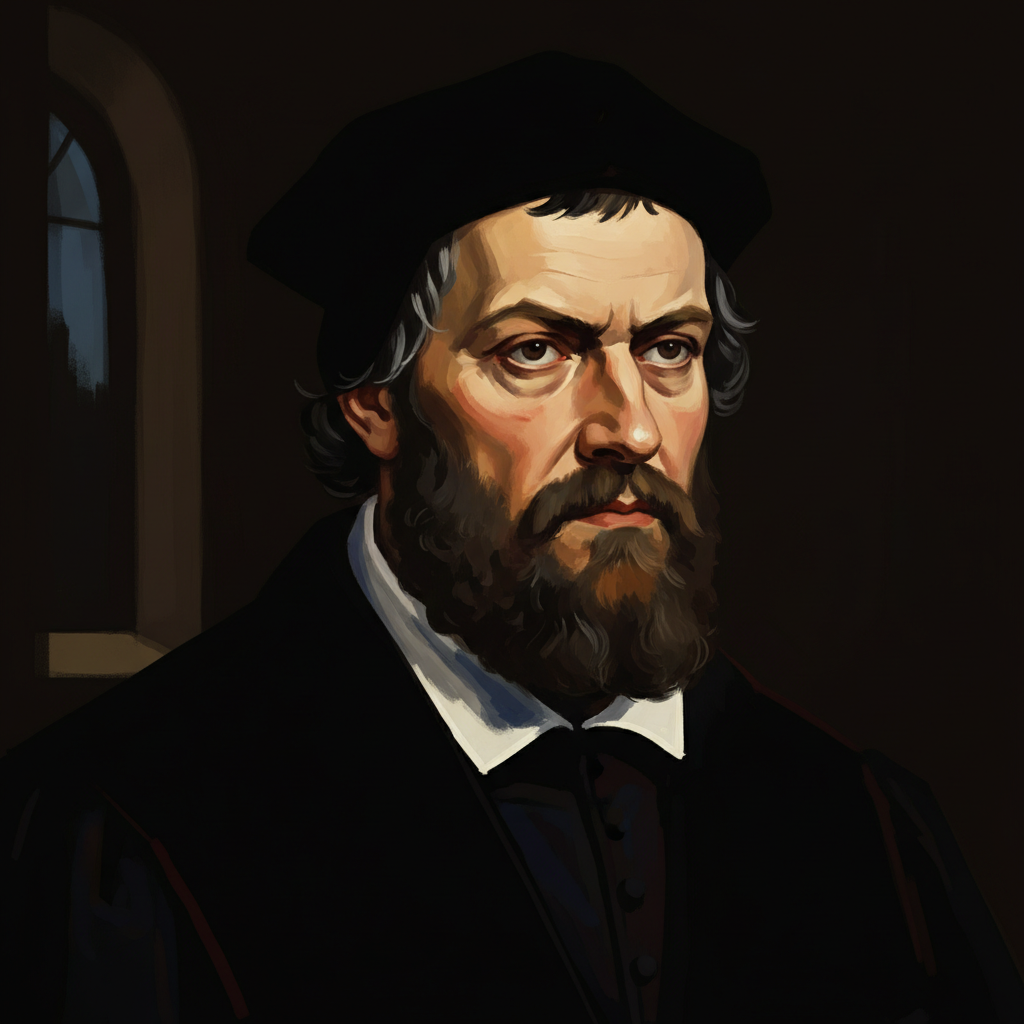
Martin Luther — "The greatest good in marriage is the love of husband and wife."
The greatest good in marriage is the love of husband and wife.
The greatest good in marriage is the love of husband and wife.
Click any product to generate a realistic preview. Up to 3 at a time.
* Initial load can take up to 90 seconds — revising the preview in another color is nearly instant.
"Whenever the devil harasses you, seek the company of men or drink more, or joke and talk nonsense, or do some other merry thing. Sometimes we must drink more, sport, recreate ourselves, and even sin a…"
"I am drinking beer from Namburg which tastes to me almost like the beer from Mansfeld which you praised to me. It agrees with me well and gives me about three bowel movements in three hours in the mor…"
"If you wish to make a good prayer, go into your closet, lock the door, and throw the key out the window."
"One should praise women, whether it be true or false."
"Therefore, dear Lords, help here, save here, release here, stab, smite, strangle here, whoever can. And if you die in it, blessed are you; for you die in obedience to God's Word and command (Rom. 13) …"
German theologian whose 95 Theses (1517) launched the Protestant Reformation and broke the Catholic Church's monopoly on Western Christianity. Closely associated with Philipp Melanchthon (Lutheran systematizer) and John Calvin (later Reformer who built on Luther's break). For an intellectual contrast, see Pope Leo X, Renaissance pope (1513-1521) — Leo X's indulgence sales triggered Luther's break and Leo excommunicated him in 1521 — Luther's entire Reformation is structured as a direct answer to the indulgence-funded Vatican Leo represented.
Found in 1 providers: grok
1 source checked
Marriage's highest value is the genuine affection between spouses, not wealth, status, social alliance, or producing heirs. The quote argues that mutual love is what makes a marriage truly worthwhile, treating the emotional bond between partners as the primary benefit and purpose of the union rather than any external, practical, or transactional advantage the relationship might offer.
Luther rejected the medieval Catholic view that celibacy was spiritually superior to marriage. In 1525 he married former nun Katharina von Bora, and their warm partnership shaped his theology of marriage as a sacred, joyful estate. He wrote affectionately about Katie, calling her his rib, and championed clerical marriage, treating spousal love as a divine gift rather than a concession to weakness.
In early modern Europe, marriage was largely a property and dynastic arrangement negotiated by families, while the Catholic Church elevated celibate monasticism above married life. Luther's Reformation in the 1520s dismantled monasteries, freed priests and nuns to marry, and reframed the household as a primary sphere of Christian vocation. Elevating spousal love defied centuries of teaching that marriage was a lesser, merely tolerable state for ordinary believers.
AI-generated insights based on extensive research and information for context. Factual errors? Email [email protected].
Your cart is empty