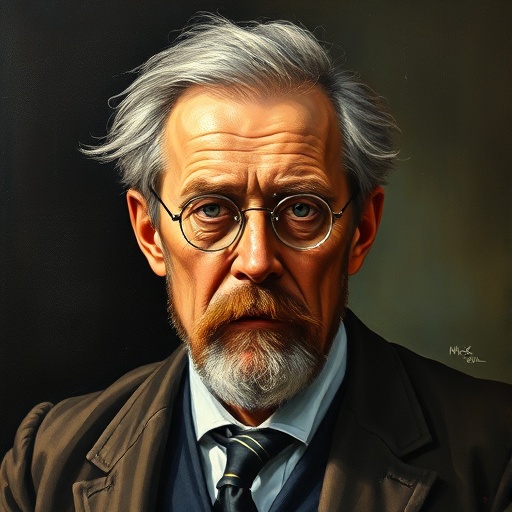
Max Planck — "The greatest joy of a scientist is to see a new truth emerge."
The greatest joy of a scientist is to see a new truth emerge.
The greatest joy of a scientist is to see a new truth emerge.
Click any product to generate a realistic preview. Up to 3 at a time.
* Initial load can take up to 90 seconds — revising the preview in another color is nearly instant.
"The scientist must be a dreamer and a realist at the same time."
"All matter originates and exists only by virtue of a force… We must assume behind this force the existence of a conscious and intelligent Mind. This Mind is the matrix of all matter."
"Religion and natural science are fighting a joint battle in an incessant, never-ending crusade against skepticism and against dogmatism, against unbelief and against superstition, and as the motto for…"
"When we speak of the 'reality' of the external world, we mean that it is independent of our perception of it."
"There can never be any real opposition between religion and science; for the one is the complement of the other."
Found in 1 providers: grok
1 source checked
Discovering something genuinely new about how the world works brings a scientist deeper satisfaction than money, fame, or recognition. The thrill lies in the moment when evidence reveals a fact nobody knew before, pushing human understanding forward by a small but real step. For Planck, the payoff of research is not status or applause but the quiet, personal experience of watching reality disclose one of its hidden rules.
Planck lived this idea. In 1900 he reluctantly introduced the quantum of action to fix blackbody radiation, a result he initially called an act of desperation but later recognized as a genuine new truth about nature. He spent decades probing thermodynamics and radiation before that breakthrough, and kept working through personal tragedy and wartime loss, driven by the conviction that uncovering physical law was itself the reward.
Planck worked from the 1870s into the 1940s, when classical physics seemed nearly finished yet kept cracking at the edges: blackbody curves, the photoelectric effect, atomic spectra. His 1900 quantum hypothesis and Einstein's 1905 papers launched the revolution that became quantum mechanics and relativity. German universities dominated physics, Nobel Prizes had just begun, and two world wars reshaped science. Celebrating the emergence of new truth captured the excitement of a field watching its foundations be rewritten in real time.
AI-generated insights based on extensive research and information for context. Factual errors? Email [email protected].
Your cart is empty