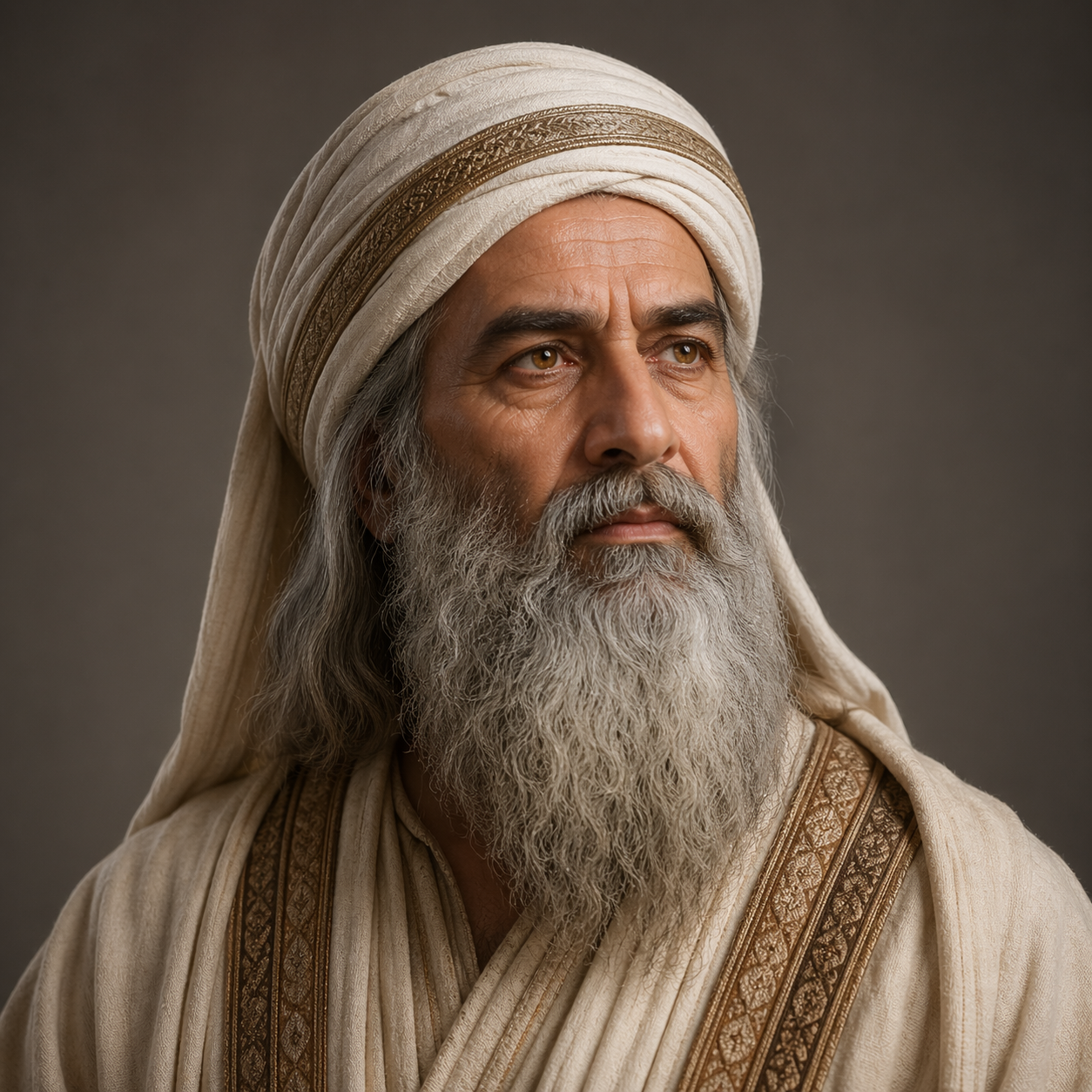
Zoroaster — "The greatest weapon against evil is righteousness."
The greatest weapon against evil is righteousness.
The greatest weapon against evil is righteousness.
Click any product to generate a realistic preview. Up to 3 at a time.
* Initial load can take up to 90 seconds — revising the preview in another color is nearly instant.
"May the Lie be cast down, and the Truth prevail."
"The inner fire of wisdom and truth must be kindled in every heart."
"May the divine light guide us in all our thoughts, words, and deeds."
"The greatest wisdom is to know oneself. The second greatest is to know where you put your keys."
"Reply to thine enemy with gentleness."
Iranian prophet who founded Zoroastrianism, the first major religion of cosmic dualism between good (Ahura Mazda) and evil (Angra Mainyu). Closely associated with The Buddha (near-contemporary Eastern moral-cosmological revolutionary). For an intellectual contrast, see Friedrich Nietzsche, German philosopher of 'beyond good and evil' — Nietzsche appropriated Zarathustra's name for Thus Spoke Zarathustra (1883) precisely to invert the original's moral cosmology — the historical Zoroaster founded the good-versus-evil framework Nietzsche's character announces the end of.
Found in 1 providers: gemini
1 source checked
Fighting wrongdoing does not require force, wealth, or cleverness. The most effective defense against harmful acts, corrupt people, or destructive ideas is simply doing what is right yourself. When you live honestly, act justly, and refuse to compromise your integrity, evil loses its grip. Moral character, not violence or scheming, is what actually defeats harmful forces in the world around you and within you.
Zoroaster built his entire religion around the cosmic battle between Asha (truth, righteousness) and Druj (the lie, disorder). As a priest-prophet who reformed older Iranian polytheism, he taught that every human chooses a side through good thoughts, good words, and good deeds. This quote distills his central doctrine: ordinary people, by practicing righteousness, become active combatants alongside Ahura Mazda against evil itself.
Zoroaster lived in Bronze Age Iran, likely between 1500 and 1000 BCE, among tribal cattle-herding societies plagued by raids, blood feuds, and animal sacrifice cults. Surrounding religions emphasized ritual appeasement of many gods through offerings. His message that moral conduct, not sacrifice or warrior prowess, was the true weapon against evil was radical, laying ethical foundations later absorbed into Judaism, Christianity, and Islam.
AI-generated insights based on extensive research and information for context. Factual errors? Email [email protected].
Your cart is empty