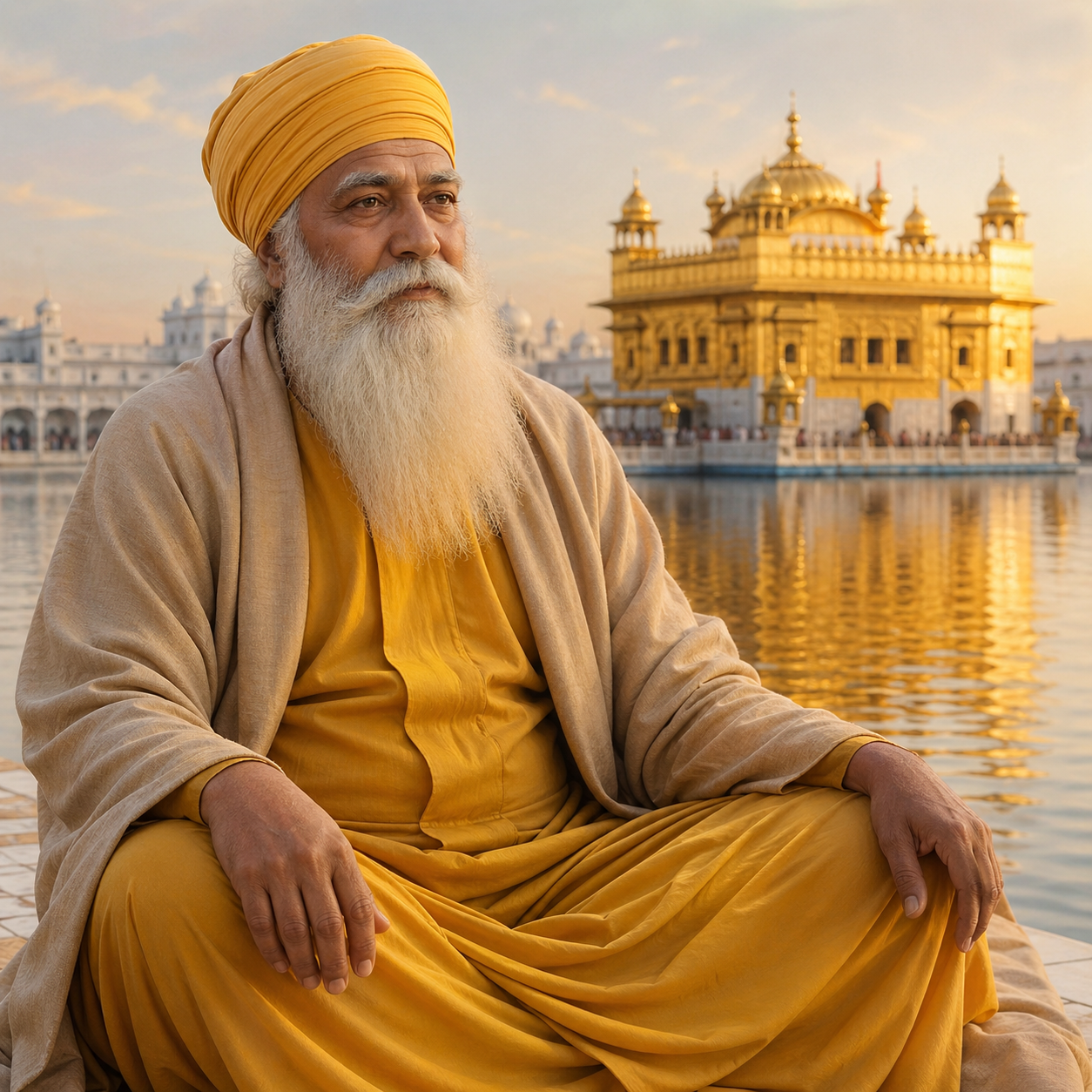
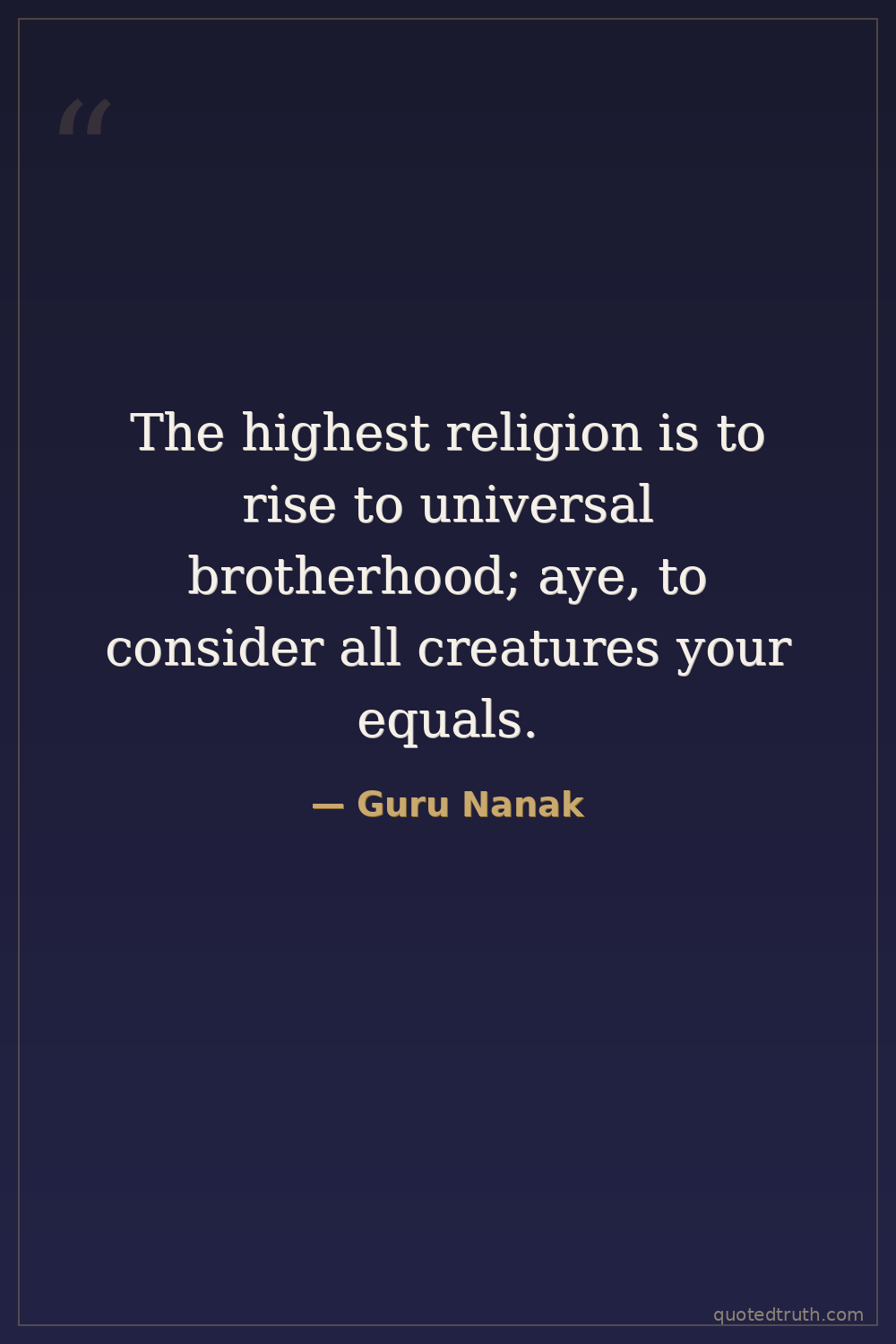
Guru Nanak — "The highest religion is to rise to universal brotherhood; aye, to consider all c…"
The highest religion is to rise to universal brotherhood; aye, to consider all creatures your equals.
The highest religion is to rise to universal brotherhood; aye, to consider all creatures your equals.
Click any product to generate a realistic preview. Up to 3 at a time.
* Initial load can take up to 90 seconds — revising the preview in another color is nearly instant.
"May your spirit be uplifted and your internet connection be stable."
"The whole world is a manifestation of the Lord."
"Be kind to all beings, this is more meritorious than bathing at the sixty-eight sacred shrines of pilgrimage and donating money."
"Without good deeds, there is no devotion."
"Those who have loved, have found God."
Founder of Sikhism and the first of the Ten Sikh Gurus, whose teachings of one universal God and rejection of caste shaped Punjab. Closely associated with Kabir (mystical poet whose verses appear in the Sikh Guru Granth Sahib). For an intellectual contrast, see Brahmanical orthodoxy, the Hindu caste-and-ritual establishment of his era — Sikhism was founded as a deliberate alternative to both Hindu ritual hierarchy and Islamic exclusivism — Nanak's universalism was a structural rejection of caste and priestly mediation.
Found in 1 providers: gemini
1 source checked
True religion isn't found in ritual, scripture, or doctrine but in recognizing the fundamental equality of every living being. Real spirituality demands actively dismantling the instinct to rank or exclude — replacing hierarchy with unconditional solidarity. The measure of one's devotion isn't prayer or ceremony but how completely one embraces all creatures, human and otherwise, as deserving the same dignity and belonging as oneself.
Guru Nanak (1469–1539) founded Sikhism specifically to dismantle caste hierarchy and religious sectarianism. His four Udasi journeys took him across South Asia, Persia, and Arabia, preaching to Hindus, Muslims, and untouchables alike, eating with outcasts in open defiance of convention. The langar — the free community kitchen he instituted — embodied this teaching physically: every person regardless of caste, faith, or rank sat together and ate as equals.
In 15th–16th century Punjab, Brahminical caste stratification and Mughal-era social hierarchy made birth the determinant of spiritual and social worth. The Bhakti movement was challenging orthodoxy, but caste discrimination remained pervasive and religiously sanctioned. Sectarian violence between Hindu and Muslim communities fractured the region. Guru Nanak's insistence on universal brotherhood directly confronted both the entrenched caste system and the religious tribalism tearing the subcontinent apart during this turbulent period.
AI-generated insights based on extensive research and information for context. Factual errors? Email [email protected].
Your cart is empty