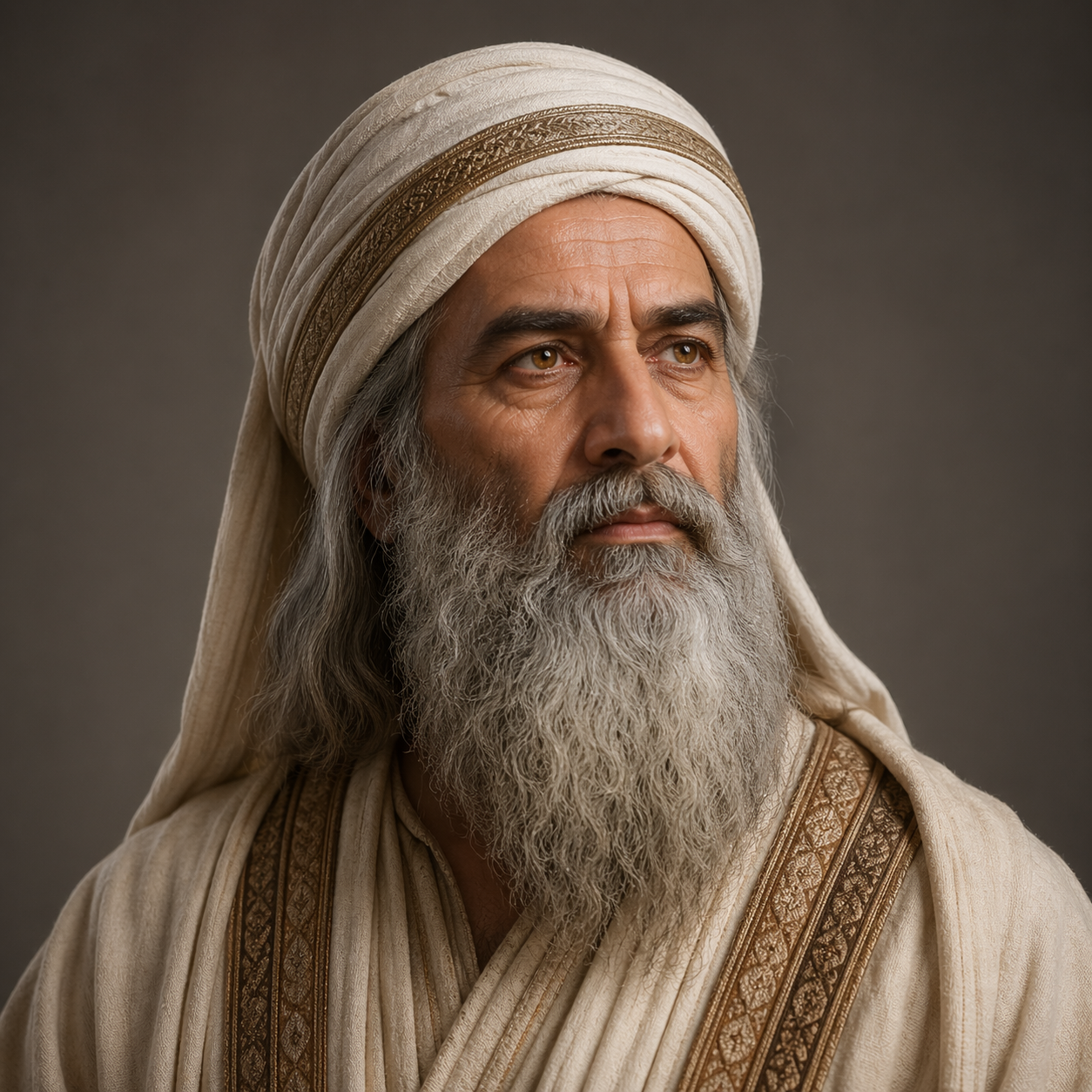
Zoroaster — "The liar is the greatest enemy of mankind."
The liar is the greatest enemy of mankind.
The liar is the greatest enemy of mankind.
Click any product to generate a realistic preview. Up to 3 at a time.
* Initial load can take up to 90 seconds — revising the preview in another color is nearly instant.
"Good thoughts, good words, good deeds. And a good nap. Don't forget the good nap."
"I yearn to know the truth, O Ahura Mazda, and to live according to it."
"The reward of the righteous is given through the Good Mind."
"The wicked shall be punished, but the righteous shall be rewarded."
"He who comes to know me through my thought, and through my word and deed, he shall become a sharer in the good reward."
Iranian prophet who founded Zoroastrianism, the first major religion of cosmic dualism between good (Ahura Mazda) and evil (Angra Mainyu). Closely associated with The Buddha (near-contemporary Eastern moral-cosmological revolutionary). For an intellectual contrast, see Friedrich Nietzsche, German philosopher of 'beyond good and evil' — Nietzsche appropriated Zarathustra's name for Thus Spoke Zarathustra (1883) precisely to invert the original's moral cosmology — the historical Zoroaster founded the good-versus-evil framework Nietzsche's character announces the end of.
Found in 1 providers: deepseek
1 source checked
Deception is the most destructive force in human society. Lying corrupts trust, damages relationships, misleads decisions, and erodes the shared reality people need to cooperate. A liar inflicts harm that spreads invisibly, poisoning families, communities, and institutions. More than a thief or even a violent aggressor, the liar undermines the very foundation on which human dealings rest, making truth itself the highest moral obligation and falsehood the deepest betrayal.
Zoroaster built his entire religion around the cosmic battle between Asha (truth, order) and Druj (lie, deception). As the prophet who received visions from Ahura Mazda, he taught that every human choice aligns with either truth or falsehood. His ethical triad, good thoughts, good words, good deeds, depends on honesty. Calling the liar mankind's greatest enemy wasn't hyperbole for him, it was the literal theological core of his teaching and moral cosmology.
Zoroaster preached in ancient Persia, roughly between 1500 and 1000 BCE, among pastoral Indo-Iranian tribes governed by oral oaths, tribal treaties, and honor-based contracts. With no written law enforcement, a person's word was the only binding currency for trade, marriage, and alliances. A liar could unravel entire clans. Against polytheistic cults that accepted ritual deception, Zoroaster's radical elevation of truthfulness reshaped Persian civilization and later influenced Judaism, Christianity, and Islam.
AI-generated insights based on extensive research and information for context. Factual errors? Email [email protected].
Your cart is empty