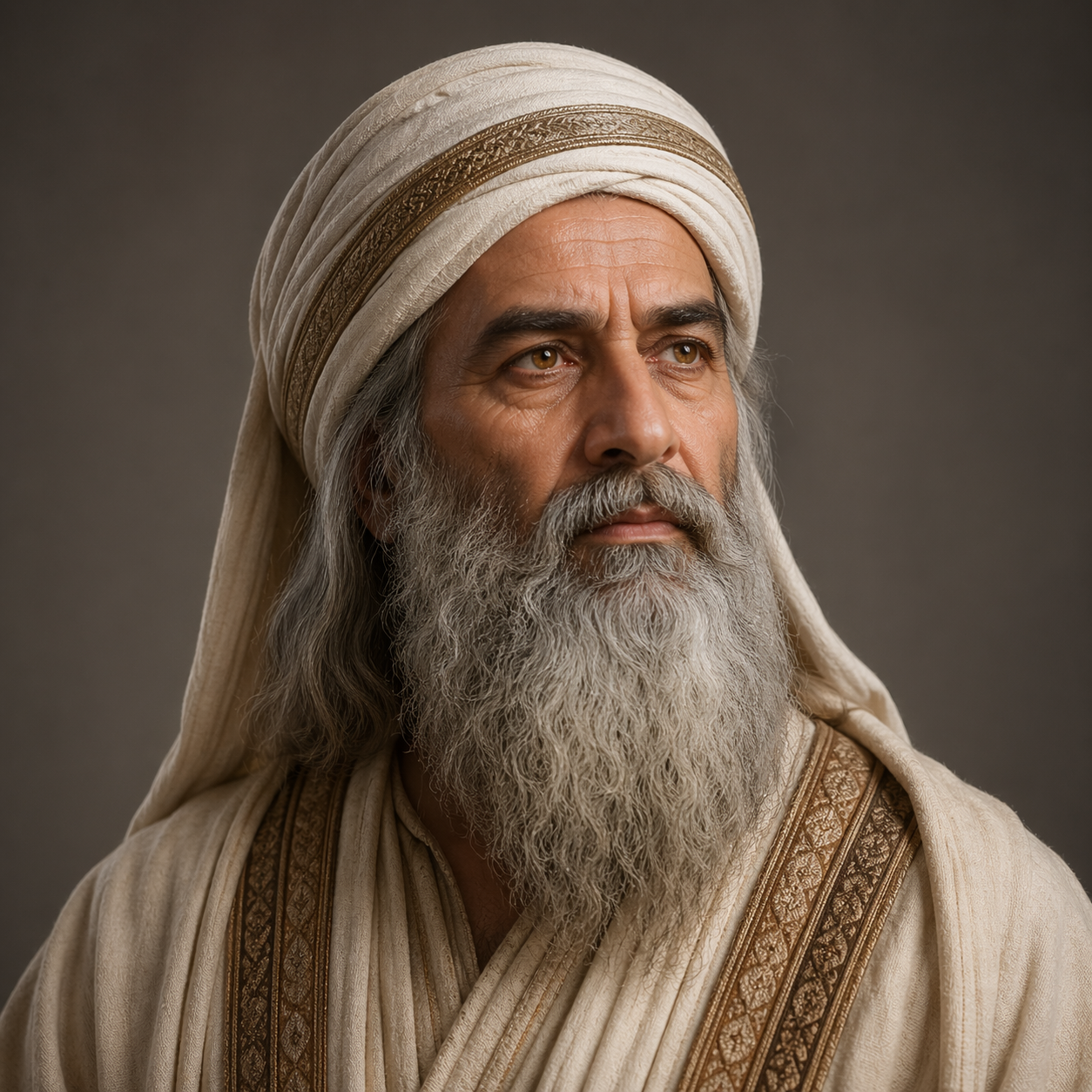
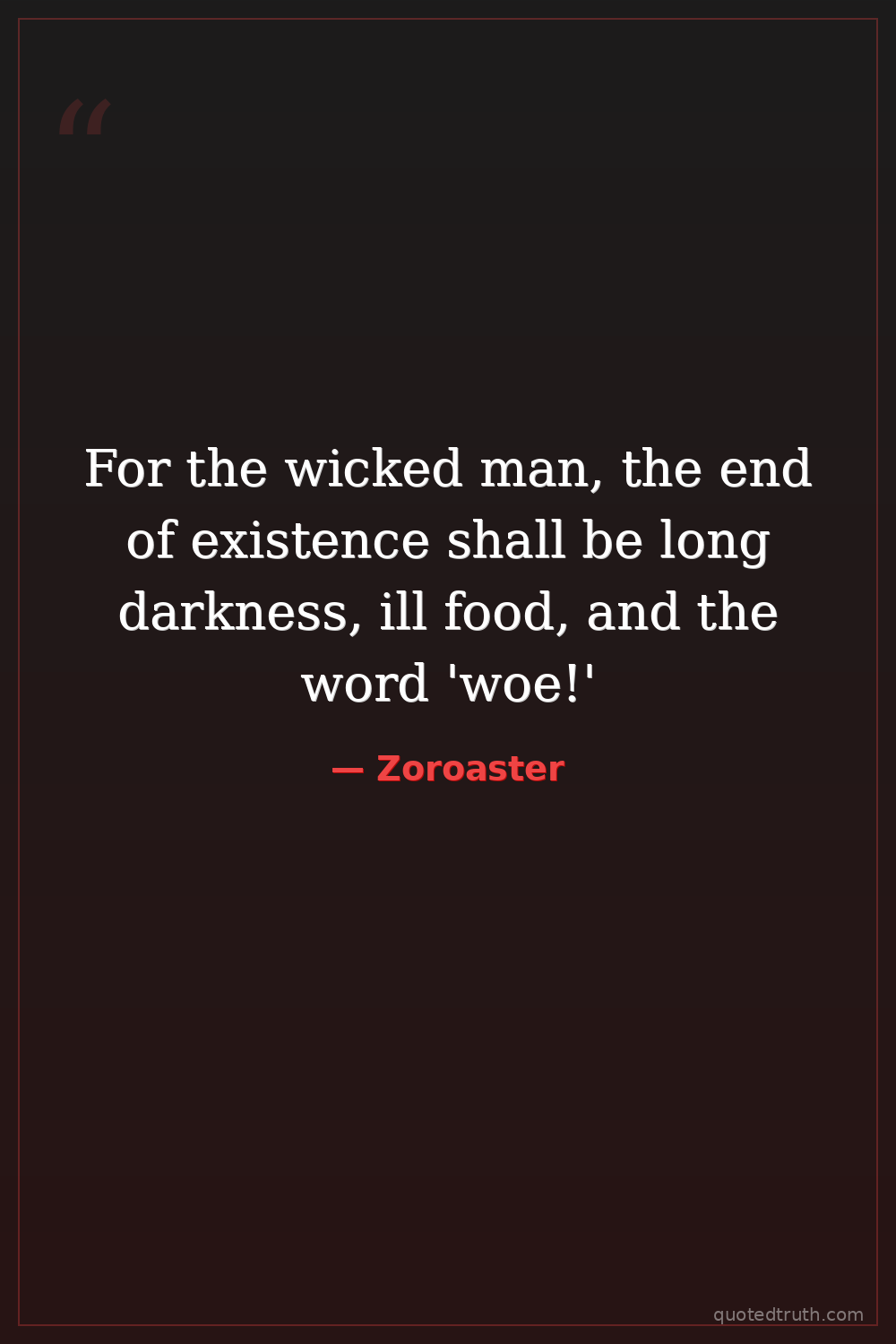
Zoroaster — "For the wicked man, the end of existence shall be long darkness, ill food, and t…"
For the wicked man, the end of existence shall be long darkness, ill food, and the word 'woe!'
For the wicked man, the end of existence shall be long darkness, ill food, and the word 'woe!'
Click any product to generate a realistic preview. Up to 3 at a time.
* Initial load can take up to 90 seconds — revising the preview in another color is nearly instant.
"May the evil-doer perish, and may the good be rewarded according to their deeds."
"War and courage have done more great things than charity. Not your sympathy, but your bravery has saved the unfortunate."
"The universe is a grand tapestry. And sometimes, it gets a little tangled."
"He who seeks wisdom, him Ahura Mazda will enlighten."
"A gentle hand can lead even an elephant by a hair. Reply to thine enemy with gentleness."
Iranian prophet who founded Zoroastrianism, the first major religion of cosmic dualism between good (Ahura Mazda) and evil (Angra Mainyu). Closely associated with The Buddha (near-contemporary Eastern moral-cosmological revolutionary). For an intellectual contrast, see Friedrich Nietzsche, German philosopher of 'beyond good and evil' — Nietzsche appropriated Zarathustra's name for Thus Spoke Zarathustra (1883) precisely to invert the original's moral cosmology — the historical Zoroaster founded the good-versus-evil framework Nietzsche's character announces the end of.
Found in 1 providers: grok
1 source checked
Those who live immorally face grim consequences after death: prolonged darkness, bitter sustenance, and lasting regret. Rather than simply ceasing to exist, evildoers endure a miserable afterlife marked by isolation, deprivation, and the anguished cry of 'woe.' The message warns that choosing wickedness in life carries real weight beyond the grave, with suffering proportional to one's rejection of truth, order, and goodness during their time on earth.
As founder of Zoroastrianism, Zoroaster introduced one of history's earliest doctrines of moral judgment after death, where souls face reward or punishment based on lifetime choices. His teachings centered on the cosmic struggle between Ahura Mazda (good) and Angra Mainyu (evil), demanding humans actively choose righteousness. This quote embodies his revolutionary ethical framework, placing personal accountability and the battle between asha (truth) and druj (deceit) at the center of spiritual life.
Zoroaster lived in ancient Persia roughly between 1500-1000 BCE, among Indo-Iranian tribes practicing polytheistic nature worship with animal sacrifice and ritual intoxication. His era predated organized monotheism, and concepts of heaven, hell, and final judgment were largely undeveloped. By proclaiming one supreme god and an ethical afterlife, Zoroaster challenged existing priestly traditions. His ideas later influenced Judaism, Christianity, and Islam, seeding foundational Western notions of cosmic dualism, resurrection, and moral reckoning.
AI-generated insights based on extensive research and information for context. Factual errors? Email [email protected].
Your cart is empty