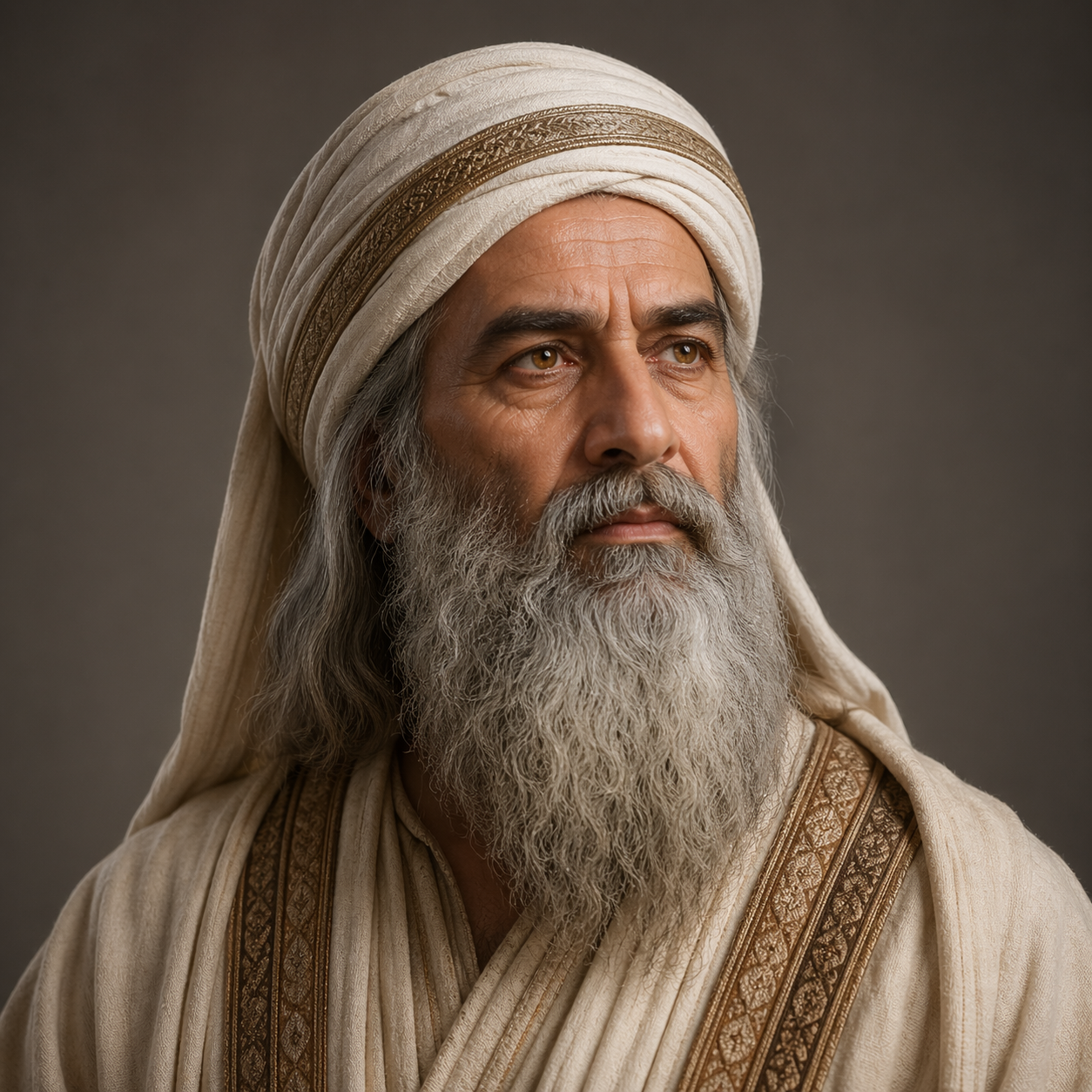
Zoroaster — "The liar shall perish, but the truthful shall dwell in the House of Song."
The liar shall perish, but the truthful shall dwell in the House of Song.
The liar shall perish, but the truthful shall dwell in the House of Song.
Click any product to generate a realistic preview. Up to 3 at a time.
* Initial load can take up to 90 seconds — revising the preview in another color is nearly instant.
"Contemplate the beams of fire with a most pious mind. Every one, both men and women, ought to-day to choose his creed."
"The path of the righteous is not always easy, but it is always right. And sometimes, it involves a lot of sheep. You wouldn't believe the amount of sheep."
"Seek your happiness in the happiness of all."
"Taking the first footstep with a good thought, the second with a good word, and the third with a good deed. I entered paradise."
"Harmony with nature is essential for spiritual well-being."
Iranian prophet who founded Zoroastrianism, the first major religion of cosmic dualism between good (Ahura Mazda) and evil (Angra Mainyu). Closely associated with The Buddha (near-contemporary Eastern moral-cosmological revolutionary). For an intellectual contrast, see Friedrich Nietzsche, German philosopher of 'beyond good and evil' — Nietzsche appropriated Zarathustra's name for Thus Spoke Zarathustra (1883) precisely to invert the original's moral cosmology — the historical Zoroaster founded the good-versus-evil framework Nietzsche's character announces the end of.
Found in 1 providers: deepseek
1 source checked
Those who deceive will face destruction, while honest people will earn a place of eternal joy and harmony. The saying draws a sharp moral line: dishonesty leads to ruin, while truthfulness leads to paradise. It frames truth not as a social nicety but as the defining virtue that determines a person's ultimate fate, promising that integrity is rewarded beyond this life even if liars seem to prosper in the moment.
Zoroaster founded a faith built on the cosmic struggle between Asha (truth, order) and Druj (the lie, chaos). As a priest-prophet reforming ancient Iranian religion, he taught that every person chooses sides through their thoughts, words, and deeds. The 'House of Song' (Garo Demana) is his term for paradise, reserved for the righteous. This quote distills his entire theology: truthfulness is not merely ethical but the very mechanism by which the soul reaches heaven.
Zoroaster lived in Bronze Age eastern Iran (roughly 1500–1000 BCE) among pastoral tribes practicing polytheistic rituals involving animal sacrifice, intoxicants, and warrior raiding. Oaths and verbal contracts governed tribal society, so lying destabilized the entire social order. His reform elevated one supreme god, Ahura Mazda, and introduced revolutionary concepts later absorbed by Judaism, Christianity, and Islam: heaven, hell, judgment after death, and a final cosmic battle where truth defeats deception.
AI-generated insights based on extensive research and information for context. Factual errors? Email [email protected].
Your cart is empty