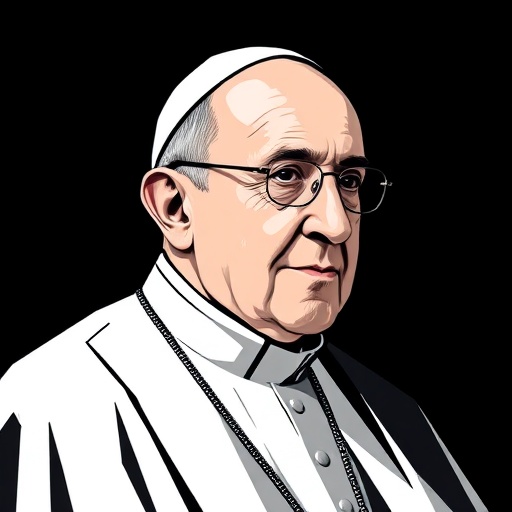
Pope Francis — "The Lord is not a GPS. He is not a program. He is a person."
The Lord is not a GPS. He is not a program. He is a person.
The Lord is not a GPS. He is not a program. He is a person.
Click any product to generate a realistic preview. Up to 3 at a time.
* Initial load can take up to 90 seconds — revising the preview in another color is nearly instant.
"The Roman Curia is the leprosy of the papacy."
"The Lord has redeemed all of us, all of us, with the Blood of Christ: all of us, not just Catholics. Everyone!"
"The world is full of wars, hatred, envy, jealousy, and many other things that are not of God."
"If someone is gay and he searches for the Lord and has good will, who am I to judge? We shouldn’t marginalize people for this. They must be integrated into society."
"A good Catholic is interested in politics."
First Latin American and Jesuit pope (2013-), who has steered the Catholic Church toward pastoral inclusion on LGBTQ pastoral care, divorced Catholics, and climate. Closely associated with Pope John XXIII (the Vatican II reformer pope) and Cardinal Walter Kasper (his theological ally on pastoral reform). For an intellectual contrast, see Cardinal Raymond Burke, American traditionalist cardinal, former head of the Vatican Apostolic Signatura — Burke is the public face of Catholic traditionalism that views Francis's pastoral approach as doctrinally dangerous — he has formally challenged Amoris Laetitia and other Francis reforms.
Found in 1 providers: grok
1 source checked
Faith isn't about querying a divine database for directions or inputs and outputs. This quote rejects a transactional, utility-based relationship with God — one where you consult him like a navigation app and expect precise instructions in return. Instead, it asserts that authentic faith means relating to God as a person: encountering him, listening to him, being surprised by him, and responding in the unpredictable way any real relationship demands.
Jorge Mario Bergoglio's Jesuit formation centers on discernment — a deeply relational practice of listening to God, not consulting a rulebook. As Archbishop of Buenos Aires, he criticized clericalism's mechanical rule-application and built his ministry on personal encounter with the poor. His papacy's cornerstone document, Evangelii Gaudium, calls the Church to a culture of encounter. He famously cold-called strangers himself, modeling the personal God he preaches.
Francis became pope in 2013, when smartphones and navigation apps had normalized algorithmic decision-making. Google Maps, Siri, and Waze trained billions to expect on-demand answers from systems rather than persons. Simultaneously, the Church faced the aftermath of abuse scandals — institutional failures of rule-following without relationship. His pontificate also coincided with the Synod on the Family debates, where he pushed pastoral discernment over rigid doctrinal application.
AI-generated insights based on extensive research and information for context. Factual errors? Email [email protected].
Your cart is empty