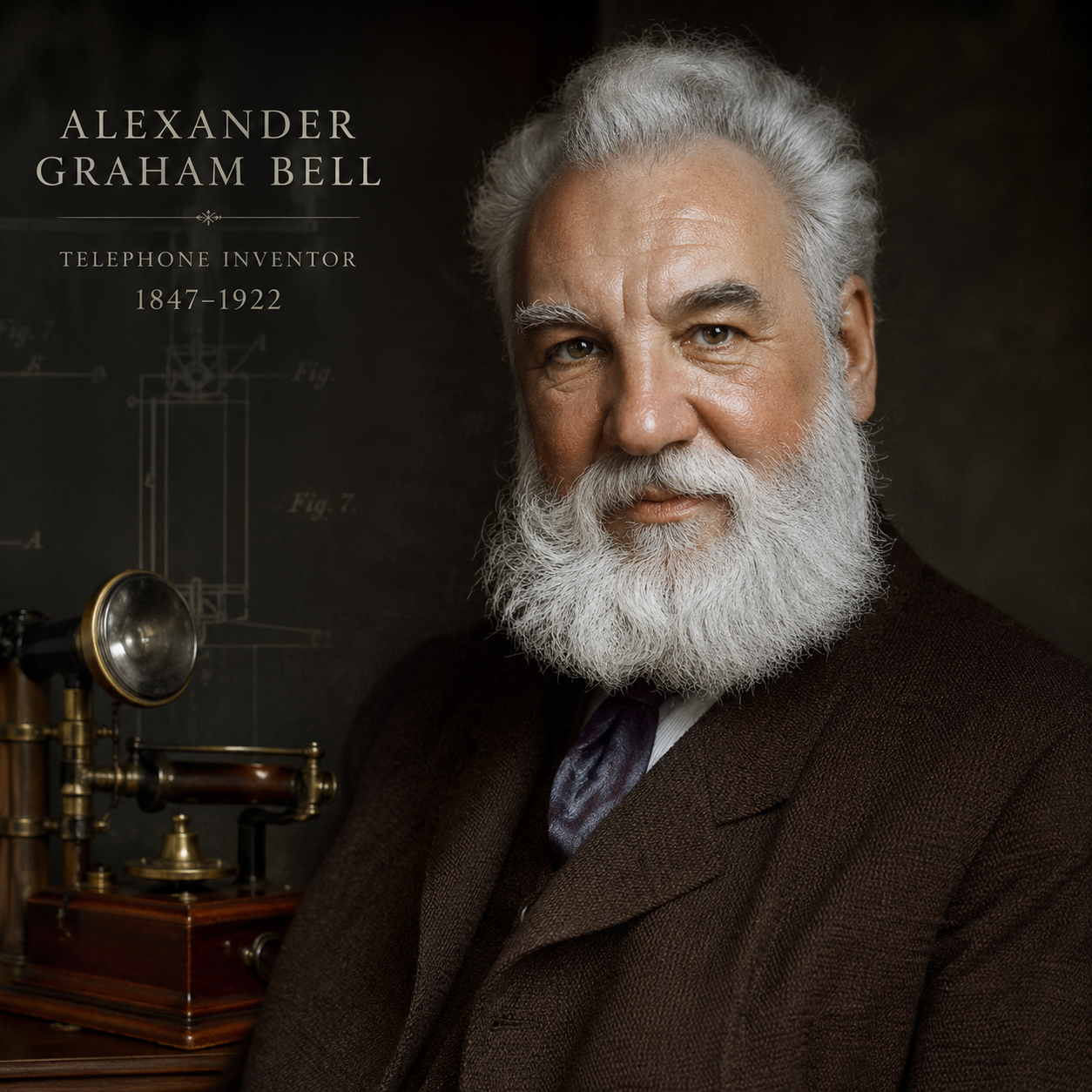
Alexander Graham Bell — "The man who is a master of patience is master of everything else."
The man who is a master of patience is master of everything else.
The man who is a master of patience is master of everything else.
Click any product to generate a realistic preview. Up to 3 at a time.
* Initial load can take up to 90 seconds — revising the preview in another color is nearly instant.
"I have always been a firm believer in the power of hard work and perseverance."
"But often what the world calls nonsensical, becomes practical, does it not? You were called crazy, too, once, were you not?"
"Concentrate all your thoughts upon the work at hand. The sun's rays do not burn until brought to a focus."
"I am a man of science, and I believe in the power of observation and experimentation."
"Man is the result of slow growth; that is why he occupies the position he does in animal life. What does a pup amount to that has gained its growth in a few days or weeks, beside a man who only attain…"
Found in 1 providers: grok
1 source checked
Patience is the foundational skill beneath all other mastery. Those who can resist rushing, endure setbacks without quitting, and work methodically through problems gain an advantage in every domain. It isn't passivity—it's disciplined persistence. Most failures trace back to moving too fast or abandoning effort too soon. Master patience and you master the pace at which everything else becomes possible.
Bell spent years refining the telephone through hundreds of failed experiments before his 1876 patent. His mother and wife were both deaf, shaping his patient, meticulous study of sound and speech transmission. He famously filed his telephone patent only hours before Elisha Gray—winning not through luck but through sustained preparation. Bell continued inventing for decades after, embodying patience as a professional method, not merely a personality trait.
The Gilded Age was a frenzy of invention and patent races—Bell, Edison, and dozens of rivals competed fiercely to claim breakthroughs first. Industrial capital rewarded speed, yet most rushed inventors failed or were scooped. In that climate, patient, rigorous experimentation was a genuine competitive edge. Bell's observation reflects hard-won wisdom: the chaotic innovation economy of the 1870s–1890s punished impatience far more often than it rewarded it.
AI-generated insights based on extensive research and information for context. Factual errors? Email [email protected].
Your cart is empty