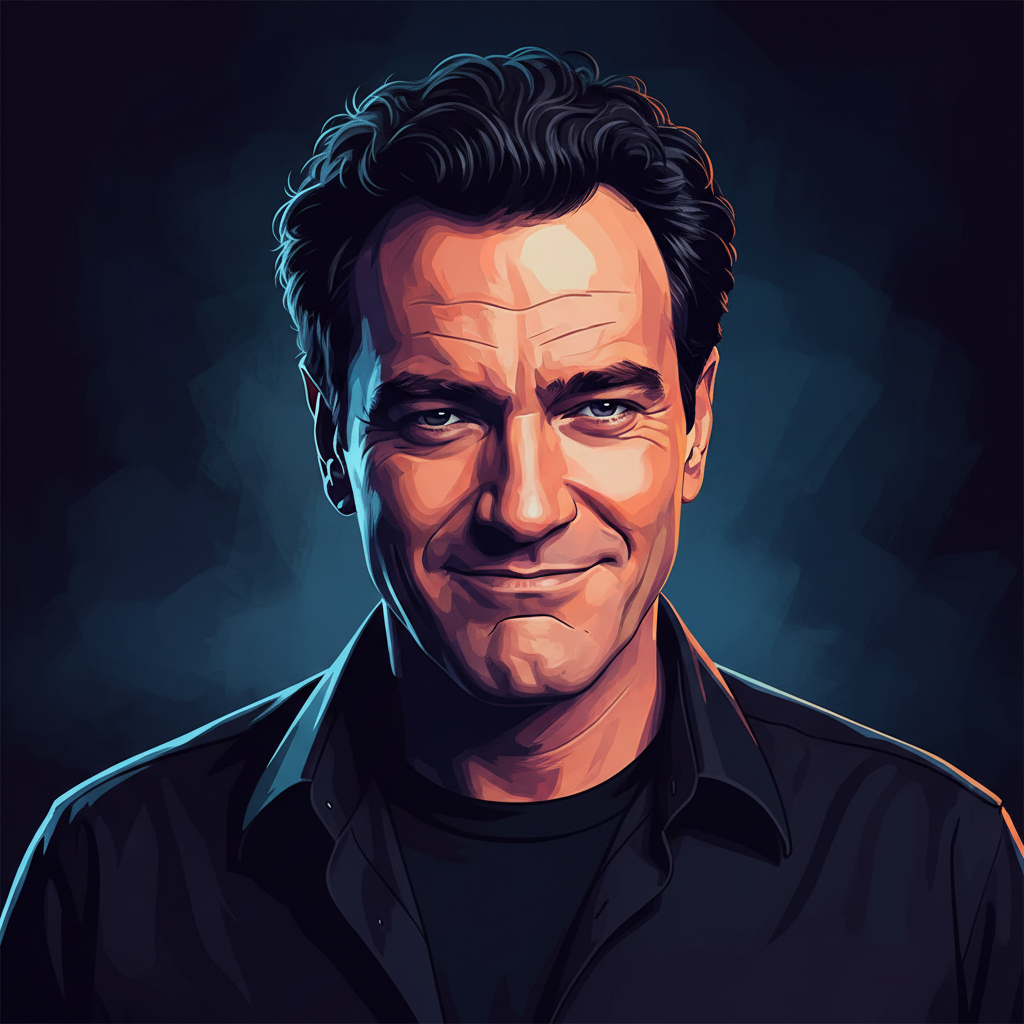
Quentin Tarantino — "The minute you put handcuffs on artists because of stuff like that, it's not an …"
The minute you put handcuffs on artists because of stuff like that, it's not an art form anymore.
The minute you put handcuffs on artists because of stuff like that, it's not an art form anymore.
Click any product to generate a realistic preview. Up to 3 at a time.
* Initial load can take up to 90 seconds — revising the preview in another color is nearly instant.
"There are two kinds of violence. First, there's cartoon violence like Lethal Weapon. There's nothing wrong with that. I'm not ragging on that. But my kind of violence is tougher, rougher, more disturb…"
"I just want the same rights that a novelist has... you can write a novel about a bastard, but he can be totally interesting."
"I don't believe at all in test screenings or sneak previews where you hand out questionnaires to the viewers to get their reactions."
"To me they're all living inside of this one universe. And it isn't [pointing out the window] out there. Well, it's a little bit out there, and it's also there, too [points at his TV], in the movies, a…"
"I don't like to be safe. I like to take risks."
American filmmaker (Pulp Fiction, Kill Bill, Inglourious Basterds) whose intertextual genre-collage redefined 1990s independent cinema. Closely associated with Robert Rodriguez (frequent collaborator (From Dusk Till Dawn, Sin City)) and Paul Thomas Anderson (1990s indie-auteur peer). For an intellectual contrast, see Stanley Kubrick, meticulous formalist filmmaker (1928-1999) — Kubrick's films erase influences into singular monolithic vision through year-long shoots and 100-take perfectionism; Tarantino's foreground every reference as a deliberate tribute — the two opposite ways auteurist cinema can be made.
Interview with Variety's Todd McCarthy, discussing violence in film.
Date: 1992
PhilosophicalFound in 1 providers: gemini
1 source checked
Your cart is empty