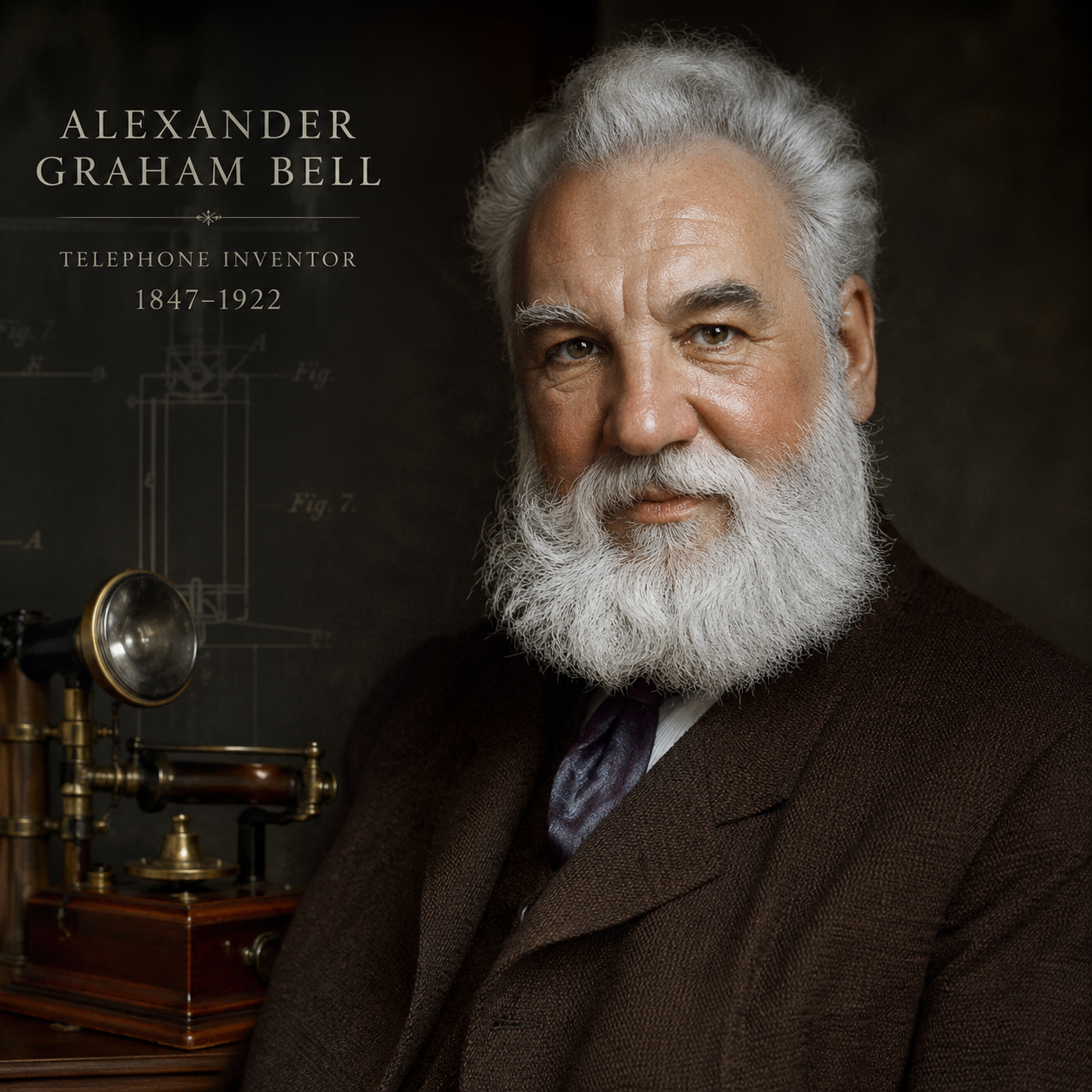
Alexander Graham Bell — "The most important thing is to keep on trying, to never give up."
The most important thing is to keep on trying, to never give up.
The most important thing is to keep on trying, to never give up.
Click any product to generate a realistic preview. Up to 3 at a time.
* Initial load can take up to 90 seconds — revising the preview in another color is nearly instant.
"We are all born with a certain potential, and it is up to us to fulfill it."
"The greatest discovery of my life was the discovery of the value of hard work."
"The world is full of people who are waiting for someone to come along and inspire them to be what they always wanted to be."
"The greatest minds are those who are not afraid to be wrong."
"The only way to do great work is to love what you do."
General inspirational quote, widely attributed, but specific source hard to verify.
Date: unknown
GeneralFound in 1 providers: grok
1 source checked
Persistence matters more than talent or starting circumstances. When you keep trying despite repeated failure, you remain in the game long enough for breakthroughs to happen. Giving up guarantees failure; continuing creates the possibility of success. The quote strips away excuses and focuses on the one variable within anyone's control: the decision to continue. It directly challenges anyone tempted to quit before achieving their goal.
Bell spent years attempting to transmit sound electrically before the telephone worked. His 1876 patent was filed just hours before a competing claim from Elisha Gray — a razor-thin margin rewarding relentless effort. Bell later pursued the photophone, hydrofoil boats, and aviation research well into old age. His entire career demonstrates that his output came from compounding effort over time, not singular genius in one flash of inspiration.
Bell's era — the 1870s through early 1900s — was the apex of the industrial invention race, when dozens of rivals competed to patent nearly identical breakthroughs. The patent system rewarded whoever filed first, making persistence a literal survival requirement. Thomas Edison's widely quoted one-percent-inspiration framing captured the era's prevailing ethos. Inventors were celebrated as national heroes, and quitting mid-experiment meant permanently ceding ground to competitors who simply kept going.
AI-generated insights based on extensive research and information for context. Factual errors? Email [email protected].
Your cart is empty