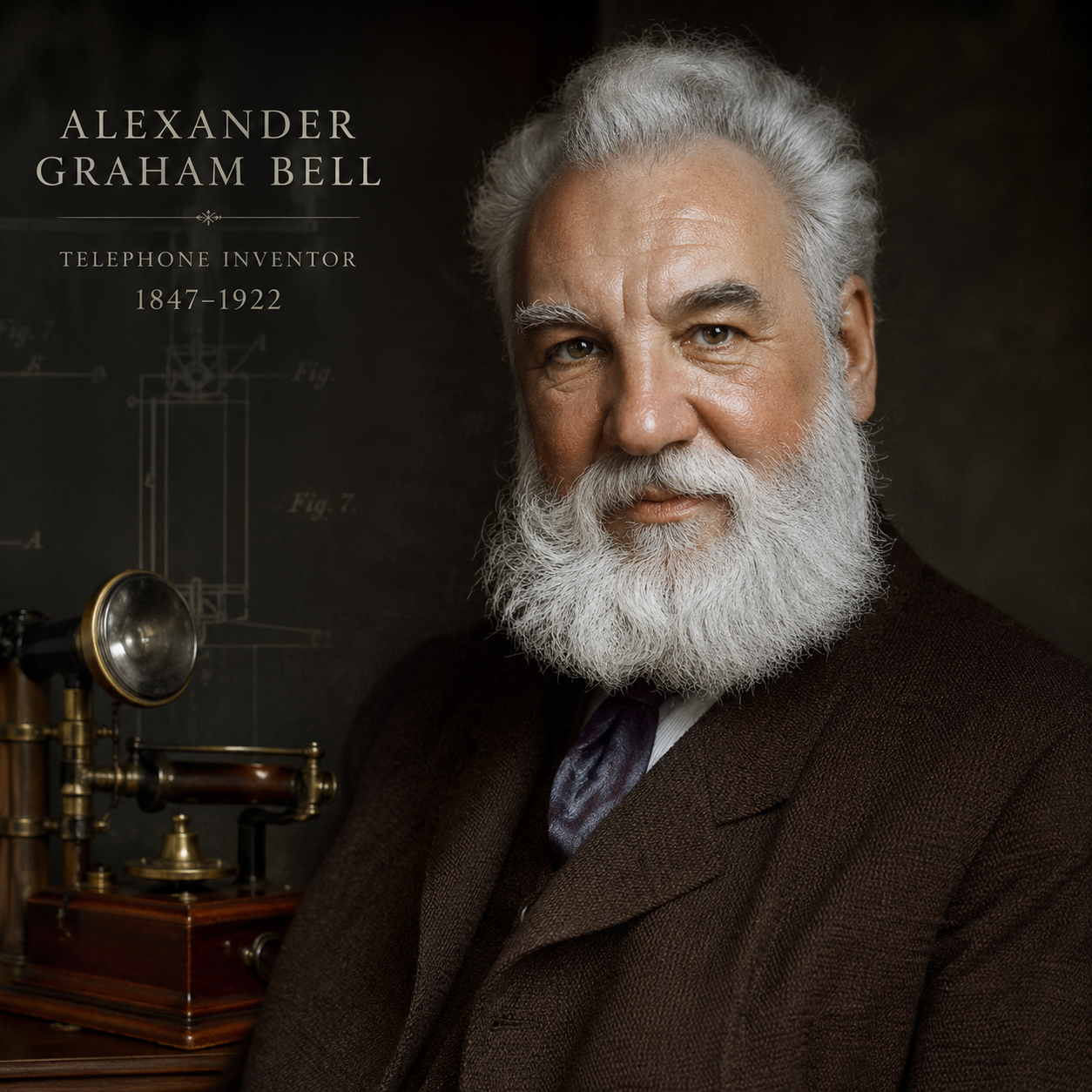
Alexander Graham Bell — "The most important thing for a man to do is to be true to himself."
The most important thing for a man to do is to be true to himself.
The most important thing for a man to do is to be true to himself.
Click any product to generate a realistic preview. Up to 3 at a time.
* Initial load can take up to 90 seconds — revising the preview in another color is nearly instant.
"The day will come when the man at the telephone will be able to see the distant person to whom he is speaking."
"Man is a tool-using animal. Without tools he is nothing, with tools he is all."
"I have never been accused of plagiarism, but I have been accused of being a plagiarist."
"Before anything else, preparation is the key to success."
"We are all too much inclined, I think, to put off until tomorrow the things that we ought to do today."
Found in 1 providers: grok
1 source checked
The quote argues that personal authenticity is the highest priority — staying aligned with one's own values, convictions, and identity regardless of external pressures or popular opinion. It frames integrity not as a virtue among many but as the foundational one: a person who betrays their own sense of right and truth undermines everything else they do. Honesty with oneself is the prerequisite for meaningful action in the world.
Bell's life embodied this principle. He faced fierce patent disputes over the telephone and skepticism from investors who doubted its commercial value. He held deeply unpopular views on deaf education — championing oral speech over sign language despite intense opposition from the Deaf community. Raised in a family obsessed with vocal science, his father invented Visible Speech, Bell pursued his unconventional vision relentlessly. His breakthroughs came precisely because he refused to abandon his convictions.
Bell worked during the Victorian era and Gilded Age — periods of rigid social conformity, class stratification, and intense commercial pressure on inventors to profit quickly. Yet these same decades sparked fierce individualism through Transcendentalism and Emersonian self-reliance. Inventors like Bell constantly faced demands to abandon pure inquiry for immediate returns. Patent wars, investor skepticism, and competing claims threatened originality. The tension between authentic personal vision and external commercial forces was a defining struggle of the age.
AI-generated insights based on extensive research and information for context. Factual errors? Email [email protected].
Your cart is empty