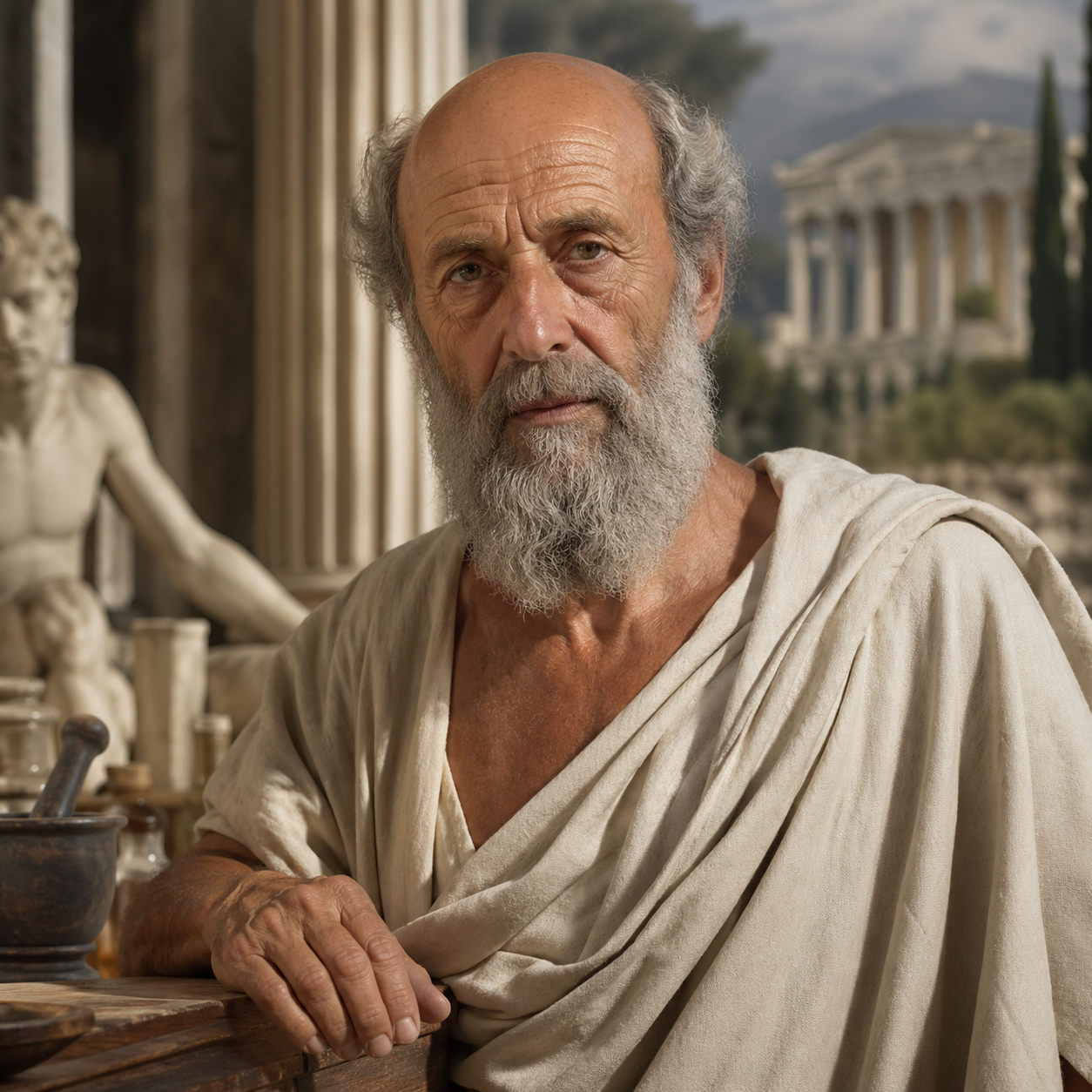
Hippocrates — "The natural healing force within each one of us is the greatest force in getting…"
The natural healing force within each one of us is the greatest force in getting well.
The natural healing force within each one of us is the greatest force in getting well.
Click any product to generate a realistic preview. Up to 3 at a time.
* Initial load can take up to 90 seconds — revising the preview in another color is nearly instant.
"The patient must be taught to help himself."
"To do nothing is sometimes a good remedy."
"If a man takes a bath, and has a fever, and afterward he has a chill, that is bad."
"Rest and sleep are the best cures for many diseases."
"The art of medicine is to heal, not to kill."
Emphasizing the body's innate ability to heal, a core Hippocratic principle.
Date: c. 460-370 BCE
WisdomFound in 1 providers: gemini
1 source checked
Every person carries an innate biological capacity to recover from illness — the body's own immune responses, cellular repair, and restorative processes are more powerful than any external intervention. Healing is fundamentally self-directed; treatments should support rather than replace that internal drive toward balance and restoration.
Hippocrates built medicine on careful observation of patients recovering naturally, rejecting supernatural explanations for illness. He emphasized diet, rest, and environment as healing aids — not cures themselves. This belief drove his foundational principle of 'first, do no harm': physicians assist nature, never override it.
In ancient Greece, illness was attributed to gods and spirits; temple priests performed ritual cures. Hippocrates radically reframed disease as natural, physical phenomena around 400 BCE. Declaring the body's own force supreme was a direct challenge to religious healing establishments and laid the groundwork for empirical, observation-based medicine.
AI-generated insights based on extensive research and information for context. Factual errors? Email [email protected].
Your cart is empty