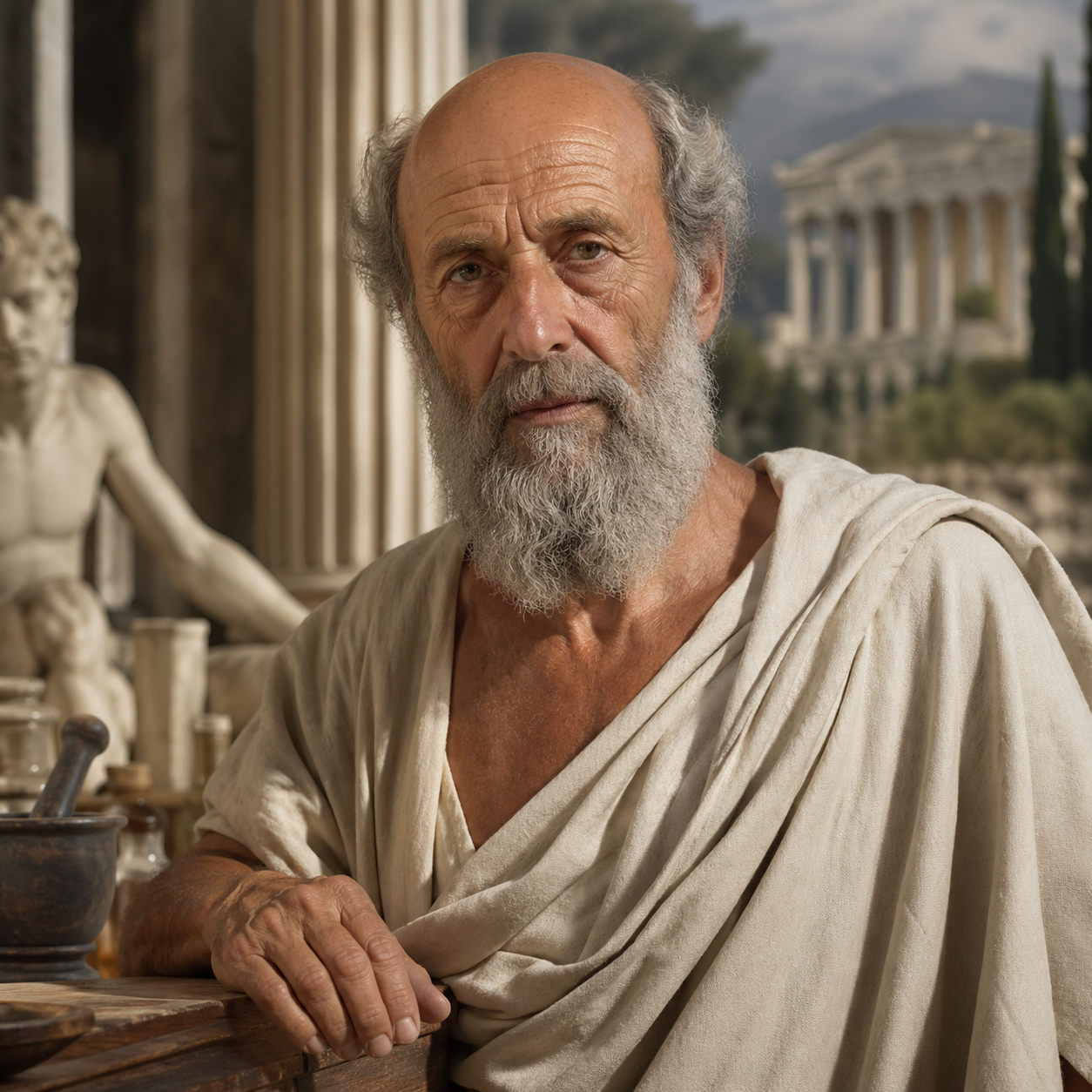
Hippocrates — "Wherever the art of medicine is loved, there is also a love of humanity."
Wherever the art of medicine is loved, there is also a love of humanity.
Wherever the art of medicine is loved, there is also a love of humanity.
Click any product to generate a realistic preview. Up to 3 at a time.
* Initial load can take up to 90 seconds — revising the preview in another color is nearly instant.
"If someone wishes for good health, one must first ask oneself if he is ready to do away with the reasons for his illness. Only then is it possible to help him."
"It is more important to know what sort of person has a disease than to know what sort of disease a person has."
"The greatest medicine of all is to teach people how not to need it."
"The physician treats, but nature heals."
"The physician is the servant of nature."
Attributed, often used to describe the ethical foundation of medicine.
Date: c. 400 BC
Love & RelationshipsFound in 2 providers: grok,gemini
2 sources checked
Medicine practiced with genuine care requires loving the people you treat, not just mastering techniques. True healing demands seeing patients as human beings, not problems to solve. A physician who loves their craft inherently values human life and suffering, because medicine without compassion is merely mechanical procedure. The art and the humanity are inseparable.
Hippocrates founded systematic clinical observation at a time when medicine was tangled with superstition and temple priests. He insisted physicians observe patients directly, record symptoms carefully, and treat healing as an ethical duty. His Hippocratic Oath embedded human welfare as medicine's central obligation, reflecting his belief that technical skill divorced from humanity produces harm, not healing.
In ancient Greece around 460-370 BCE, illness was widely attributed to divine punishment or demonic interference. Healing happened at temples of Asclepius through ritual and prayer. Hippocrates broke from this tradition by treating disease as natural, observable, and treatable through reason. Declaring medicine a humanistic art rather than priestly magic was a radical reframing that required arguing medicine's purpose was human flourishing.
AI-generated insights based on extensive research and information for context. Factual errors? Email [email protected].
Your cart is empty