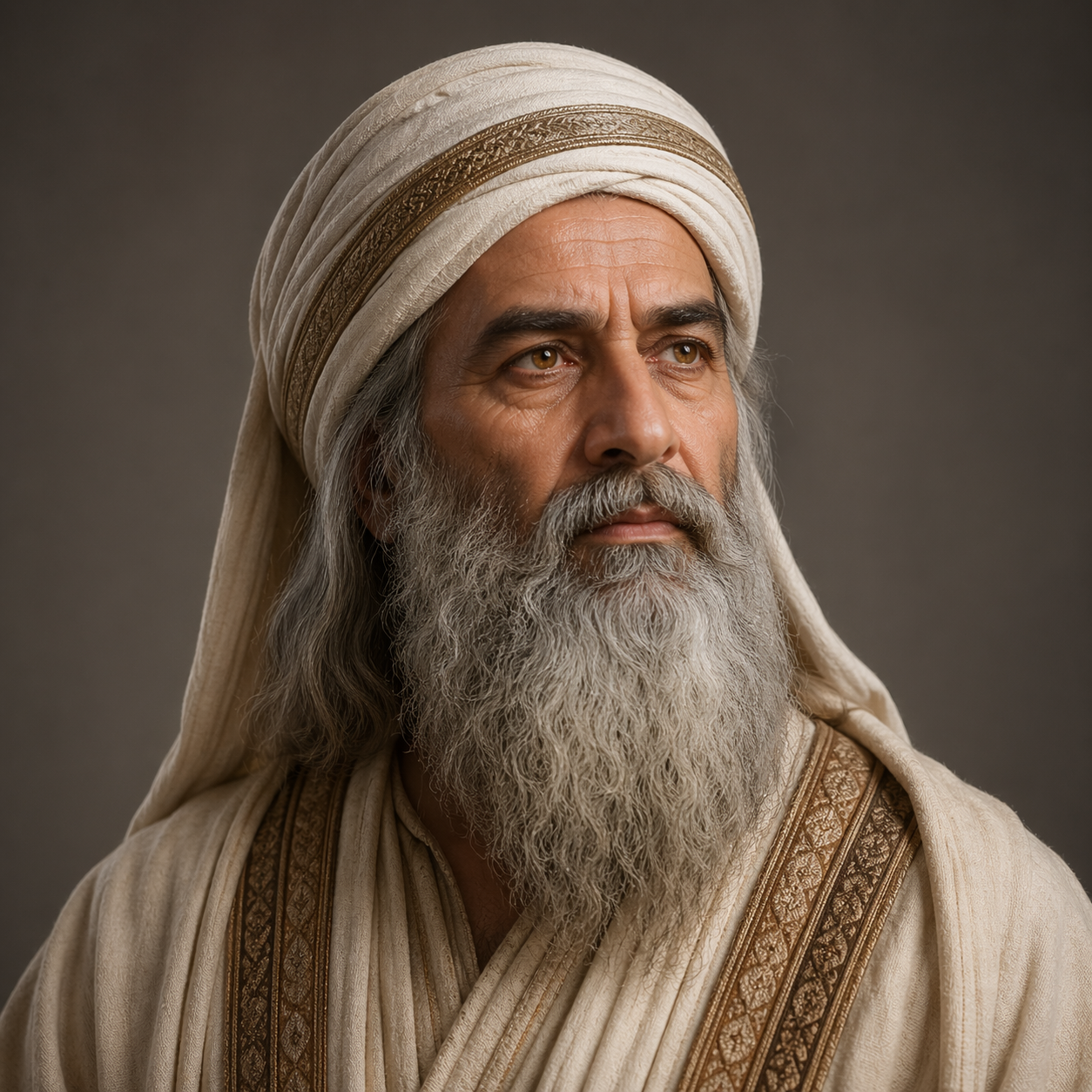
Zoroaster — "The one who is false is a follower of the Lie; the one who is true is a follower…"
The one who is false is a follower of the Lie; the one who is true is a follower of Truth.
The one who is false is a follower of the Lie; the one who is true is a follower of Truth.
Click any product to generate a realistic preview. Up to 3 at a time.
* Initial load can take up to 90 seconds — revising the preview in another color is nearly instant.
"Righteousness and Good Mind for the people. To enable me to apprise all, teach me O Mazda Ahura, Through Thine own Spirit and Thine own Words, the principle of creation of the first existence."
"He who follows the Lie is a deceiver, and his end shall be sorrow."
"For the wise, the truth is clear; for the foolish, it is hidden."
"Seek your happiness in the happiness of all."
"He who chooses the Lie, O Mazda, for him shall be woe at the end."
Iranian prophet who founded Zoroastrianism, the first major religion of cosmic dualism between good (Ahura Mazda) and evil (Angra Mainyu). Closely associated with The Buddha (near-contemporary Eastern moral-cosmological revolutionary). For an intellectual contrast, see Friedrich Nietzsche, German philosopher of 'beyond good and evil' — Nietzsche appropriated Zarathustra's name for Thus Spoke Zarathustra (1883) precisely to invert the original's moral cosmology — the historical Zoroaster founded the good-versus-evil framework Nietzsche's character announces the end of.
Found in 1 providers: grok
1 source checked
People fall into one of two camps based on their choices and actions. Those who deceive, break promises, or act dishonestly align themselves with a destructive force of falsehood, while those who speak honestly, keep their word, and act with integrity align with truth. Your character is defined by which side you consistently feed through your daily behavior, not by what you claim to be.
Zoroaster built his entire theology around this cosmic duality, naming it Asha (truth, order) versus Druj (lie, deceit). As a reforming priest who rejected the polytheistic rituals of his tribe, he taught that every human must personally choose sides in this moral battle. His Gathas, the hymns attributed to him, repeatedly frame salvation as loyalty to truth through good thoughts, words, and deeds.
Zoroaster lived in Bronze Age Iran, likely between 1500 and 1000 BCE, among pastoral tribes practicing animal sacrifice and worshipping many gods. Cattle raiding, broken oaths, and tribal warfare were common, making sworn honesty a matter of survival. His teaching of a single wise creator and a moral universe where truth-telling carried cosmic weight was revolutionary, later shaping Persian imperial ethics under Cyrus and Darius and influencing Judaism, Christianity, and Islam.
AI-generated insights based on extensive research and information for context. Factual errors? Email [email protected].
Your cart is empty