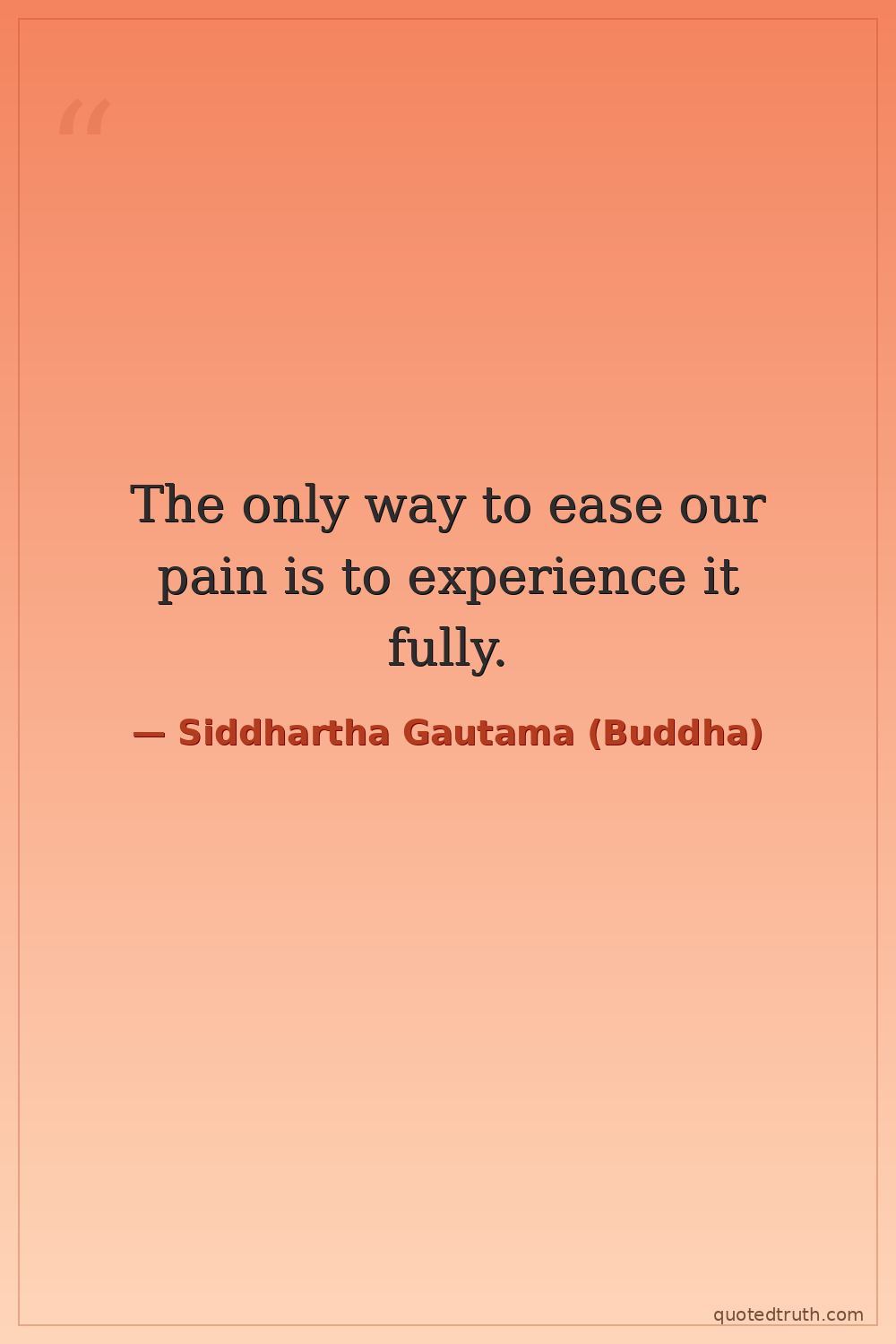
Siddhartha Gautama (Buddha) — "The only way to ease our pain is to experience it fully."
The only way to ease our pain is to experience it fully.
The only way to ease our pain is to experience it fully.
Click any product to generate a realistic preview. Up to 3 at a time.
* Initial load can take up to 90 seconds — revising the preview in another color is nearly instant.
"If anything is worth doing, do it with all your heart."
"The thoughtless man, even if he can recite a large portion of the law, but is not a doer of it, has no share in the priesthood, but is like a cowherd counting the cows of others."
"However many holy words you read, however many you speak, what good will they do you if you do not act on upon them?"
"Happiness does not depend on what you have or who you are. It solely relies on how you think."
"The fragrance of holiness travels even against the wind."
A modern interpretation, not a direct quote from the Pali Canon.
Date: c. 5th century BCE
GeneralFound in 1 providers: grok
1 source checked
Trying to avoid, suppress, or distract from emotional pain only prolongs it. True relief comes from turning toward suffering, acknowledging it honestly, and letting yourself feel it without resistance. When you stop fighting the hurt and meet it directly, it loses its grip and begins to dissolve. Healing requires presence with discomfort, not escape from it. The shortcut around pain is actually the longest route.
Buddha built his entire teaching around suffering (dukkha) as the first of the Four Noble Truths. After abandoning palace luxury and extreme asceticism, he discovered that neither indulgence nor denial ended suffering. His path of mindfulness trained practitioners to observe pain directly through meditation, seeing its impermanent nature. He taught that clinging and aversion fuel suffering, so facing sensations fully, without grasping or pushing away, was central to liberation and awakening.
In 5th-century BCE northern India, dominant Vedic traditions emphasized ritual sacrifice and caste duty to manage life's hardships, while competing shramana movements promoted severe bodily mortification to transcend suffering. Both approaches tried to bypass pain through external means or self-punishment. Buddha's middle-way insight emerged as a radical psychological alternative, proposing that direct inner examination of experience, rather than ritual appeasement or ascetic escape, was the actual route to freedom from mental anguish.
AI-generated insights based on extensive research and information for context. Factual errors? Email [email protected].
Your cart is empty