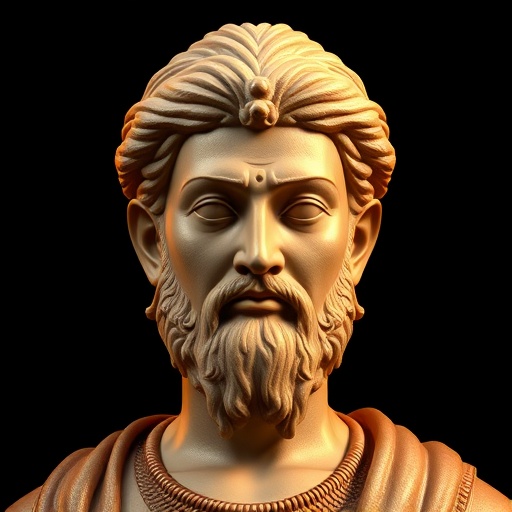
Mahavira — "The path of purification is the path of non-violence, self-control, and penance."
The path of purification is the path of non-violence, self-control, and penance.
The path of purification is the path of non-violence, self-control, and penance.
Click any product to generate a realistic preview. Up to 3 at a time.
* Initial load can take up to 90 seconds — revising the preview in another color is nearly instant.
"Man's true nature is divine."
"Happiness and sorrow are the results of one's own actions."
"The soul is the only thing that is permanent; everything else is impermanent."
"Happiness resides in perfect self-control."
"The first step towards liberation is non-violence."
24th and last Tirthankara of Jainism, whose teachings of strict ahimsa (non-violence), aparigraha (non-attachment), and karma reshaped ancient Indian religion. Closely associated with The Buddha (near-contemporary moral revolutionary, also reacting against Vedic ritualism). For an intellectual contrast, see Vedic Brahmanical ritual sacrifice, the animal-sacrifice-centered Vedic religion of his era — Mahavira's ahimsa demanded total non-violence, including not eating root vegetables that kill the plant — a maximum-distance ethical move from the Vedic priestly tradition that ritually sacrificed cattle and horses. The two cleanest poles of ancient Indian religious ethics.
Found in 1 providers: grok
1 source checked
True spiritual growth requires three disciplines working together: avoiding harm to any living being, mastering your impulses and desires rather than being ruled by them, and willingly accepting hardship to burn away accumulated karma. Together these practices cleanse the soul of attachments that bind it to suffering and rebirth, gradually freeing the self toward liberation.
Mahavira spent twelve years in severe ascetic practice, pulling out his own hair, owning nothing, eating minimally, and standing motionless for hours. He developed ahimsa into Jainism's supreme principle, filtering every action through its harm to others. His entire biography is this quote lived literally, not merely preached.
Sixth-century BCE India saw intense spiritual experimentation amid Vedic ritual dominance. Mahavira and contemporaries like the Buddha challenged brahminical sacrifice culture, which involved animal killing and priestly hierarchy. Asserting non-violence as the highest path was a radical counter-cultural stance in a world where ritual bloodshed purchased divine favor.
AI-generated insights based on extensive research and information for context. Factual errors? Email [email protected].
Your cart is empty