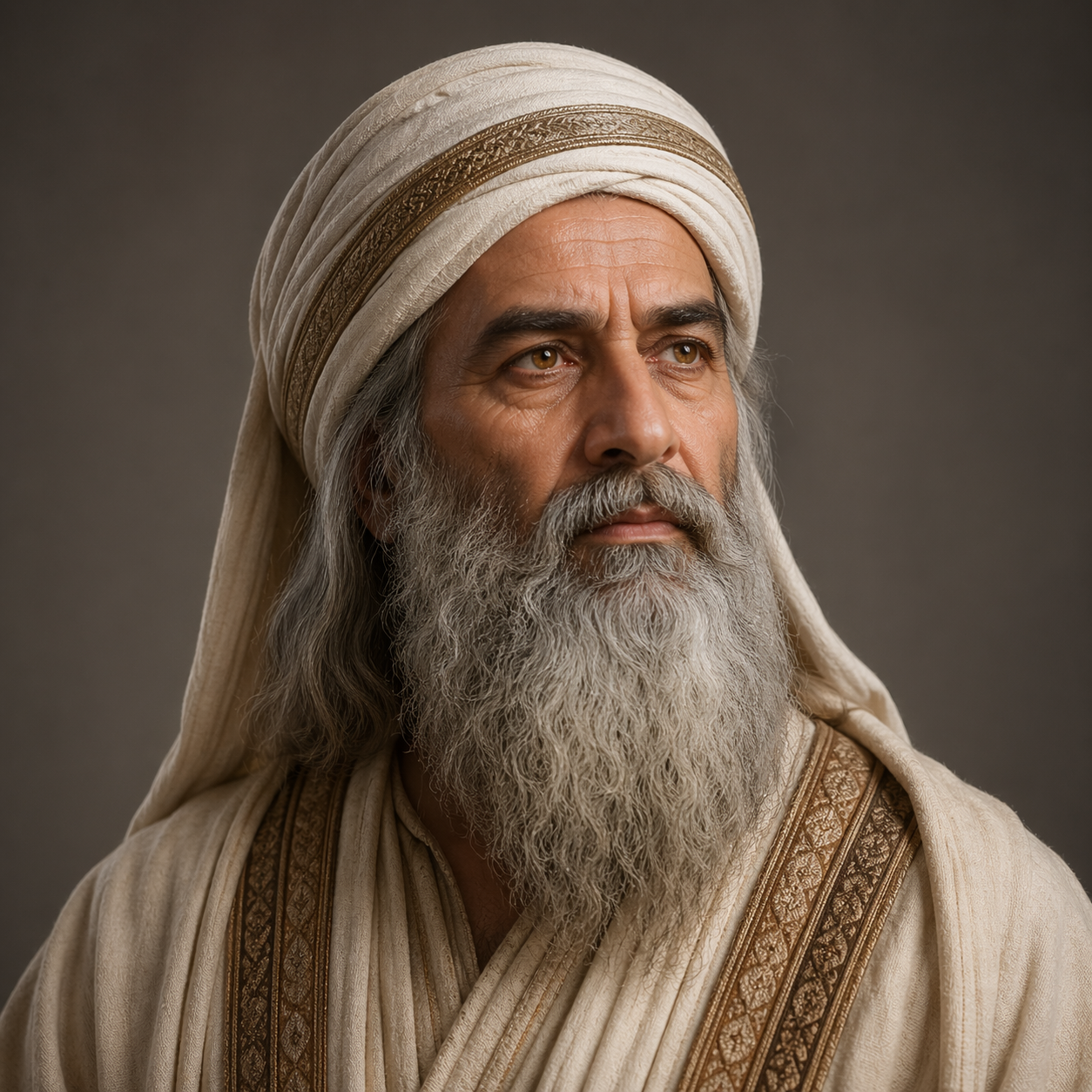
Zoroaster — "The path of the righteous is straight, the path of the wicked is crooked."
The path of the righteous is straight, the path of the wicked is crooked.
The path of the righteous is straight, the path of the wicked is crooked.
Click any product to generate a realistic preview. Up to 3 at a time.
* Initial load can take up to 90 seconds — revising the preview in another color is nearly instant.
"The Lie is the source of all evil, the Truth is the source of all good."
"The path to enlightenment is long. And sometimes, you need a snack break."
"He who brings forth life for the cattle and cultivates the earth with righteousness, he is the one who serves Mazda."
"Show me, O Mazda, through Good Mind, how to fulfill this teaching, for which I ask Thee, and through Thy Righteousness, to approach Thee, O Ahura, and to offer praise to Thee."
"I am aware of my weakness, grant me the affection which a lover in the radiance of righteousness."
Iranian prophet who founded Zoroastrianism, the first major religion of cosmic dualism between good (Ahura Mazda) and evil (Angra Mainyu). Closely associated with The Buddha (near-contemporary Eastern moral-cosmological revolutionary). For an intellectual contrast, see Friedrich Nietzsche, German philosopher of 'beyond good and evil' — Nietzsche appropriated Zarathustra's name for Thus Spoke Zarathustra (1883) precisely to invert the original's moral cosmology — the historical Zoroaster founded the good-versus-evil framework Nietzsche's character announces the end of.
Found in 1 providers: grok
1 source checked
Living with honesty and good intent creates a clear, direct life where choices align and consequences follow predictably. Choosing deceit, cruelty, or selfishness forces constant detours, cover-ups, and contradictions that twist your path into something tangled. The straight road is not easier, but it is coherent; the crooked one eventually traps the person walking it. Integrity simplifies, corruption complicates.
Zoroaster built his entire religion around Asha, meaning truth and cosmic order, set against Druj, the lie. As a priest-prophet who rejected polytheistic rituals of his day, he framed existence as a moral choice between two opposing roads. This saying distills his core doctrine: humans are active participants choosing right-thinking, right-speaking, and right-acting, or sliding into deception and disorder. The road metaphor is pure Zoroaster.
Zoroaster lived in ancient Iran, likely between 1500 and 1000 BCE, among Indo-Iranian tribes practicing animal sacrifice and honoring many gods through warrior-priests. Morality was transactional, tied to ritual offerings rather than personal ethics. Zoroaster's insistence on individual moral accountability and a single wise creator, Ahura Mazda, was radical. He faced persecution for rejecting the old priesthood, making his straight-versus-crooked imagery a direct challenge to the corrupt religious establishment of his era.
AI-generated insights based on extensive research and information for context. Factual errors? Email [email protected].
Your cart is empty