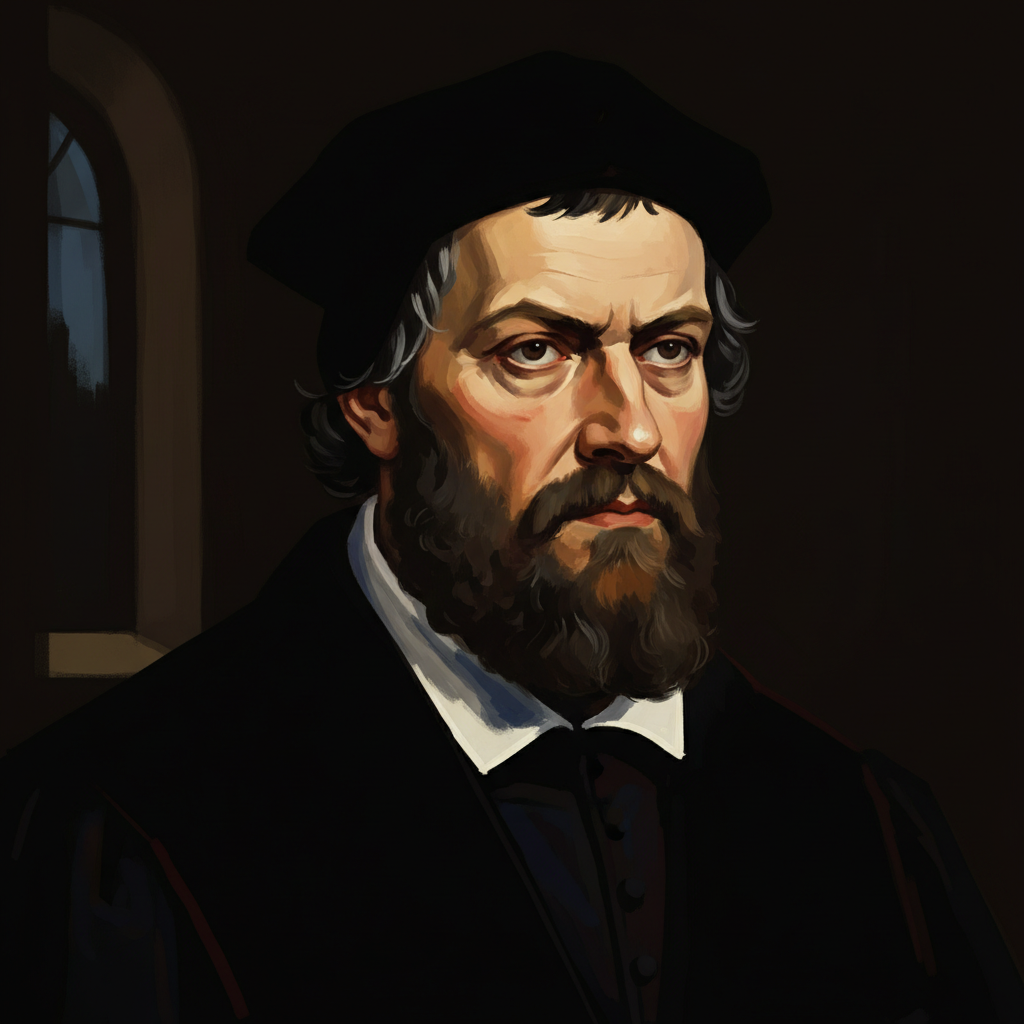
Martin Luther — "The pope is the Antichrist."
The pope is the Antichrist.
The pope is the Antichrist.
Click any product to generate a realistic preview. Up to 3 at a time.
* Initial load can take up to 90 seconds — revising the preview in another color is nearly instant.
"Printing is the ultimate gift of God and the greatest one. Indeed, the invention of printing is the work of God."
"I would rather be a swineherd than a Pope."
"The greatest blessing of all is to have a good wife."
"Again, the Lord wills that whoever confesses his sins and believes the absolution should be forgiven. 'No,' says ass-pope fart, 'faith does nothing; but your own repentance and atonement do, as well a…"
"He who lets himself be led by reason will never escape sin."
German theologian whose 95 Theses (1517) launched the Protestant Reformation and broke the Catholic Church's monopoly on Western Christianity. Closely associated with Philipp Melanchthon (Lutheran systematizer) and John Calvin (later Reformer who built on Luther's break). For an intellectual contrast, see Pope Leo X, Renaissance pope (1513-1521) — Leo X's indulgence sales triggered Luther's break and Leo excommunicated him in 1521 — Luther's entire Reformation is structured as a direct answer to the indulgence-funded Vatican Leo represented.
Found in 2 providers: deepseek,grok
2 sources checked
This statement declares that the head of the Roman Catholic Church is not Christ's representative on earth but rather his ultimate enemy, the figure prophesied in scripture to oppose God before the end times. It is an accusation that the papal office itself, not just a particular pope, embodies corruption, deception, and spiritual tyranny. The claim rejects papal authority entirely and frames opposition to Rome as a sacred duty rather than mere disagreement.
Luther made this charge central to his break with Rome after the pope excommunicated him in 1521. A former Augustinian monk and theology professor at Wittenberg, he concluded that indulgence sales, papal claims to interpret scripture alone, and resistance to reform proved the office was corrupted beyond repair. He repeated the accusation in sermons, pamphlets, and his 1545 tract 'Against the Papacy at Rome, Founded by the Devil,' making it a defining tenet of Lutheran identity.
The early sixteenth century saw the Western Church selling indulgences to fund St. Peter's Basilica, widespread clerical corruption, and Renaissance popes wielding political and military power. The printing press allowed Luther's 1517 Ninety-Five Theses to spread across Germany within weeks. Apocalyptic expectation was high, with many reading current events through Revelation. Identifying the pope as Antichrist gave reformers theological justification for schism and galvanized princes already resentful of Rome's financial and political reach into their territories.
AI-generated insights based on extensive research and information for context. Factual errors? Email [email protected].
Your cart is empty