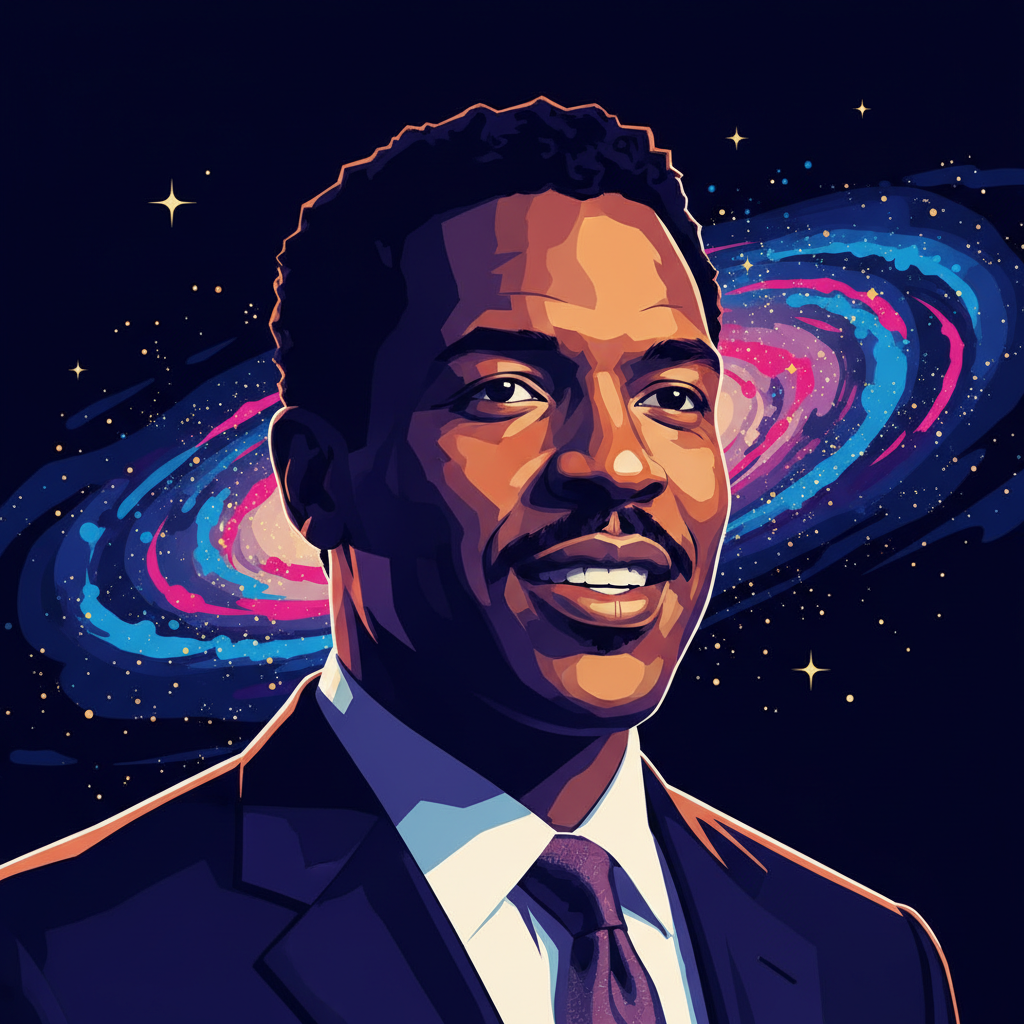
Neil deGrasse Tyson — "The problem with the world is that the intelligent people are full of doubts, wh…"
The problem with the world is that the intelligent people are full of doubts, while the stupid ones are full of confidence.
The problem with the world is that the intelligent people are full of doubts, while the stupid ones are full of confidence.
Click any product to generate a realistic preview. Up to 3 at a time.
* Initial load can take up to 90 seconds — revising the preview in another color is nearly instant.
"There are no bad ideas in science, just bad experiments."
"The more you know about the universe, the less you can believe in God."
"I think it's important to have a sense of humor about the universe. It's a pretty absurd place, after all."
"I'm a big proponent of space exploration, not just for scientific discovery, but for the inspiration it provides."
"I'm not a vegetarian, but I do believe that we should be more mindful of where our food comes from, and how it's produced."
American astrophysicist, Hayden Planetarium director, and Cosmos: A Spacetime Odyssey host who carries the Carl Sagan public-science mantle. Closely associated with Bill Nye (fellow science communicator) and Brian Greene (theoretical physicist and string-theory popularizer). For an intellectual contrast, see Ken Ham, founder of Answers in Genesis and the Creation Museum — Ham's career has been organized around defending biblical 6-day creationism — exactly the science-education position Tyson's mainstream-science communication is structured to refute.
Found in 1 providers: grok
1 source checked
Smart people understand how genuinely complex problems are, so they hold conclusions loosely and second-guess themselves constantly. People who lack that depth see simple answers everywhere and commit to them without reservation. The result: cautious, qualified thinkers hesitate to speak boldly while overconfident, underqualified voices drive decisions. Intellectual humility, which should be a strength, becomes a social disadvantage against those unaware enough to never question themselves.
Tyson has spent decades defending scientific consensus on evolution, climate change, and vaccines against confident non-experts dominating media and politics. As director of the Hayden Planetarium and host of StarTalk and Cosmos, he uses humor and accessibility to counter misinformation spread by certainty untethered from evidence. His public frustration with flat-earth promoters and vaccine skeptics mirrors exactly the paradox this quote names: loud confidence routinely drowning out careful, evidence-based doubt.
Social media algorithms reward confident, shareable takes over nuanced, hedged analysis—structurally amplifying the dynamic this quote describes. In the 2010s and 2020s, post-truth politics, pandemic misinformation, flat-earth movements, and climate denial showed how viral certainty outcompetes expert caution. Declining institutional trust meant credentials no longer conveyed authority while confident amateurs commanded massive audiences. The Dunning-Kruger effect became a cultural touchstone precisely because this imbalance had grown impossible to ignore.
AI-generated insights based on extensive research and information for context. Factual errors? Email [email protected].
Your cart is empty