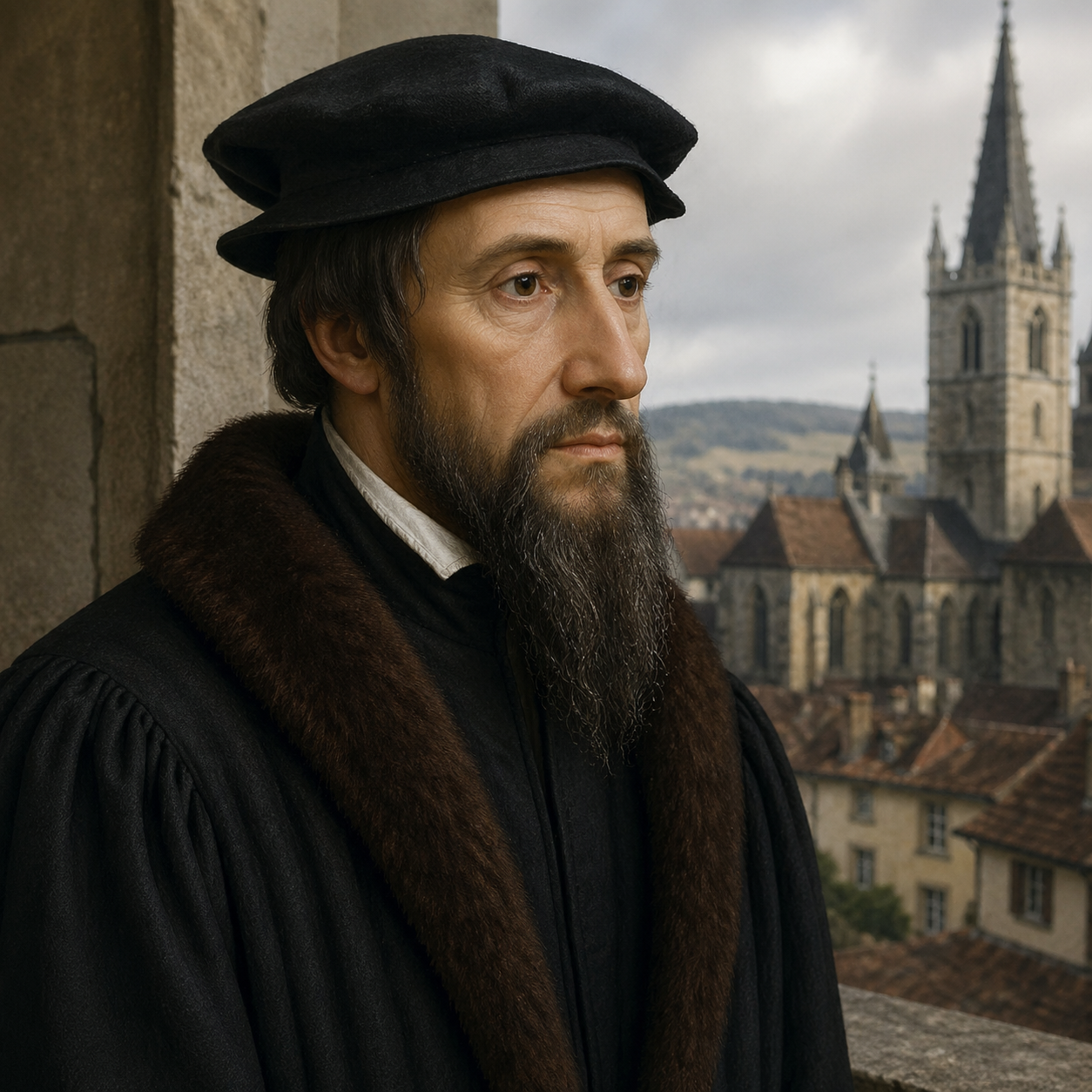
John Calvin — "The proper knowledge of God is when we know him to be our Father."
The proper knowledge of God is when we know him to be our Father.
The proper knowledge of God is when we know him to be our Father.
Click any product to generate a realistic preview. Up to 3 at a time.
* Initial load can take up to 90 seconds — revising the preview in another color is nearly instant.
"The Lord then would have all the godly to burn with so much zeal in the defense of lawful worship and true religion, that no connection, no relationship, nor any other consideration, connected with th…"
"There is not one blade of grass, there is no color in this world that is not intended to make us rejoice."
"For we do not say that man is dragged unwillingly into sinning, but that because his will is corrupt he is held captive under the yoke of sin and therefore of necessity wills in an evil way."
"Without knowledge of God, there is no true knowledge of self."
"It is not enough to have a good cause, but we must also have a good conscience."
French theologian whose Institutes of the Christian Religion (1536) systematized Protestant Reformed doctrine, including predestination. Closely associated with Martin Luther (Reformation founder, Calvin's predecessor). For an intellectual contrast, see Jacobus Arminius, Dutch Reformed theologian (1560-1609) — Arminius's rejection of strict double-predestination founded Arminianism — the theological tradition modern Methodism, most evangelicalism, and Pentecostalism descend from. The Calvinist-Arminian debate has divided Protestantism for 400 years.
Found in 1 providers: grok
1 source checked
True knowledge of God isn't abstract theology or intellectual doctrine about divine attributes — it's a personal, relational recognition. Knowing God as Father implies intimacy, trust, and dependence, the way a child knows a parent. Genuine theological understanding transforms into a living relationship where believers see themselves as adopted children under divine care. The relational dimension is what makes knowledge of God complete and practically meaningful rather than merely academic.
Calvin spent his life systematizing Protestant theology in his Institutes of the Christian Religion, centering everything on divine sovereignty and predestination. Yet he insisted election wasn't cold fate but adoption into God's family. As Geneva's ruling pastor, he consistently pushed theology from scholastic abstraction toward practical piety. This quote captures his pastoral core: doctrine must move from mind to heart. Calvin's own displacement from France deepened his reliance on God's fatherly providence through persecution.
In 16th-century Europe, Catholic scholasticism defined God through formal philosophical categories, while institutional Church structures mediated access to the divine through priests, sacraments, and saints. Ordinary believers had little personal theological agency. The Reformation radically disrupted this — Calvin's framing of God as knowable Father bypassed clerical intermediaries entirely. During an era of brutal religious wars and mass uncertainty, asserting direct filial relationship with God was both theologically revolutionary and existentially urgent for displaced Protestants.
AI-generated insights based on extensive research and information for context. Factual errors? Email [email protected].
Your cart is empty