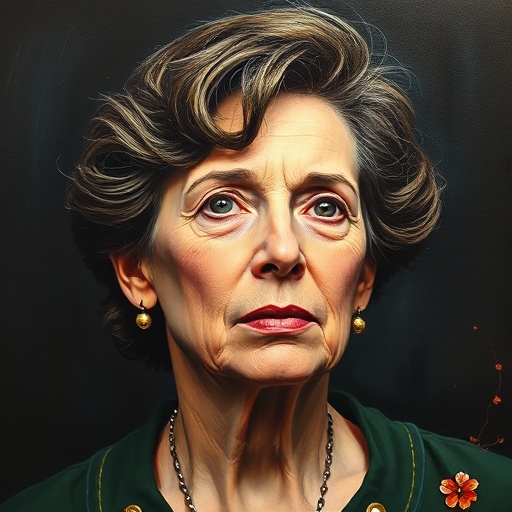
Rachel Carson — "The public is largely unaware of the true nature of the problem, and that is why…"
The public is largely unaware of the true nature of the problem, and that is why I felt compelled to write this book.
The public is largely unaware of the true nature of the problem, and that is why I felt compelled to write this book.
Click any product to generate a realistic preview. Up to 3 at a time.
* Initial load can take up to 90 seconds — revising the preview in another color is nearly instant.
"The earth is not ours to exploit, but to cherish and protect."
"I have no doubt that we are on a collision course with disaster if we continue down this path."
"The more I learn about the natural world, the more I am filled with awe."
"We are surrounded by an infinite number of wonders, and yet we see so few of them."
"We are dealing with the most dangerous substances in the world, and we are treating them with a casual indifference that borders on criminal."
Found in 1 providers: grok
1 source checked
Carson is saying that ignorance — not malice — is the core barrier to environmental protection. When the public doesn't understand a danger, they cannot demand change. She positions writing as an act of civic duty: an expert who withholds what they know from the people who need it is complicit in harm. The quote reveals her conviction that informed citizens are democracy's strongest defense against institutional and industrial wrongdoing.
Carson spent 15 years as a scientist at the U.S. Fish and Wildlife Service and had already written three acclaimed nature books before Silent Spring. She was diagnosed with cancer while writing it, yet pressed on, driven by moral urgency. As a woman in a male-dominated scientific establishment, she knew her credibility would be attacked — and it was. Her career embodied the belief that science without public communication is fundamentally incomplete.
In 1962, DDT and synthetic pesticides were celebrated as postwar miracles, sprayed on suburban neighborhoods, schools, and farmland without public question. The chemical industry was powerful, federally backed, and largely unregulated. Most Americans trusted that approved products were safe. Carson published Silent Spring into this complacency, sparking the modern environmental movement and contributing to DDT's U.S. ban in 1972 and the EPA's creation in 1970.
AI-generated insights based on extensive research and information for context. Factual errors? Email [email protected].
Your cart is empty