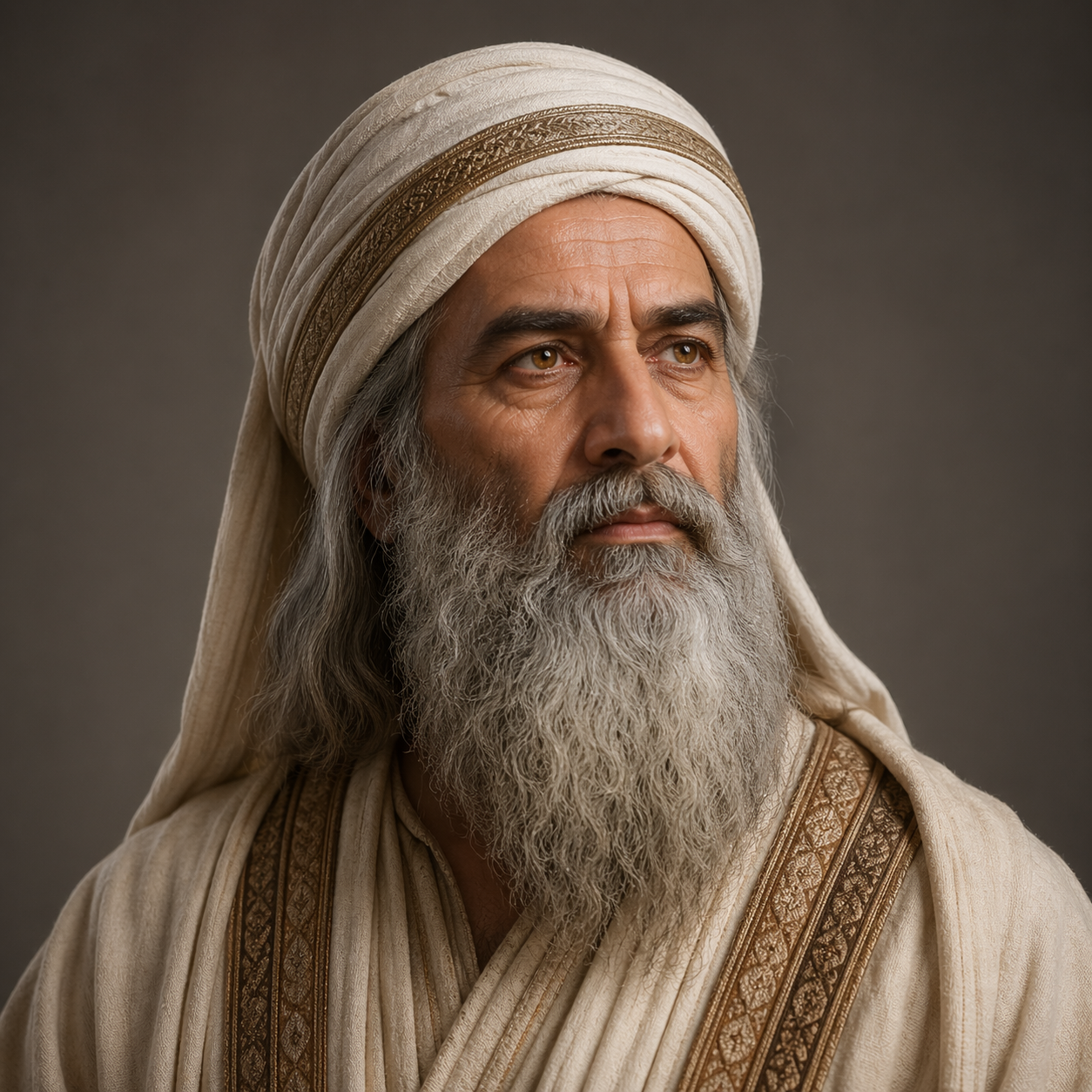
Zoroaster — "The purpose of life is to strive for perfection and attain union with Ahura Mazd…"
The purpose of life is to strive for perfection and attain union with Ahura Mazda.
The purpose of life is to strive for perfection and attain union with Ahura Mazda.
Click any product to generate a realistic preview. Up to 3 at a time.
* Initial load can take up to 90 seconds — revising the preview in another color is nearly instant.
"May we be among those who shall make this world perfect, O Mazda Ahura, and may we be workers for the renovation of the world."
"Whosoever, O Mazda, does not serve thee with the word, him I shall deliver into the hand of the wicked; for him shall be woe, and long punishment."
"The lie-follower is an evil doer, but the truth-follower is a good doer."
"I shall be master of my own destiny."
"Whoso causes affliction to the righteous, him shall the evil spirit hold captive."
Iranian prophet who founded Zoroastrianism, the first major religion of cosmic dualism between good (Ahura Mazda) and evil (Angra Mainyu). Closely associated with The Buddha (near-contemporary Eastern moral-cosmological revolutionary). For an intellectual contrast, see Friedrich Nietzsche, German philosopher of 'beyond good and evil' — Nietzsche appropriated Zarathustra's name for Thus Spoke Zarathustra (1883) precisely to invert the original's moral cosmology — the historical Zoroaster founded the good-versus-evil framework Nietzsche's character announces the end of.
Found in 1 providers: gemini
1 source checked
Life has a clear goal: keep improving yourself morally and spiritually until you are fully aligned with the highest good, which Zoroaster called Ahura Mazda, the wise creator. Perfection here is not being flawless but actively choosing truth, good thoughts, good words, and good deeds every day. The reward is not just afterlife bliss but a real inner unity with divine wisdom achieved through deliberate, disciplined effort in ordinary living.
Zoroaster founded Zoroastrianism and centered his teachings on Ahura Mazda, the supreme wise lord, and the lifelong ethical contest between truth (asha) and the lie (druj). As a reforming priest who rejected the ritualism of his time, he preached that every human chooses sides through thoughts, words, and deeds. This quote captures his signature ethic: salvation is earned by striving, not inherited, mirroring his own exile and persistent missionary struggle.
Zoroaster lived in ancient Iran, likely between 1500 and 1000 BCE, among semi-nomadic Indo-Iranian tribes worshipping many gods through animal sacrifice and intoxicating rituals. Tribal raids, cattle theft, and priestly corruption were common. Into this polytheistic, violent world he introduced a radical monotheistic ethic centered on one wise creator, free will, and a final judgment. Proclaiming personal striving toward Ahura Mazda redefined religion from appeasing gods to actively building a righteous cosmic order.
AI-generated insights based on extensive research and information for context. Factual errors? Email [email protected].
Your cart is empty