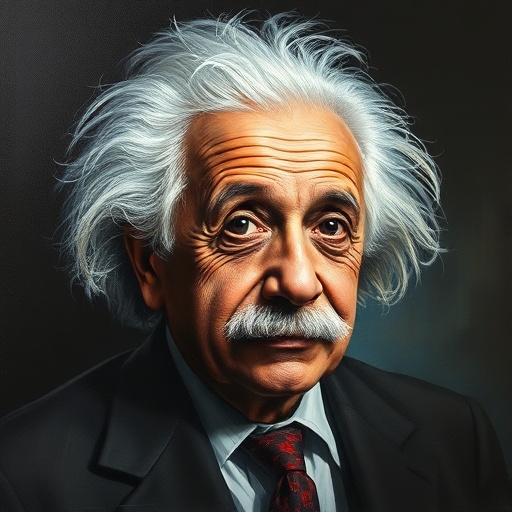
Albert Einstein — "The pursuit of truth and beauty is a sphere of activity in which we are permitte…"
The pursuit of truth and beauty is a sphere of activity in which we are permitted to remain children all our lives.
The pursuit of truth and beauty is a sphere of activity in which we are permitted to remain children all our lives.
Click any product to generate a realistic preview. Up to 3 at a time.
* Initial load can take up to 90 seconds — revising the preview in another color is nearly instant.
"If I were not a physicist, I would probably be a musician. I often think in music. I live my daydreams in music."
"Falling in love is not at all the most stupid thing that people do-but gravitation cannot be held responsible for it."
"The human spirit must prevail over technology."
"The most beautiful thing we can experience is the mysterious. It is the source of all true art and all science. He to whom this emotion is a stranger, who can no longer pause to wonder and stand rapt …"
"I am enough of an artist to draw freely upon my imagination. Imagination is more important than knowledge. Knowledge is limited. Imagination encircles the world."
Found in 1 providers: grok
1 source checked
Curiosity and wonder never have to be abandoned as we grow older. Seeking truth means following evidence wherever it leads without ego or agenda. Pursuing beauty means recognizing elegance and harmony in ideas. Together they represent a kind of play—open-ended, intrinsically motivated exploration that adults are often pressured to trade for practicality, status, or certainty.
Einstein famously described his greatest asset as childlike curiosity. He played violin for joy, conducted thought experiments like a dreaming child, and said imagination mattered more than knowledge. He rejected rote memorization and rigid academic authority throughout his career, insisting physics should feel beautiful—his rejection of quantum mechanics' 'ugliness' being a prime example.
Einstein lived through WWI, WWII, and the dawn of nuclear weapons—an era when science was weaponized on an unprecedented scale. Against that backdrop, championing truth and beauty as ends in themselves was a moral stance: science serving wonder rather than destruction. The post-war period pressured scientists toward military and industrial utility, making his idealism deliberately countercultural.
AI-generated insights based on extensive research and information for context. Factual errors? Email [email protected].
Your cart is empty