Martin Luther — "The saints must be good, downright sinners."
The saints must be good, downright sinners.
The saints must be good, downright sinners.
Click any product to generate a realistic preview. Up to 3 at a time.
* Initial load can take up to 90 seconds — revising the preview in another color is nearly instant.
"I would not give my faith for all the world's goods."
"Sometimes it is necessary to commit some sin out of hatred and contempt for the Devil."
"Fifthly, passport and traveling privileges should be absolutely forbidden to the Jews. For they have no business in the countryside, since they are not farmers or craftsmen or merchants, but only usur…"
"I resist the devil, and often it is with a fart that I chase him away. When he tempts me with silly sins I say, 'Devil, yesterday I broke wind too. Have you written it down on your list?'"
"You are an extraordinary creature, being neither God nor man. Perhaps you are the devil himself."
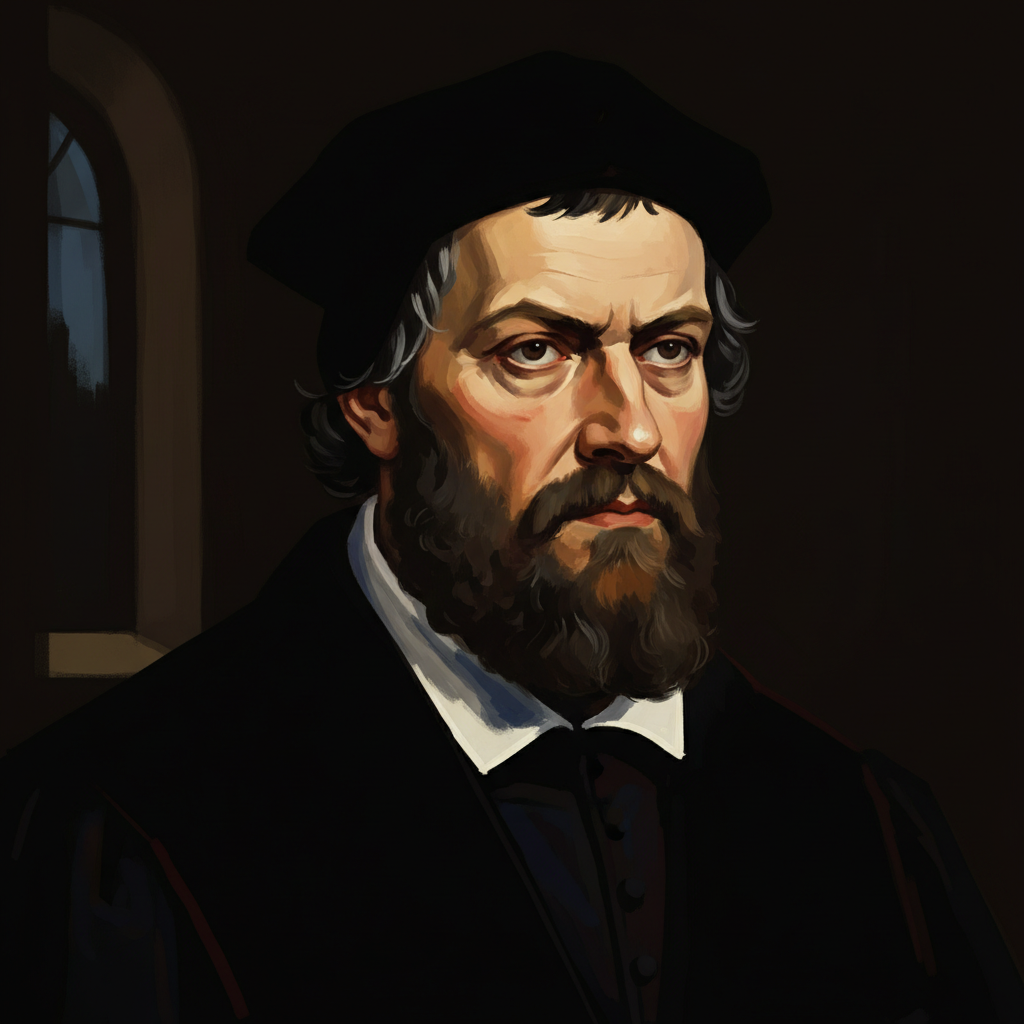
German theologian whose 95 Theses (1517) launched the Protestant Reformation and broke the Catholic Church's monopoly on Western Christianity. Closely associated with Philipp Melanchthon (Lutheran systematizer) and John Calvin (later Reformer who built on Luther's break). For an intellectual contrast, see Pope Leo X, Renaissance pope (1513-1521) — Leo X's indulgence sales triggered Luther's break and Leo excommunicated him in 1521 — Luther's entire Reformation is structured as a direct answer to the indulgence-funded Vatican Leo represented.
Found in 1 providers: gemini
1 source checked
Genuine holiness isn't about pretending to be flawless or hiding mistakes. Real goodness comes from honestly admitting how badly you mess up, not from projecting a polished image. The people who actually grow morally are the ones who face their failures squarely rather than covering them up. Fake piety, by contrast, is worse than obvious wrongdoing because it blocks honest self-examination and the humility needed to actually change.
Luther built his entire theology around this paradox: humans are simultaneously righteous and sinful (simul justus et peccator). A former Augustinian monk tortured by scrupulosity, he rejected monastic works-righteousness after concluding that salvation came through faith alone, not moral performance. His famous advice to Melanchthon, 'sin boldly,' reflects the same conviction that acknowledging sin openly beats the self-deceiving piety he saw corrupting the medieval church.
In early 16th-century Europe, the Catholic Church sold indulgences promising reduced purgatory time, and sainthood was tied to visible works, relics, and pilgrimages. Luther's 1517 Ninety-Five Theses attacked this performance-based holiness, igniting the Reformation. His statement subverted an entire spiritual economy built on appearing righteous. Printing-press pamphlets spread such provocations across German-speaking lands, fracturing Christendom and challenging the notion that clergy or canonized saints possessed superior moral status over ordinary believers.
AI-generated insights based on extensive research and information for context. Factual errors? Email [email protected].
Your cart is empty