Laozi — "The Tao is always at ease. It is still, yet it moves the world."
The Tao is always at ease. It is still, yet it moves the world.
The Tao is always at ease. It is still, yet it moves the world.
Click any product to generate a realistic preview. Up to 3 at a time.
* Initial load can take up to 90 seconds — revising the preview in another color is nearly instant.
"The five colors blind the eye. The five notes deafen the ear. The five tastes dull the palate. Racing and hunting madden the mind. Precious goods keep their owners in fetters."
"To lead people, walk behind them."
"The best of men is like water. Water benefits all things and does not compete with them. It dwells in lowly places that all disdain. This is why it is so near to the Tao."
"The greatest flaw is to desire more."
"When the great Tao is abandoned, there is humanity and righteousness. When wisdom and intelligence appear, there is great hypocrisy."
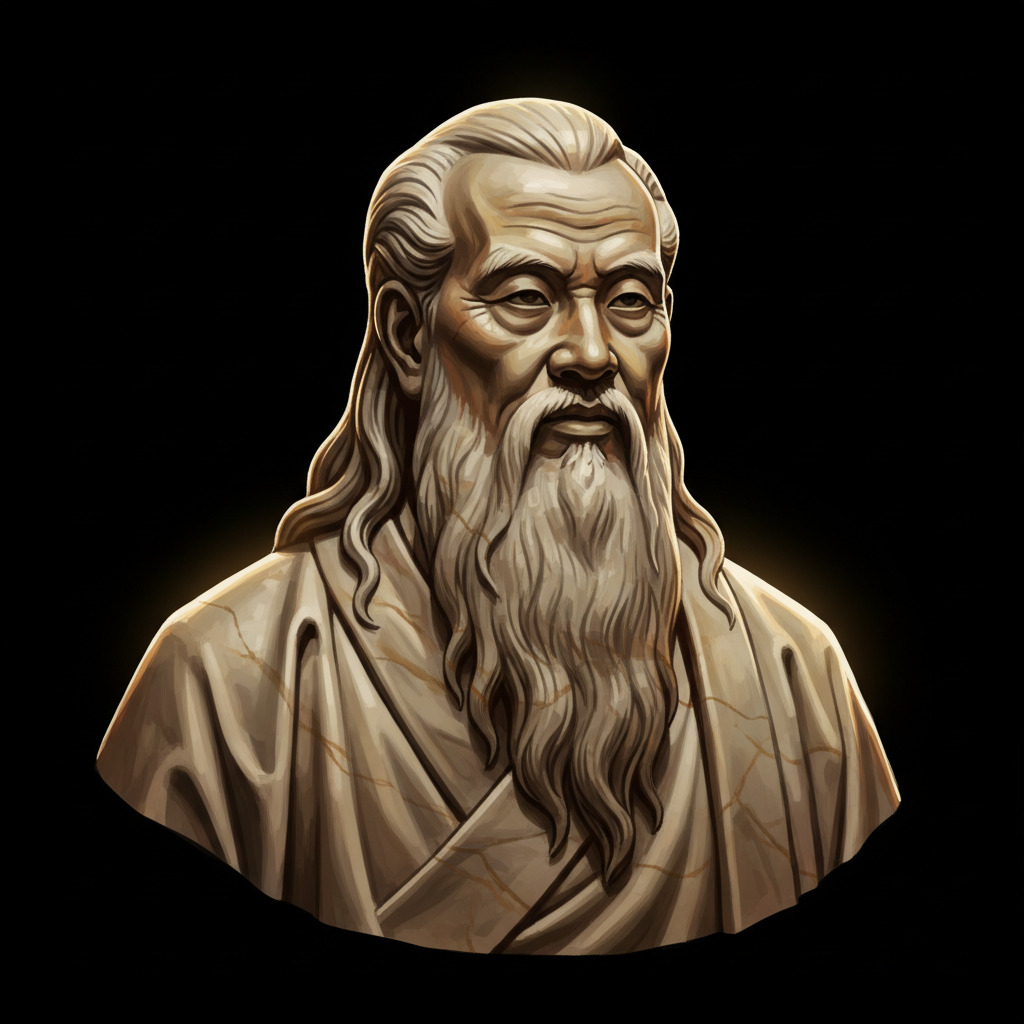
Reputed founder of Taoism and author of the Tao Te Ching, whose wu wei (effortless action) shaped East Asian philosophy. Closely associated with Zhuangzi (later Taoist who extended Laozi's framework). For an intellectual contrast, see Confucius, near-contemporary Chinese sage of social ritual and duty — Confucius systematized social order through ritual and hierarchy; Laozi argued that all such systems were the disease, not the cure — the two founding poles of Chinese moral philosophy.
Found in 1 providers: grok
1 source checked
True power operates quietly and effortlessly. The deepest force shaping reality does not strain, push, or announce itself, yet everything moves because of it. Stillness is not passivity or weakness; it is a composed, unhurried state from which enormous influence flows. The lesson is that agitation and noise are signs of smallness, while calm centeredness is what actually drives lasting change in people, situations, and the wider world.
Laozi, the legendary founder of Taoism, worked as an archivist in the Zhou royal court, a role demanding quiet observation rather than action. Tradition says he grew disillusioned with political striving and rode west into retreat, composing the Tao Te Ching before vanishing. This saying mirrors his preference for wu wei, effortless action, and his conviction that sages influence through restraint, not assertion, embodying the stillness he saw as the deepest expression of the Tao.
Laozi lived during the late Zhou dynasty, an era sliding toward the Warring States period, when rival lords waged constant war and Confucian reformers urged strict ritual and active governance. Amid this noise and ambition, his teaching of stillness, yielding, and non-interference was a radical counter-philosophy. It offered exhausted officials and commoners an alternative to striving, suggesting that harmony with nature's quiet rhythms, not forceful intervention, was the real path to order.
AI-generated insights based on extensive research and information for context. Factual errors? Email [email protected].
Your cart is empty