Pythagoras — "The 'tetractys' is the source of all things."
The 'tetractys' is the source of all things.
The 'tetractys' is the source of all things.
Click any product to generate a realistic preview. Up to 3 at a time.
* Initial load can take up to 90 seconds — revising the preview in another color is nearly instant.
"If you're asked: What is the silence? Respond: It is the first stone of the Wisdom's temple."
"Abstain from flesh."
"The stars in the heavens sing a music if only we had ears to hear."
"A thought is an idea in transit."
"Wisdom thoroughly learned will never be forgotten."
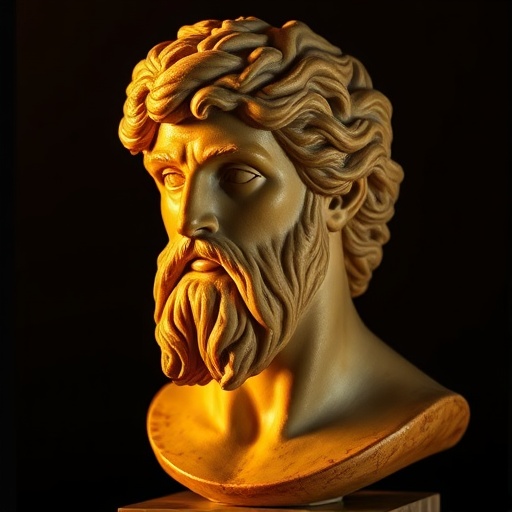
Greek philosopher and mathematician whose school in Croton combined geometry (the Pythagorean theorem), number-mysticism, and a religious-vegetarian way of life. Closely associated with Thales of Miletus (earlier pre-Socratic and the first philosopher). For an intellectual contrast, see Heraclitus, pre-Socratic Greek philosopher of flux — Heraclitus called Pythagoras 'the chief of swindlers' — among the founding insults of the philosophical-rivalry tradition. Their 'all is flux' vs 'all is number' poles still organize the philosophy of mathematics today (Platonist vs anti-realist).
The tetractys, a triangular figure of ten points, was a sacred symbol and represented the organization of the cosmos.
Date: c. 570 – c. 495 BC
ShockingFound in 1 providers: grok
1 source checked
Pythagoras claims that a specific triangular arrangement of ten dots stacked in rows of one, two, three, and four contains the foundational pattern behind everything that exists. The numbers one through four add up to ten and encode points, lines, surfaces, and solids, so this figure supposedly maps how reality is built. In modern terms, he is saying a simple numerical structure underlies all of nature.
Pythagoras founded a religious-philosophical brotherhood that treated numbers as sacred, and the tetractys was their holiest symbol, sworn on in oaths. He is credited with linking musical harmony to whole-number ratios and discovering the famous right-triangle relationship, so grounding 'all things' in a numerical figure matches his conviction that arithmetic and geometry reveal cosmic order rather than just measure it.
In the sixth century BCE, Greek thinkers were shifting from mythological explanations toward rational accounts of nature, with Ionians like Thales proposing water or air as first principles. Pythagoras, working in the Greek colonies of southern Italy, competed in that same search for an underlying substance but chose abstract number instead. Mystery cults, oral secrecy, and Orphic beliefs about soul transmigration were widespread, shaping his blend of mathematics, ritual, and metaphysics.
AI-generated insights based on extensive research and information for context. Factual errors? Email [email protected].
Your cart is empty