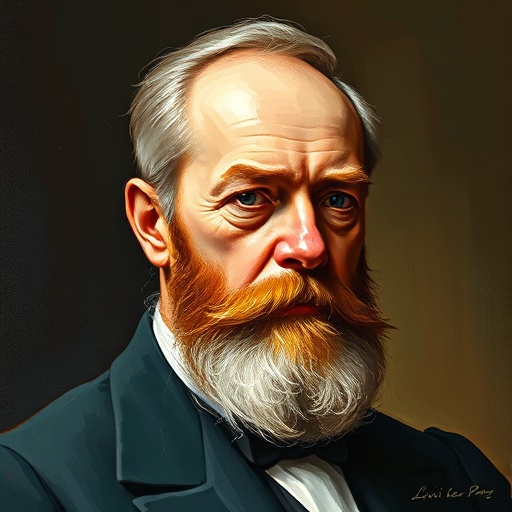
Louis Pasteur — "The true character of a man is revealed in his actions, not in his words."
The true character of a man is revealed in his actions, not in his words.
The true character of a man is revealed in his actions, not in his words.
Click any product to generate a realistic preview. Up to 3 at a time.
* Initial load can take up to 90 seconds — revising the preview in another color is nearly instant.
"I have great hopes that the vaccine against rabies will be a success."
"A bottle of wine contains more philosophy than all the books in the world."
"The world is full of wonders, but they are only visible to the eyes that know how to see them."
"In the fields of observation chance favors only the prepared mind."
"The Greeks understood the mysterious power of the hidden side of things. They bequeathed to us one of the most beautiful words in our language—the word 'enthusiasm'—en theos—a god within."
Found in 1 providers: grok
1 source checked
A person's real nature shows through what they do, not what they say. Anyone can make promises, claim values, or talk about being honest, kind, or hardworking. But behavior under pressure, choices when nobody is watching, and follow-through on commitments are what actually reveal who someone is. Words are cheap and easily faked; consistent action over time is the only honest signal of character worth trusting.
Pasteur built his reputation through rigorous laboratory work rather than theorizing. He faced fierce opposition from physicians who dismissed germ theory verbally, so he answered with demonstrations: the anthrax vaccine trial at Pouilly-le-Fort in 1881 and the rabies vaccination of Joseph Meister in 1885. He risked his reputation on experimental results, not rhetoric. This quote mirrors his lifelong conviction that scientific truth emerges from tested evidence and disciplined practice, never from eloquent argument alone.
Pasteur worked through the mid-to-late 1800s, when European science was transitioning from armchair philosophy to evidence-based experimentation. Medical establishments still clung to miasma theory and dismissed handwashing; academic debates were often won through rhetorical skill and social standing rather than data. Meanwhile, the Industrial Revolution rewarded demonstrable results over theory. Pasteur's insistence on public, repeatable experiments challenged a culture where credentialed authorities spoke with unchallenged weight, making actions-over-words a genuinely radical scientific and social stance.
AI-generated insights based on extensive research and information for context. Factual errors? Email [email protected].
Your cart is empty