Martin Luther — "The Turks are the rod of the wrath of the Lord our God."
The Turks are the rod of the wrath of the Lord our God.
The Turks are the rod of the wrath of the Lord our God.
Click any product to generate a realistic preview. Up to 3 at a time.
* Initial load can take up to 90 seconds — revising the preview in another color is nearly instant.
"The church is not a pen-house but a mouth-house."
"A simple layman armed with Scripture is to be believed above a pope or a cardinal without it."
"Melanchthon is a miserable little worm of a man."
"First, to set fire to their synagogues or schools and to bury and cover with dirt whatever will not burn, so that no man will ever again see a stone or cinder of them. This is to be done in honor of o…"
"The hair is the finest ornament a woman has. If she be a virgin, let her wear it loose; if married, let her wear it up."
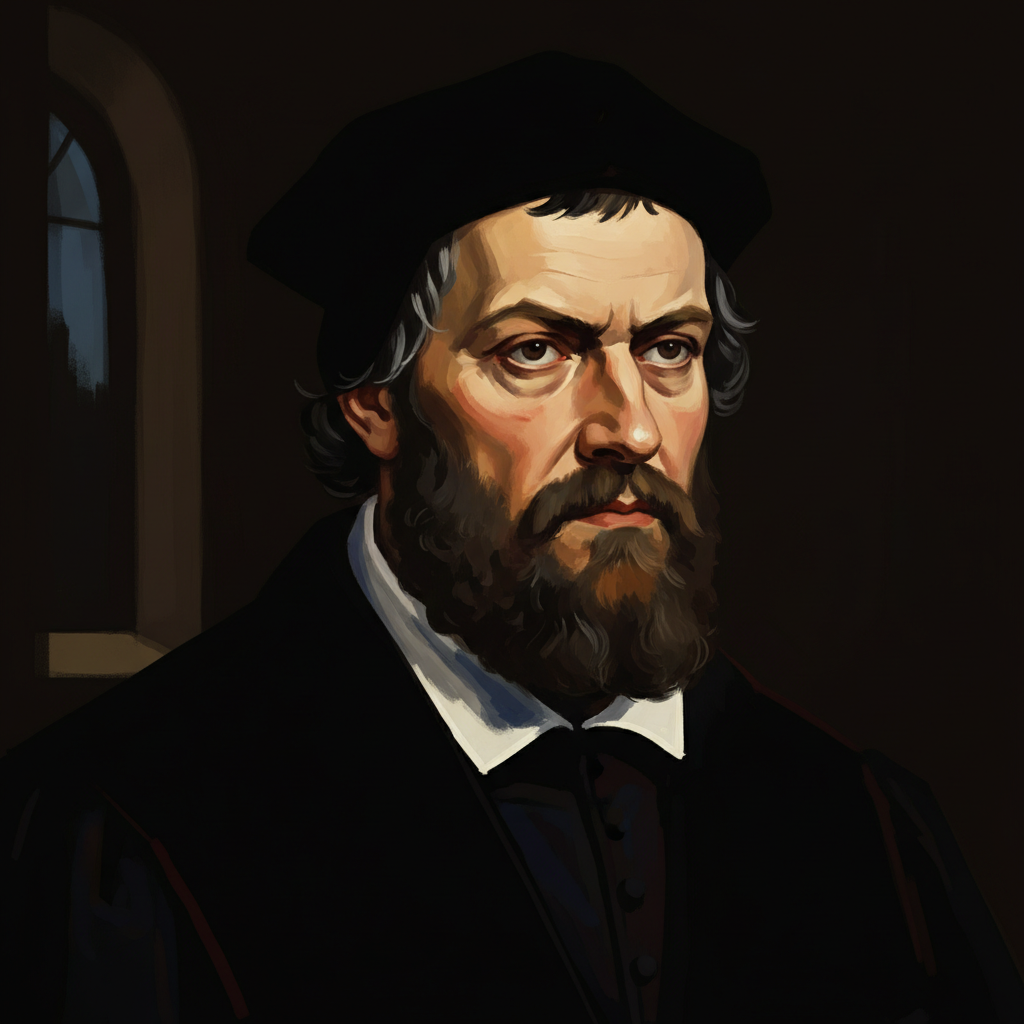
German theologian whose 95 Theses (1517) launched the Protestant Reformation and broke the Catholic Church's monopoly on Western Christianity. Closely associated with Philipp Melanchthon (Lutheran systematizer) and John Calvin (later Reformer who built on Luther's break). For an intellectual contrast, see Pope Leo X, Renaissance pope (1513-1521) — Leo X's indulgence sales triggered Luther's break and Leo excommunicated him in 1521 — Luther's entire Reformation is structured as a direct answer to the indulgence-funded Vatican Leo represented.
Found in 1 providers: deepseek
1 source checked
Luther is claiming that the Ottoman Turks, who were invading Christian Europe, were not just a military threat but a divine instrument. God was using them as a whip to punish a sinful, corrupt Christendom. The suffering inflicted by Turkish armies should therefore drive Europeans to repent and reform their lives rather than simply resist militarily, because the real enemy was their own unfaithfulness, not the invaders themselves.
Luther spent his career arguing that the institutional Church had grown corrupt and needed radical repentance, so interpreting calamity as divine discipline fit his theology perfectly. He wrote extensively on the Turkish threat in works like On War Against the Turk (1529), insisting Christians fight them spiritually through prayer and reform first, militarily second. This framing extended his Reformation critique: external judgment mirrored internal rot inside Christendom itself.
Luther wrote as Suleiman the Magnificent's armies pushed into Europe, besieging Vienna in 1529 and terrifying the Holy Roman Empire. Simultaneously the Reformation was fracturing Western Christianity, and Catholics blamed Protestants for weakening the anti-Ottoman front. Interpreting the Turks as God's rod was a common early modern trope drawn from the Hebrew prophets, letting theologians explain military catastrophe as providential correction rather than divine abandonment of Christian Europe.
AI-generated insights based on extensive research and information for context. Factual errors? Email [email protected].
Your cart is empty