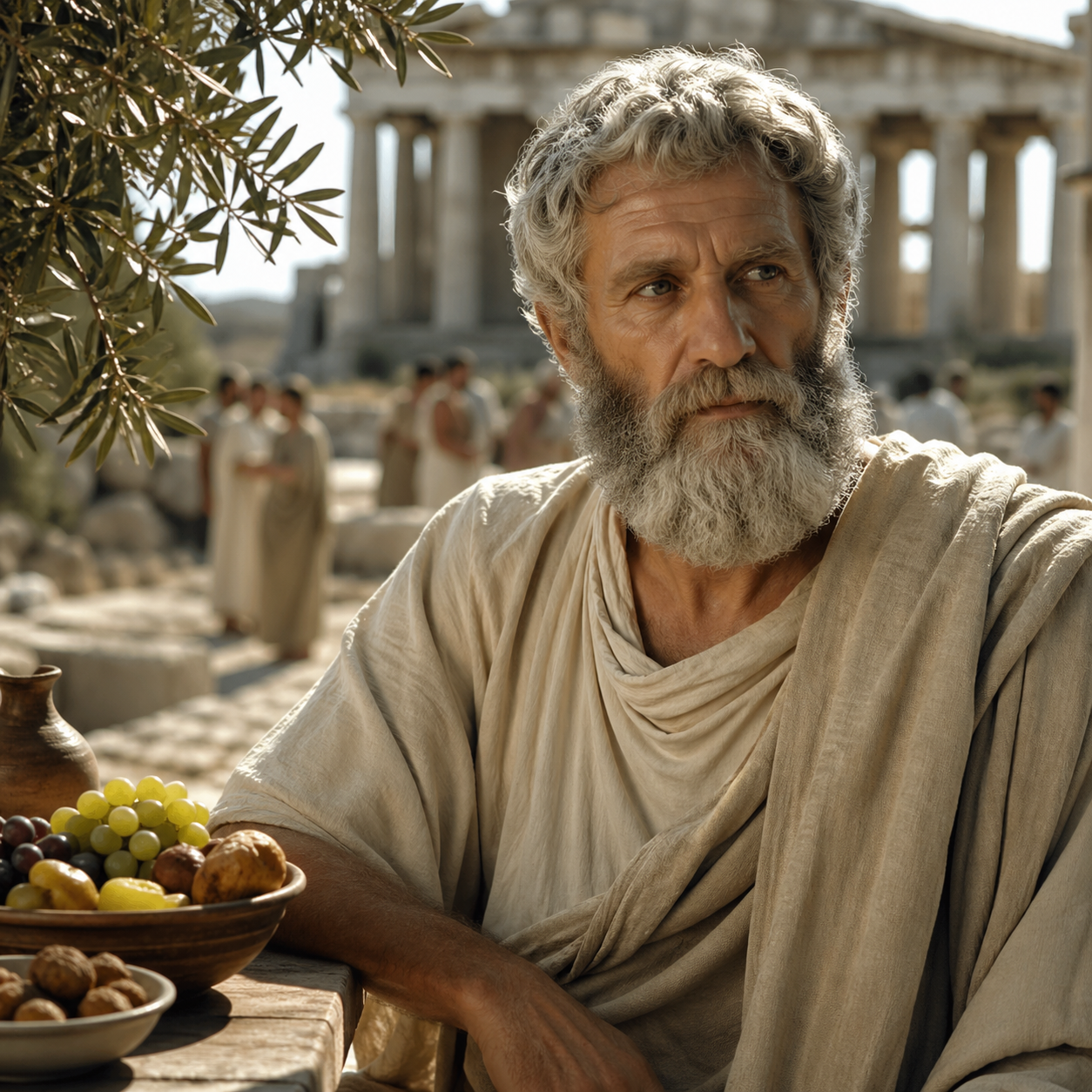
Epicurus — "The wealth required by nature is limited and is easy to procure; but the wealth …"
The wealth required by nature is limited and is easy to procure; but the wealth required by vain ideals extends to infinity.
The wealth required by nature is limited and is easy to procure; but the wealth required by vain ideals extends to infinity.
Click any product to generate a realistic preview. Up to 3 at a time.
* Initial load can take up to 90 seconds — revising the preview in another color is nearly instant.
"The wise man laughs at fate, since he knows that some things happen by necessity, others by chance, and others through his own agency."
"The noble soul occupies itself with wisdom and friendship."
"The limit of quantity in pleasures is the removal of all that is painful. Wherever and whenever this is present, pleasure is no longer increased, but has reached its stationary maximum."
"He who has peace of mind has no need of wealth."
"One must not pretend to philosophize, but really philosophize; for what we need is not the semblance of health, but real health."
Greek philosopher who founded the Garden school in Athens, whose materialist atomism and pleasure-as-tranquility ethics shaped Hellenistic thought. Closely associated with Lucretius (Roman successor whose De Rerum Natura preserved Epicurean physics). For an intellectual contrast, see the Stoics (Zeno, Epictetus, Marcus Aurelius), the Hellenistic ethical school of discipline-of-acceptance — Stoic 'live according to nature' and Epicurean 'pleasure and absence of pain' framed every ancient ethical decision — every Roman of Cicero's era was implicitly choosing one path or the other. The Stoic-Epicurean rivalry was the central philosophical debate of the Hellenistic and Roman world for 400 years.
The standard scholarly entry points to Epicurus's work: A.A. Long (UC Berkeley, Classics) — Hellenistic Philosophy: Stoics, Epicureans, Sceptics (1974); Tim O'Keefe (Georgia State University, ancient philosophy) — Epicureanism (2010); David Sedley (Cambridge, Classics) — Lucretius and the Transformation of Greek Wisdom (1998). These are the works graduate seminars cite when teaching Epicurus.
Found in 1 providers: deepseek
1 source checked
Your cart is empty