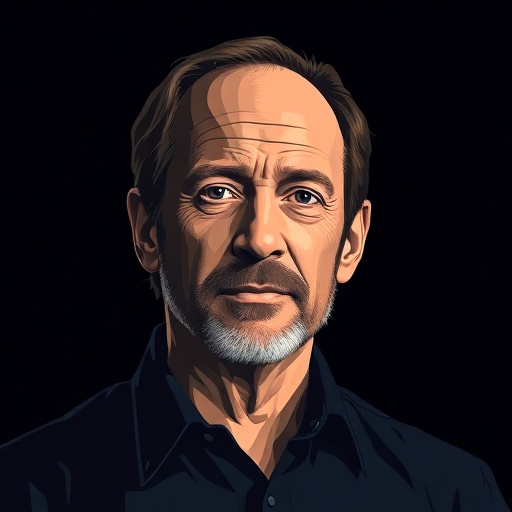
Tim Berners-Lee — "The web is not a luxury, it is a necessity."
The web is not a luxury, it is a necessity.
The web is not a luxury, it is a necessity.
Click any product to generate a realistic preview. Up to 3 at a time.
* Initial load can take up to 90 seconds — revising the preview in another color is nearly instant.
"The internet should be free from censorship."
"The web is a collaborative project, and we all have a role to play in its future."
"I didn’t expect the web to become so addictive."
"The web was designed to connect people, not to manipulate them."
"The web was supposed to be decentralized, but it’s not anymore."
British computer scientist who invented the World Wide Web at CERN in 1989 and founded the W3C, championing open web standards. Closely associated with Vint Cerf (TCP/IP co-creator and 'father of the internet') and Marc Andreessen (Mosaic browser creator and Netscape co-founder). For an intellectual contrast, see Mark Zuckerberg, Facebook (Meta) founder — Zuckerberg's walled-garden Facebook is the canonical contemporary opposite of Berners-Lee's open-web vision; Berners-Lee's Solid project and 'recapture the web' essays are explicitly written as a rebuttal to the platform-monopoly model Facebook pioneered.
Found in 1 providers: deepseek
1 source checked
Internet access is not optional or a nice-to-have amenity reserved for the privileged — it is a fundamental requirement for full participation in modern society. Like electricity or running water, being disconnected means being shut out of education, employment, healthcare, civic life, and economic opportunity. Those without access are structurally disadvantaged in ways that compound over time.
Berners-Lee invented the Web in 1989 and deliberately made it royalty-free, refusing to patent it. He has spent decades advocating through the World Wide Web Foundation for universal access, fighting digital inequality and corporate enclosure. This quote embodies his foundational conviction that the Web must serve all humanity equally — not just wealthy nations or connected elites.
Berners-Lee has pushed this message most forcefully since the mid-2000s as smartphone penetration revealed a massive global digital divide. Roughly half the world lacked internet access while the other half reorganized government services, banking, job markets, and education online — making disconnection increasingly synonymous with systemic exclusion from the modern economy and democratic participation.
AI-generated insights based on extensive research and information for context. Factual errors? Email [email protected].
Your cart is empty