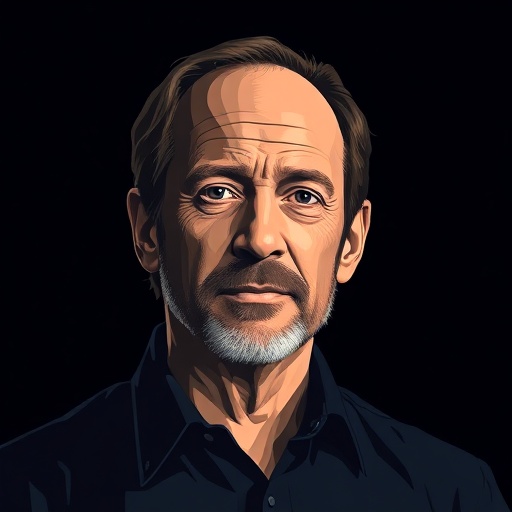
Tim Berners-Lee — "The web should be able to link to anything. You should be able to link to a pict…"
The web should be able to link to anything. You should be able to link to a picture, a video, a sound, a document. Anything.
The web should be able to link to anything. You should be able to link to a picture, a video, a sound, a document. Anything.
Click any product to generate a realistic preview. Up to 3 at a time.
* Initial load can take up to 90 seconds — revising the preview in another color is nearly instant.
"I'm not a fan of the term 'information superhighway.' It implies a one-way flow of information, which is not what the web is about."
"I believe that the web can help to create a more just and equitable world."
"The web is a platform for humanity, and we need to fight for it."
"The web is a tool for democracy, and we need to protect it from those who would undermine it."
"The biggest challenge for the web is to keep it neutral and fair."
British computer scientist who invented the World Wide Web at CERN in 1989 and founded the W3C, championing open web standards. Closely associated with Vint Cerf (TCP/IP co-creator and 'father of the internet') and Marc Andreessen (Mosaic browser creator and Netscape co-founder). For an intellectual contrast, see Mark Zuckerberg, Facebook (Meta) founder — Zuckerberg's walled-garden Facebook is the canonical contemporary opposite of Berners-Lee's open-web vision; Berners-Lee's Solid project and 'recapture the web' essays are explicitly written as a rebuttal to the platform-monopoly model Facebook pioneered.
Found in 1 providers: grok
1 source checked
Information online should connect freely across every format, not just text. Whether it's an image, video, audio clip, or written document, each piece should be reachable through a simple link. The point is universal connection: no medium gets locked away or treated as second-class. Anything published on the web should be addressable, shareable, and reachable from anywhere else, making knowledge and media flow seamlessly between sources without artificial walls or format barriers.
Berners-Lee built the web in 1989 at CERN around exactly this principle: the URL, which gave every resource a universal address. He fought for an open, royalty-free standard and later founded the W3C and the Solid project to keep the web decentralized. His insistence that links should reach any media type, not just hypertext documents, shaped HTML's embedding of images, audio, and video, and reflects his lifelong defense of openness against walled gardens.
When Berners-Lee proposed the web, online systems were fragmented: Gopher, FTP, Usenet, and proprietary networks like AOL and CompuServe each siloed their content. Multimedia was rare, slow, and locked in incompatible formats. As bandwidth grew through the 1990s and 2000s, platforms like YouTube, Flickr, and later social networks began re-siloing media behind logins and apps. His statement pushed back on that drift, defending the original vision of a single, universally linkable information space.
AI-generated insights based on extensive research and information for context. Factual errors? Email [email protected].
Your cart is empty