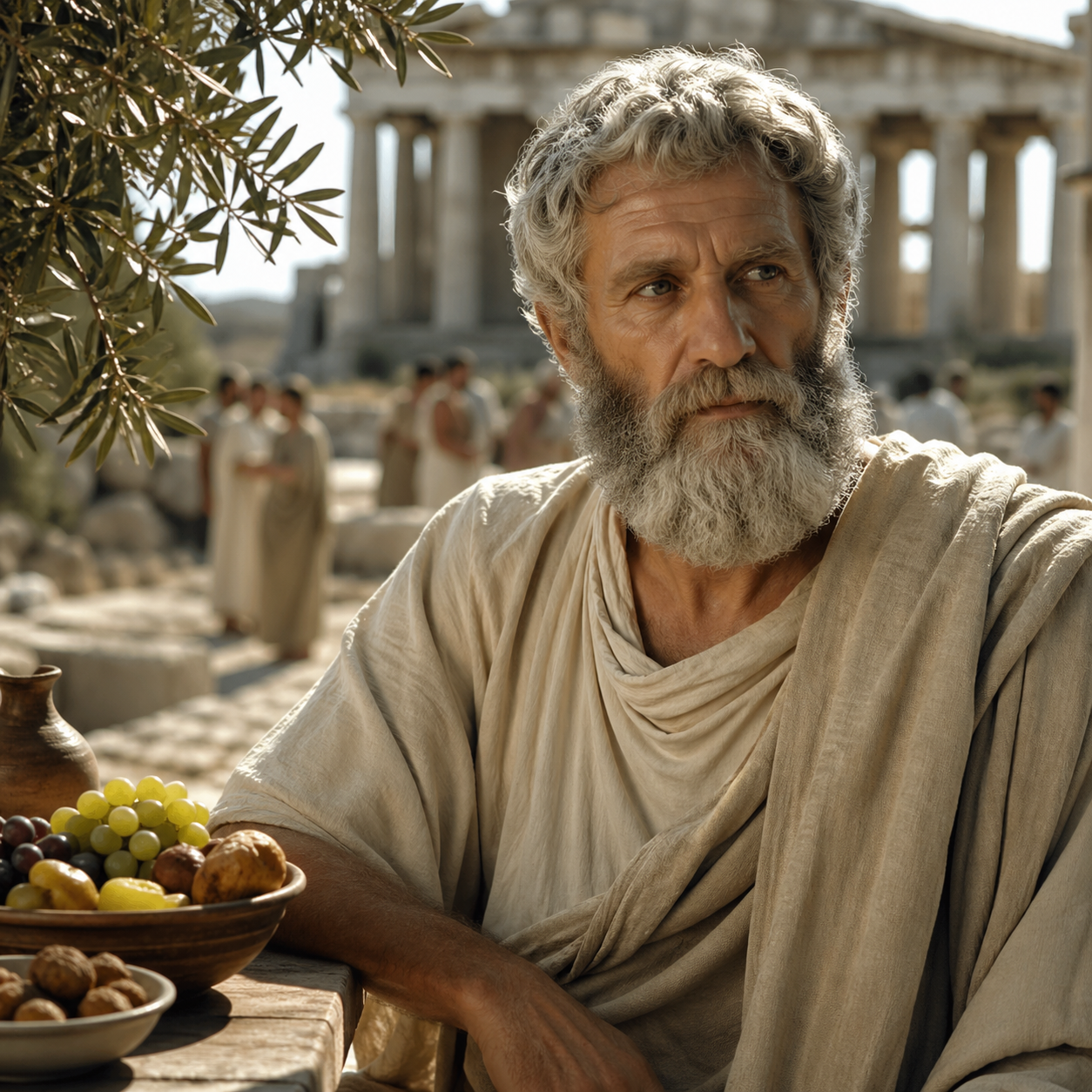
Epicurus — "The wise man is happy even on the rack."
The wise man is happy even on the rack.
The wise man is happy even on the rack.
Click any product to generate a realistic preview. Up to 3 at a time.
* Initial load can take up to 90 seconds — revising the preview in another color is nearly instant.
"We should envy no one, for good men do not deserve envy, and as for the bad, the more they prosper, the more they harm themselves."
"No pleasure is a bad thing in itself; but the means by which certain pleasures are gained bring troubles many times greater than the pleasures."
"We should not believe in fate, but in our own free will."
"The greatest fruit of self-sufficiency is freedom."
"We should heal our misfortunes by the recollection of our past joys and by the acknowledgment that it is impossible to undo what has been done."
Greek philosopher who founded the Garden school in Athens, whose materialist atomism and pleasure-as-tranquility ethics shaped Hellenistic thought. Closely associated with Lucretius (Roman successor whose De Rerum Natura preserved Epicurean physics). For an intellectual contrast, see the Stoics (Zeno, Epictetus, Marcus Aurelius), the Hellenistic ethical school of discipline-of-acceptance — Stoic 'live according to nature' and Epicurean 'pleasure and absence of pain' framed every ancient ethical decision — every Roman of Cicero's era was implicitly choosing one path or the other. The Stoic-Epicurean rivalry was the central philosophical debate of the Hellenistic and Roman world for 400 years.
The standard scholarly entry points to Epicurus's work: A.A. Long (UC Berkeley, Classics) — Hellenistic Philosophy: Stoics, Epicureans, Sceptics (1974); Tim O'Keefe (Georgia State University, ancient philosophy) — Epicureanism (2010); David Sedley (Cambridge, Classics) — Lucretius and the Transformation of Greek Wisdom (1998). These are the works graduate seminars cite when teaching Epicurus.
Your cart is empty