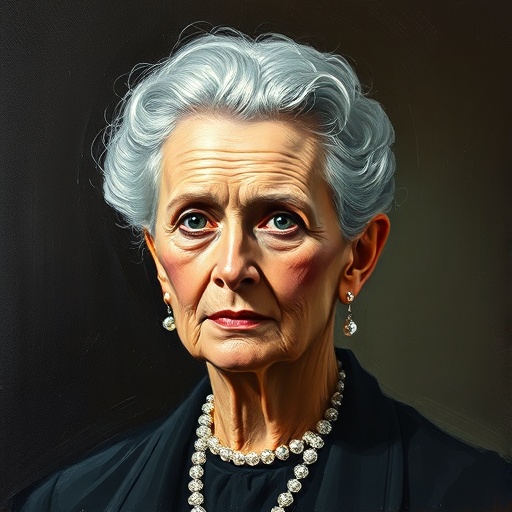
Marie Curie — "There are cruel and unjust people, but they are not the majority."
There are cruel and unjust people, but they are not the majority.
There are cruel and unjust people, but they are not the majority.
Click any product to generate a realistic preview. Up to 3 at a time.
* Initial load can take up to 90 seconds — revising the preview in another color is nearly instant.
"I was very much absorbed in the study of physics and chemistry."
"We must not forget that when radium was discovered no one knew that it would prove useful in hospitals. The work was one of pure science. And this is a proof that scientific work must not be considere…"
"I am a dreamer. I am a scientist. I am a woman. I am a human being. I am all of these things. And I am proud of it."
"All my life through, the new sights of Nature made me rejoice like a child."
"I have always believed that science has the power to change the world for the better. I have always believed that science has the power to improve the lives of all people. And I am proud of it."
Found in 1 providers: grok
1 source checked
The quote acknowledges that cruelty and injustice exist in the world, but insists these traits belong to a minority of people. Most humans, the speaker claims, are decent rather than malicious. It is a sober, measured form of optimism: not denying evil, but refusing to let it define humanity. The reader is urged to keep perspective and not assume the worst of people despite painful encounters with those who behave badly.
Curie faced relentless hostility: French press smears during the Langevin affair, xenophobic attacks on her Polish origins, sexism blocking her from the Académie des Sciences, and scientific rivals dismissing her work. Yet she kept collaborators, mentored students, and trusted colleagues like Rutherford and Einstein. Having witnessed both Nobel acclaim and public cruelty, she drew this balanced conclusion from lived experience, refusing bitterness while acknowledging real injustice she personally endured.
Curie worked from the 1890s through the 1930s, an era of rising nationalism, antisemitism, and suspicion of foreign-born and female scientists across Europe. World War I exposed mass atrocities, while tabloid journalism amplified scandal. Yet the same period saw international scientific cooperation, the Solvay Conferences, and her own radium institutes in Paris and Warsaw. This tension between public cruelty and genuine human solidarity among scientists shaped the measured humanism of her reflection.
AI-generated insights based on extensive research and information for context. Factual errors? Email [email protected].
Your cart is empty