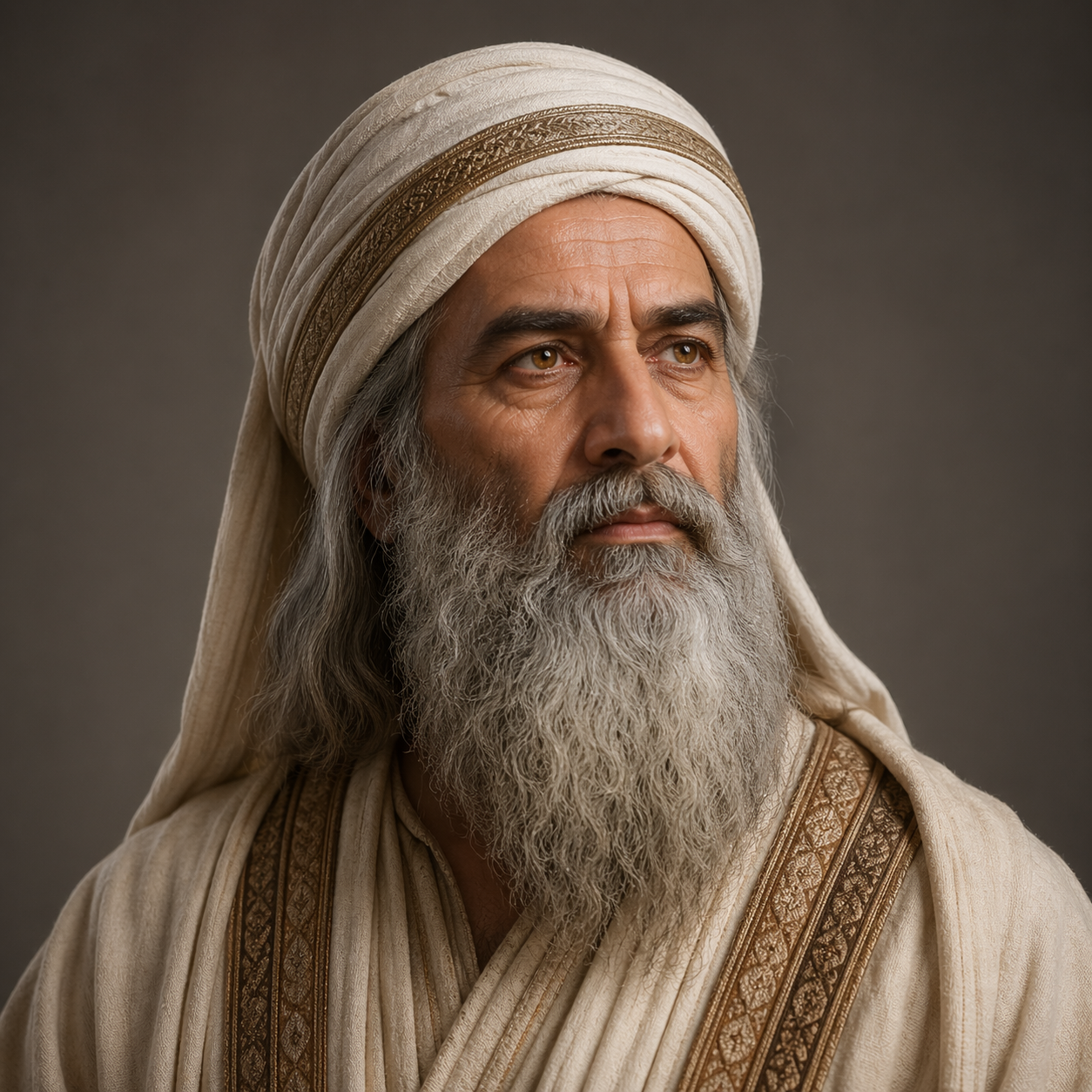
Zoroaster — "Therefore, let us all be of one mind, and let us strive for the good, and let us…"
Therefore, let us all be of one mind, and let us strive for the good, and let us reject the evil.
Therefore, let us all be of one mind, and let us strive for the good, and let us reject the evil.
Click any product to generate a realistic preview. Up to 3 at a time.
* Initial load can take up to 90 seconds — revising the preview in another color is nearly instant.
"One need not scale the heights of the heavens, nor travel along the highways of the world to find Ahura Mazda. With purity of mind and holiness of heart one can find Him in one's own heart."
"The path of truth is the only path to lasting happiness."
"The Lie-demon shall be smitten, and the Good Mind shall triumph."
"Always meet petulance with gentleness and perverseness with kindness."
"A knife of the keenest steel requires the whetstone, and the wisest man needs advice."
Iranian prophet who founded Zoroastrianism, the first major religion of cosmic dualism between good (Ahura Mazda) and evil (Angra Mainyu). Closely associated with The Buddha (near-contemporary Eastern moral-cosmological revolutionary). For an intellectual contrast, see Friedrich Nietzsche, German philosopher of 'beyond good and evil' — Nietzsche appropriated Zarathustra's name for Thus Spoke Zarathustra (1883) precisely to invert the original's moral cosmology — the historical Zoroaster founded the good-versus-evil framework Nietzsche's character announces the end of.
Found in 1 providers: gemini
1 source checked
The quote calls for unity of purpose among people, urging everyone to actively pursue what is good and deliberately turn away from what is harmful or wrong. It frames moral life as a shared, collective endeavor rather than a private matter, asking each person to align their intentions with others and to make a clear, ongoing choice between right and wrong in daily conduct.
Zoroaster founded a religion built on the stark moral choice between Asha (truth, order, good) and Druj (falsehood, chaos, evil). As a prophet-reformer, he taught that every individual must freely choose the good and join a community of like-minded believers. The call for 'one mind' mirrors his emphasis on good thoughts, good words, and good deeds unifying followers in cosmic struggle.
Zoroaster lived in ancient Persia, likely between 1500 and 1000 BCE, amid polytheistic tribal societies practicing ritual sacrifice and warrior raiding. He preached against the violent, amoral cults of his time and introduced a revolutionary ethical dualism and monotheistic leaning. His call for unified moral striving challenged fragmented tribal loyalties and laid groundwork influencing later Judaism, Christianity, and Islam's ideas of heaven, hell, and cosmic good-versus-evil.
AI-generated insights based on extensive research and information for context. Factual errors? Email [email protected].
Your cart is empty