Pope Urban II — "Those who have made a vow to go to Jerusalem, let them fulfill it as soon as pos…"
Those who have made a vow to go to Jerusalem, let them fulfill it as soon as possible.
Those who have made a vow to go to Jerusalem, let them fulfill it as soon as possible.
Click any product to generate a realistic preview. Up to 3 at a time.
* Initial load can take up to 90 seconds — revising the preview in another color is nearly instant.
"Go, therefore, with confidence to the battle of the Lord, knowing that He is with you."
"It is Christ who commands it."
"We desire that you, with all the faithful, should hasten to the aid of the Christians, and strive to deliver them from the hands of the pagans."
"We desire that you should know that the Lord is with you."
"What are you doing, sluggish race, if not to fight for Christ?"
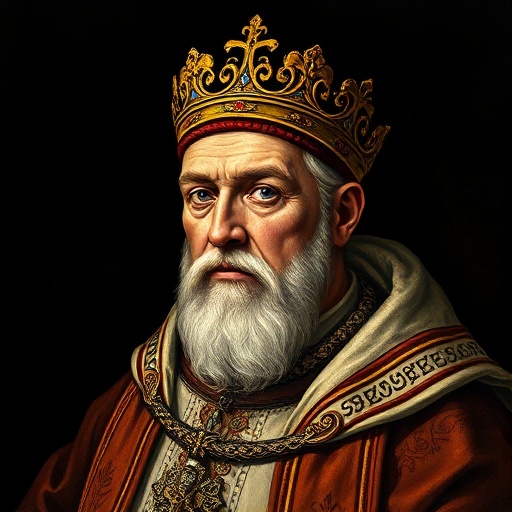
Pope (1088-1099) whose Council of Clermont speech (November 1095) launched the First Crusade — the founding event of nine centuries of Christian-Muslim military conflict. Closely associated with Pope Gregory VII (his predecessor on papal-imperial reform). For an intellectual contrast, see Saladin, Kurdish-Muslim Sultan of Egypt and Syria (1138-1193) — Saladin recaptured Jerusalem in 1187, undoing the First Crusade Urban II launched 92 years earlier. Saladin's chivalrous treatment of Christian prisoners became the canonical Muslim counter-image to Crusader brutality. The cleanest before/after pairing of the Crusades' moral arc.
Found in 1 providers: grok
1 source checked
Anyone who has committed themselves through a religious oath to make the pilgrimage and military expedition to Jerusalem must act on that commitment without delay. A vow is a sacred, binding promise, and hesitation or indefinite postponement dishonors both the pledge and the holy cause it serves. Urgency matters—good intentions mean nothing without decisive follow-through.
Urban II made the liberation of Jerusalem the defining mission of his papacy. He preached the First Crusade at Clermont in 1095, framing it as a penitential act that could earn remission of sins. As a reformist pope deeply invested in Church authority, he understood vows as spiritually binding contracts—their fulfillment was both a moral obligation and a demonstration of faith in action.
In 1095, the Seljuk Turks controlled Jerusalem and had reportedly disrupted Christian pilgrimage routes. Byzantine Emperor Alexios I sought Western military aid. Feudal Europe's warrior nobility needed religious purpose for their violence. Crusade vows became an entirely new legal-spiritual category—sworn before God, enforceable by the Church, promising eternal reward. Unfulfilled vows carried genuine fear of divine punishment in medieval Christendom.
AI-generated insights based on extensive research and information for context. Factual errors? Email [email protected].
Your cart is empty