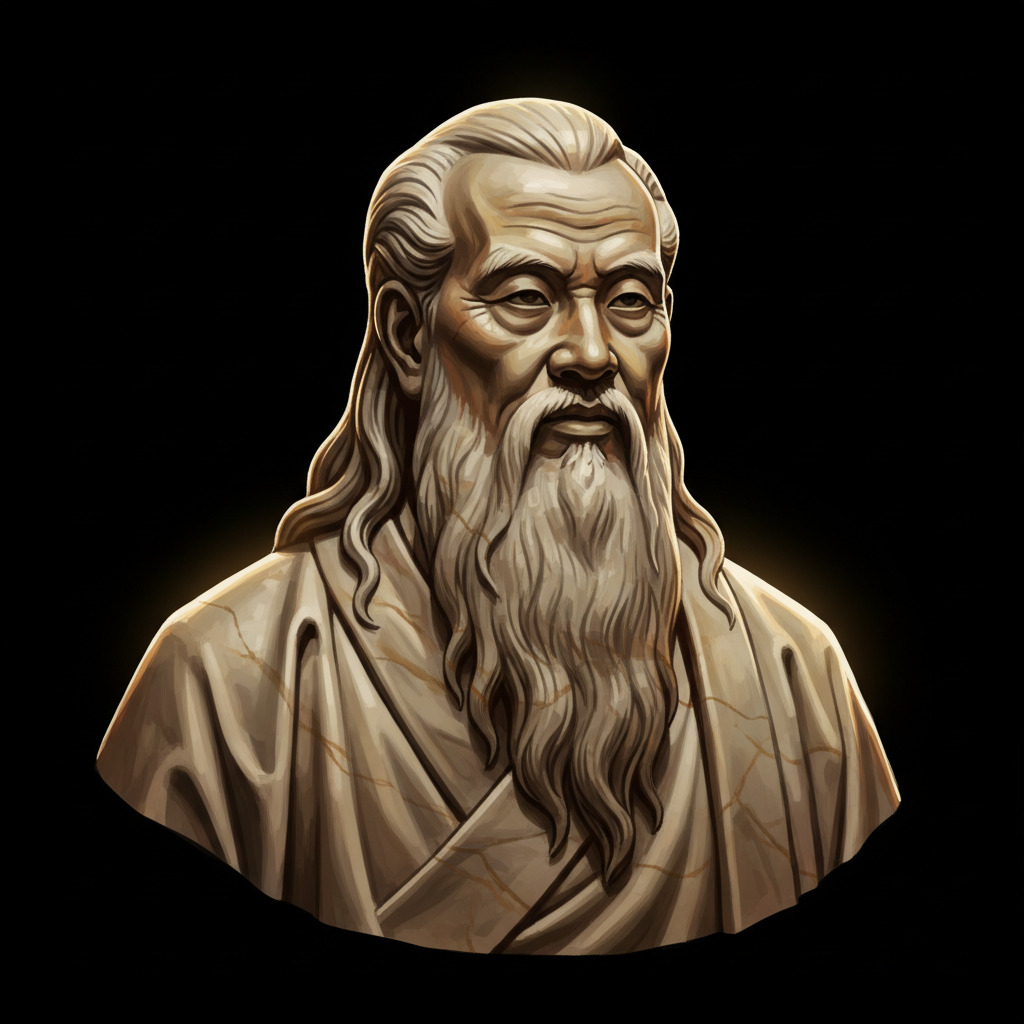
Laozi — "Truthful words are not always beautiful; beautiful words are not always truthful…"
Truthful words are not always beautiful; beautiful words are not always truthful.
Truthful words are not always beautiful; beautiful words are not always truthful.
Click any product to generate a realistic preview. Up to 3 at a time.
* Initial load can take up to 90 seconds — revising the preview in another color is nearly instant.
"When the best student hears the Tao, he practices it diligently. When the average student hears the Tao, he is half-hearted. When the worst student hears the Tao, he laughs out loud. If he did not lau…"
"All things in the world come from being. And being comes from non-being."
"The universe is a sacred vase. It should not be tampered with."
"The sage puts his person last, and it comes first. He treats his person as an outsider, and it is preserved."
"Governing a large country is like cooking a small fish. Too much handling will spoil it."
Reputed founder of Taoism and author of the Tao Te Ching, whose wu wei (effortless action) shaped East Asian philosophy. Closely associated with Zhuangzi (later Taoist who extended Laozi's framework). For an intellectual contrast, see Confucius, near-contemporary Chinese sage of social ritual and duty — Confucius systematized social order through ritual and hierarchy; Laozi argued that all such systems were the disease, not the cure — the two founding poles of Chinese moral philosophy.
Found in 1 providers: gemini
1 source checked
Honest statements often sound blunt, harsh, or unpolished, while smooth, elegant, flattering speech frequently conceals deception or empty content. A speaker who polishes every phrase may be prioritizing persuasion over accuracy. Listeners should weigh substance above style, trusting plain talk that may sting over pleasing rhetoric that goes down easily. Beauty in language and truth in content are independent qualities, and mistaking one for the other leads to being misled.
Laozi, the semi-legendary founder of Taoism and reputed author of the Tao Te Ching, valued simplicity, naturalness, and wu wei over ornamentation and clever argument. Traditions describe him as an archivist in the Zhou court who grew disillusioned with political showmanship and withdrew westward. His teachings consistently distrust rhetorical polish, elaborate ritual, and performative virtue, preferring quiet authenticity. This saying, the opening of chapter 81, distills that lifelong preference for unadorned honesty over seductive eloquence.
Laozi is traditionally placed in the 6th century BCE, during the late Spring and Autumn period as the Zhou dynasty fractured. Rival states competed through diplomacy, treaties, and itinerant persuaders whose livelihoods depended on polished speech. Confucians emphasized refined language and ritual propriety, while the later Warring States era elevated professional rhetoricians. Against this backdrop of courtly flattery, shifting alliances, and weaponized eloquence, Laozi's warning against beautiful words was a pointed critique of the age's political culture.
AI-generated insights based on extensive research and information for context. Factual errors? Email [email protected].
Your cart is empty