Laozi — "The sage does not hoard. The more he helps others, the more he benefits himself."
The sage does not hoard. The more he helps others, the more he benefits himself.
The sage does not hoard. The more he helps others, the more he benefits himself.
Click any product to generate a realistic preview. Up to 3 at a time.
* Initial load can take up to 90 seconds — revising the preview in another color is nearly instant.
"The Sage manages affairs without doing anything, and spreads doctrines without speaking."
"To yield is to be preserved whole. To be bent is to be straightened. To be empty is to be filled. To be worn out is to be renewed. To have little is to gain. To have plenty is to be perplexed."
"Abandon sageliness and discard wisdom, and the people will benefit a hundredfold. Abandon benevolence and discard righteousness, and the people will return to filial piety and paternal love. Abandon s…"
"Use justice to rule a country. Use surprise to wage war. Use non-action to govern the world."
"Those who know do not talk. Those who talk do not know."
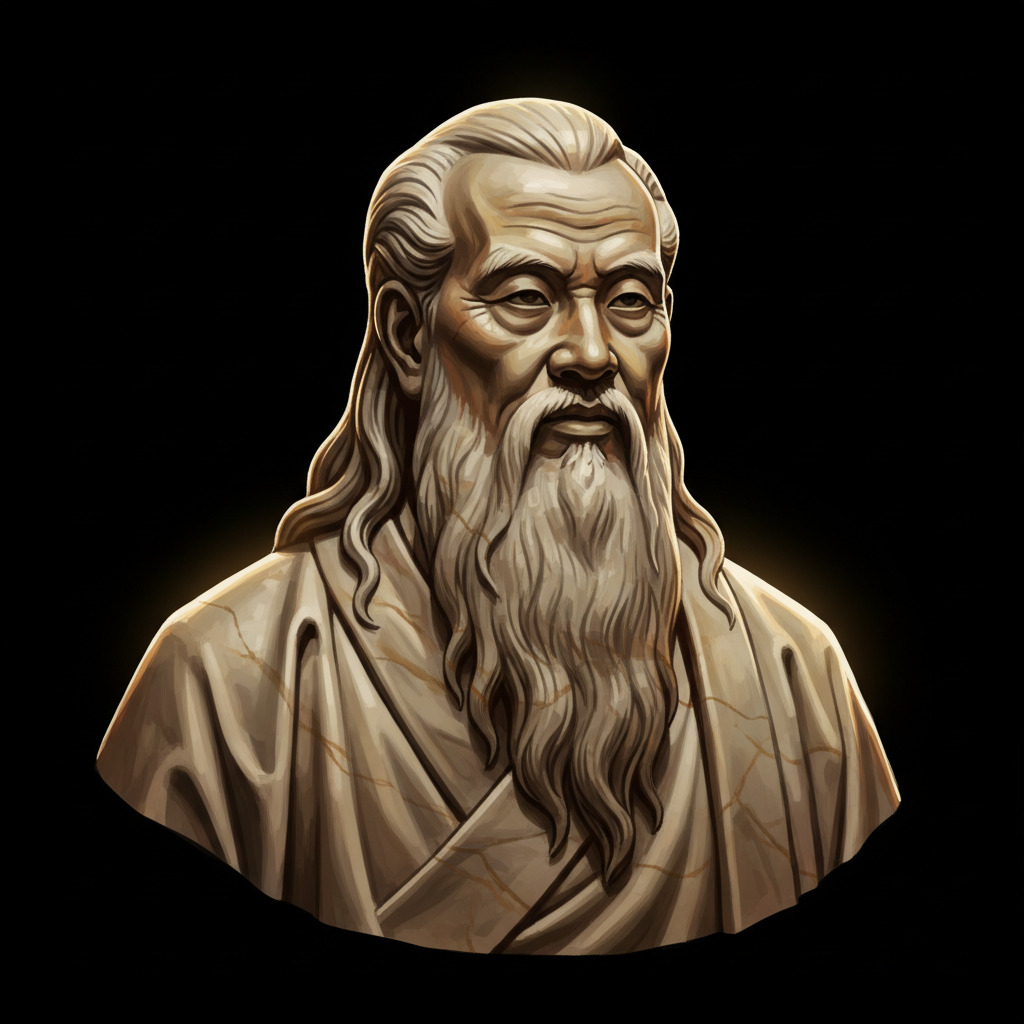
Reputed founder of Taoism and author of the Tao Te Ching, whose wu wei (effortless action) shaped East Asian philosophy. Closely associated with Zhuangzi (later Taoist who extended Laozi's framework). For an intellectual contrast, see Confucius, near-contemporary Chinese sage of social ritual and duty — Confucius systematized social order through ritual and hierarchy; Laozi argued that all such systems were the disease, not the cure — the two founding poles of Chinese moral philosophy.
Found in 1 providers: deepseek
1 source checked
Giving and helping others is not a loss but a gain. A wise person doesn't cling to possessions, status, or knowledge by stockpiling them. Instead, by freely sharing resources, time, and wisdom, they actually grow richer in meaning, relationships, and influence. Generosity creates a cycle where what you pour out comes back multiplied, while hoarding leaves you isolated and spiritually poor despite outward abundance.
Laozi, the reputed founder of Taoism and author of the Tao Te Ching, served as an archivist in the Zhou royal court before withdrawing from public life. He rejected ambition, accumulation, and rigid Confucian hierarchy, teaching wu wei (effortless action) and humility. This saying reflects his core belief that the sage empties himself to be filled, mirroring water, which nourishes all things without competing or clinging to what it touches.
Laozi lived during the late Zhou dynasty, an era of political fragmentation, warring feudal states, and social upheaval preceding the Warring States period. Rulers hoarded wealth, land, and armies while peasants suffered. Competing philosophical schools emerged seeking solutions: Confucians emphasized ritual and duty, Legalists demanded harsh control. Against this backdrop of grasping elites and moral collapse, Laozi's counterintuitive message about release and generosity offered a radical spiritual alternative rooted in harmony with the Tao.
AI-generated insights based on extensive research and information for context. Factual errors? Email [email protected].
Your cart is empty