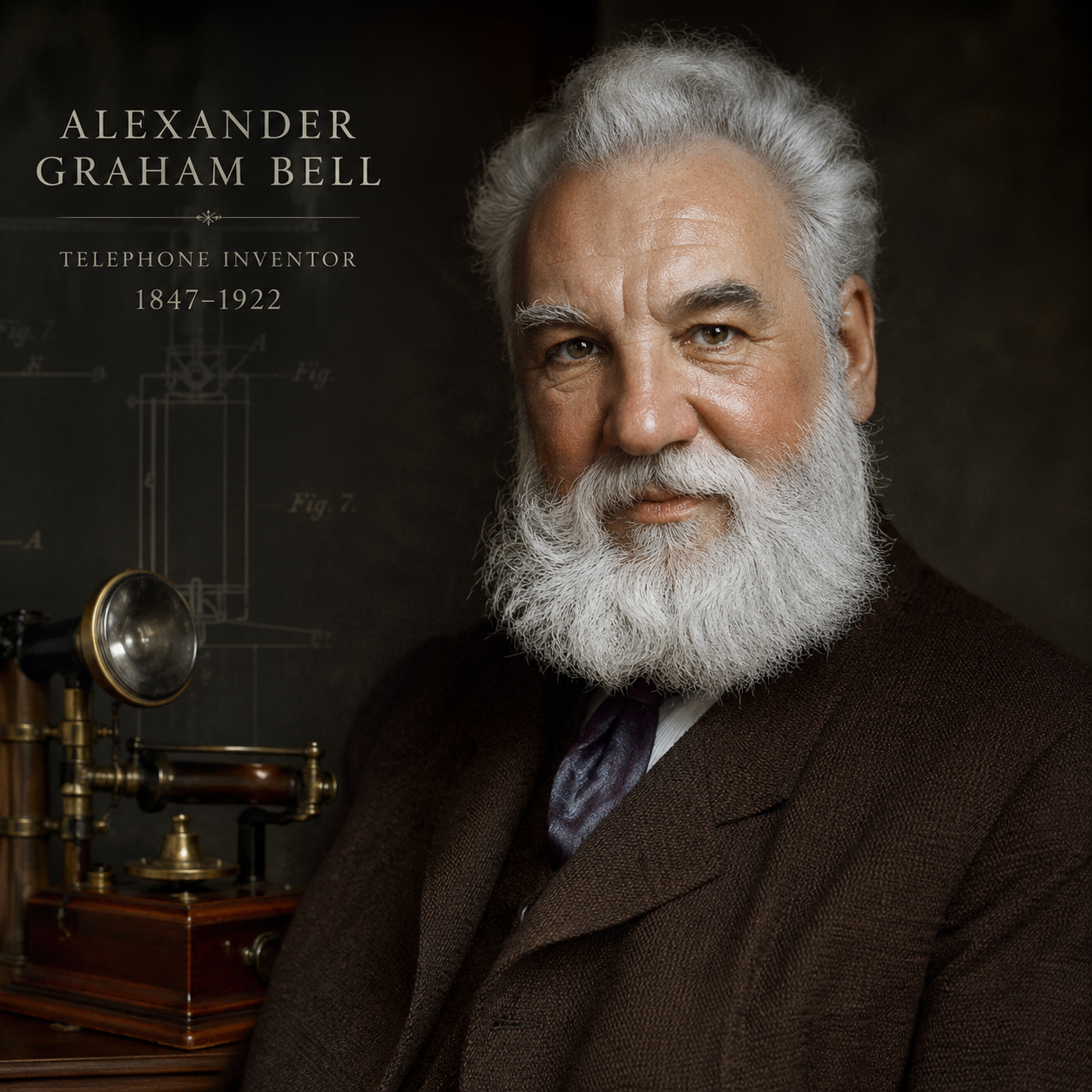
Alexander Graham Bell — "We are all born with a certain potential, and it is up to us to fulfill it."
We are all born with a certain potential, and it is up to us to fulfill it.
We are all born with a certain potential, and it is up to us to fulfill it.
Click any product to generate a realistic preview. Up to 3 at a time.
* Initial load can take up to 90 seconds — revising the preview in another color is nearly instant.
"The most successful men in the end are those whose success is the result of steady accretion. That intellectuality is more vigorous that has attained its strength gradually. It is the man who carefull…"
"Man is the result of slow growth; that is why he occupies the position he does in animal life. What does a pup amount to that has gained its growth in a few days or weeks, beside a man who only attain…"
"The greatest discovery of my life was the discovery of the value of hard work."
"I have been called a robber. I have been called a thief. I have been called a charlatan. I have even been called a murderer. But I have never been called a liar."
"The day will come when the telephone will be used by every household in America."
Widely attributed, but specific source is hard to find. It's a common inspirational sentiment.
Date: unknown
GeneralFound in 1 providers: grok
1 source checked
Every person enters life carrying inherent capabilities, but raw potential sits dormant until someone acts on it. Responsibility falls squarely on the individual: circumstances, luck, and birth conditions shape the starting line, but they don't determine the destination. Fulfilling potential means making deliberate choices, sustaining effort through difficulty, and refusing to let innate gifts go unused simply because realizing them demands sustained work and personal accountability.
Bell was raised in a family of speech and elocution scientists — his father and grandfather both dedicated careers to voice and phonetics. Teaching deaf students consumed him; he founded schools for the deaf and married Mabel Hubbard, who was deaf. The telephone itself wasn't serendipity: it emerged from years of disciplined, obsessive experimentation. He ultimately held patents across hydrofoil design, aviation, and genetics — a lifelong pattern of converting potential into invention.
Bell lived through the Second Industrial Revolution (1847–1922), when individual genius was celebrated as civilization's driving engine. The Gilded Age lionized inventors — Edison, Tesla, Bell himself — as proof that ambition could reshape daily life within a single lifetime. Social Darwinism dominated mainstream thought, making personal agency and self-development moral imperatives, not mere platitudes. In that climate, declaring that fulfillment of potential is each person's own responsibility aligned perfectly with the era's foundational ideology.
AI-generated insights based on extensive research and information for context. Factual errors? Email [email protected].
Your cart is empty