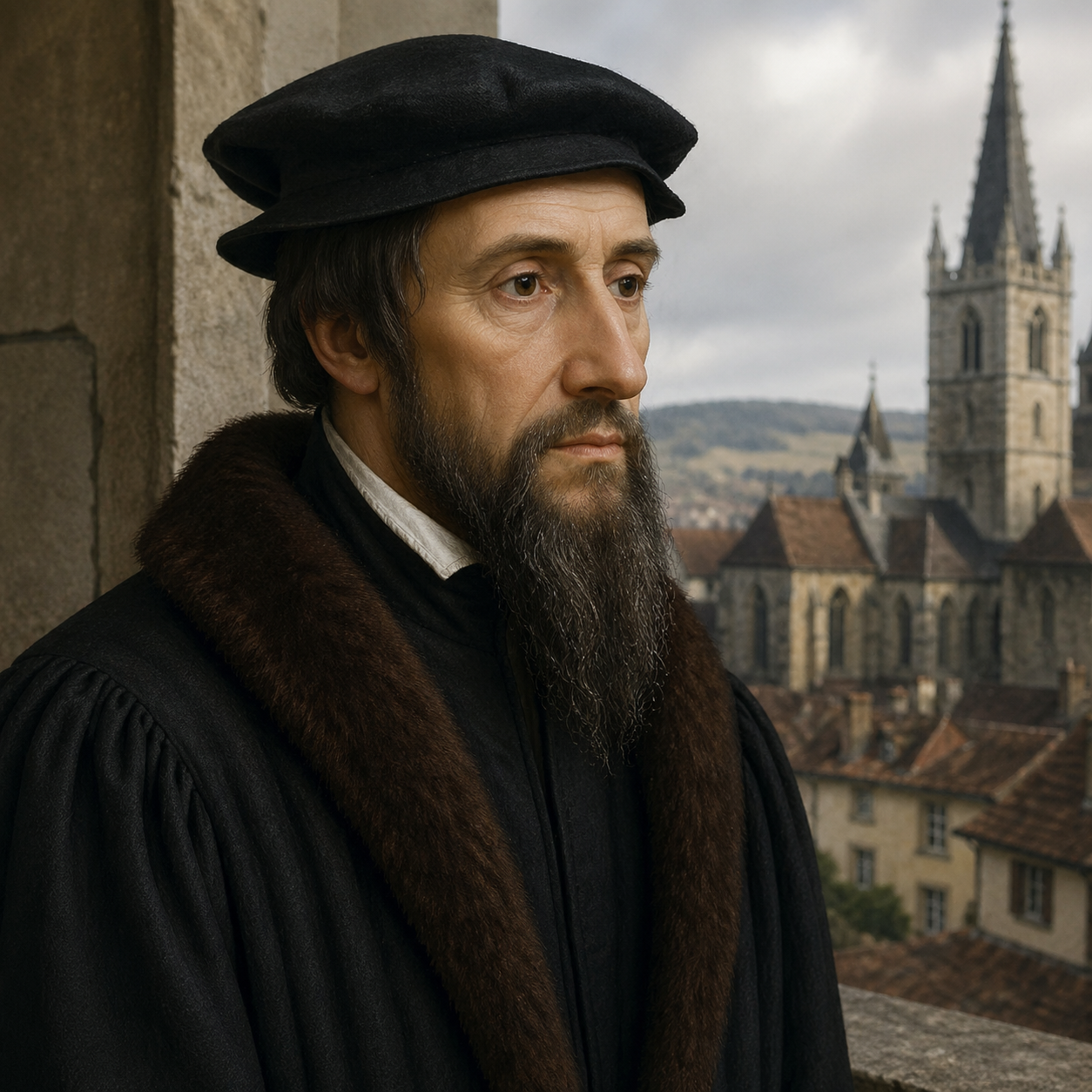
John Calvin — "We are not called to be popular, but to be faithful."
We are not called to be popular, but to be faithful.
We are not called to be popular, but to be faithful.
Click any product to generate a realistic preview. Up to 3 at a time.
* Initial load can take up to 90 seconds — revising the preview in another color is nearly instant.
"Whoever shall now contend that it is unjust to put heretics and blasphemers to death will knowingly and willingly incur their very guilt."
"The reprobate are often endued with excellent gifts, but these are given them, not for their salvation, but for their condemnation."
"The fact that infants who die before baptism are damned is a dreadful decree, but no one can deny that God foreknew what end man was to have before he created him."
"God has a secret counsel, by which he chooses whom he will, and rejects whom he will."
"The salvation of the elect depends on the free election of God."
French theologian whose Institutes of the Christian Religion (1536) systematized Protestant Reformed doctrine, including predestination. Closely associated with Martin Luther (Reformation founder, Calvin's predecessor). For an intellectual contrast, see Jacobus Arminius, Dutch Reformed theologian (1560-1609) — Arminius's rejection of strict double-predestination founded Arminianism — the theological tradition modern Methodism, most evangelicalism, and Pentecostalism descend from. The Calvinist-Arminian debate has divided Protestantism for 400 years.
Found in 1 providers: grok
1 source checked
This quote argues that the measure of a person isn't social acceptance or approval, but fidelity to one's convictions and duties. Popularity is fleeting and contingent on pleasing others; faithfulness means holding to principles even when they're unwelcome or costly. In practical terms: don't dilute your beliefs to gain favor—stand by what you believe is true and right, regardless of whether it earns applause.
Calvin was expelled from Geneva in 1538 after strict moral reforms alienated the city council, yet returned in 1541 and continued imposing rigorous discipline. His doctrines—predestination, total depravity—were controversial even among fellow Protestants. He endured riots, death threats, and condemnation across Europe. His execution of Michael Servetus in 1553 drew widespread criticism. Calvin consistently chose theological conviction over social approval, embodying this principle throughout a contentious, embattled career.
The Protestant Reformation fractured Europe's religious unity after 1517, making faithfulness to theological conviction genuinely dangerous. Reformers risked excommunication, exile, and burning at the stake. Calvin wrote during the Inquisition's peak, religious wars between Catholic and Protestant states, and the Council of Trent's counter-reform. In this climate, being theologically unpopular could mean death. Faithfulness wasn't a philosophical virtue—it was a test with mortal consequences, making Calvin's distinction viscerally urgent.
AI-generated insights based on extensive research and information for context. Factual errors? Email [email protected].
Your cart is empty