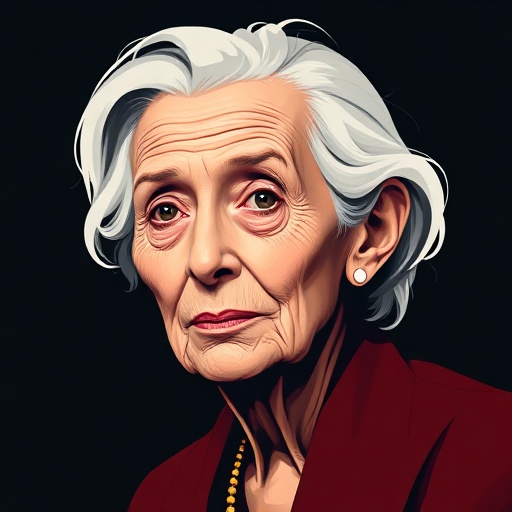
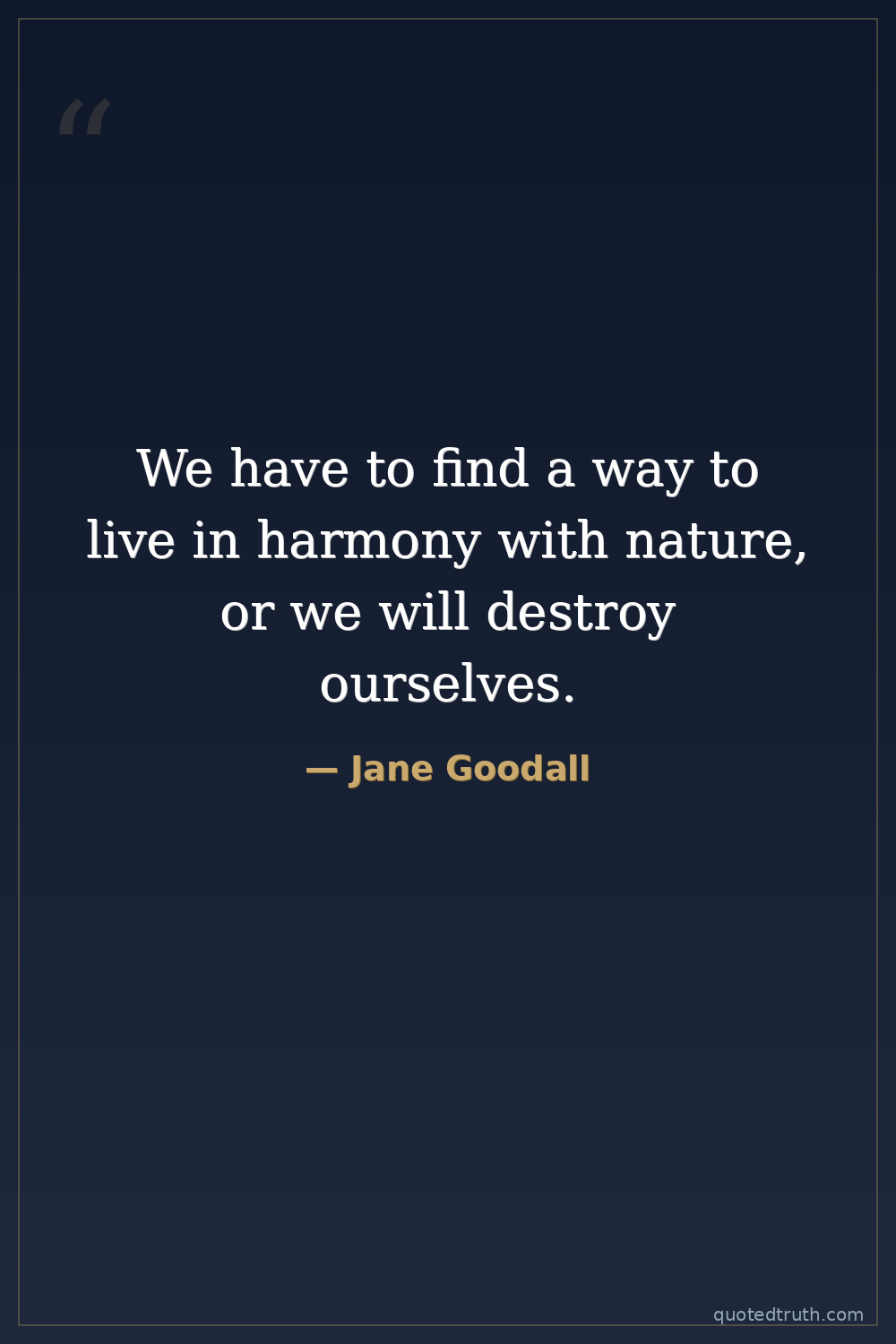
Jane Goodall — "We have to find a way to live in harmony with nature, or we will destroy ourselv…"
We have to find a way to live in harmony with nature, or we will destroy ourselves.
We have to find a way to live in harmony with nature, or we will destroy ourselves.
Click any product to generate a realistic preview. Up to 3 at a time.
* Initial load can take up to 90 seconds — revising the preview in another color is nearly instant.
"I believe that we can make a difference, if we just try."
"The greatest joy is to be out in nature."
"Someday we shall look back on this dark era of agriculture and shake our heads. How could we have ever believed that it was a good idea to grow our food with poisons?"
"We need to teach our children to be good stewards of the Earth, and to protect its resources."
"My dream is a world where humans and animals can coexist in harmony."
British primatologist who in 1960 began the longest-running wild primate study at Gombe Stream, transforming our understanding of chimpanzees. Closely associated with Dian Fossey (mountain-gorilla researcher) and Birutė Galdikas (orangutan researcher; together with Goodall and Fossey one of Louis Leakey's 'Trimates'). For an intellectual contrast, see Walter Palmer, American dentist who killed Cecil the Lion in Zimbabwe in 2015 — Palmer represents the trophy-hunting tradition Goodall's life's work has been organized against — the colonial-era hunter-naturalist worldview that treated primates and big game as specimens or trophies, which Goodall's Roots & Shoots and Jane Goodall Institute exist specifically to displace.
Found in 1 providers: grok
1 source checked
Humans must find sustainable ways to coexist with the natural world rather than exploiting it for short-term gain. Ecological destruction is ultimately self-destruction — we depend on healthy ecosystems for clean air, water, food, and climate stability. Treating nature as a resource to consume without restraint sets a course toward our own collapse. Harmony isn't idealism; it's the practical condition for human survival.
Goodall began her career at Gombe Stream in Tanzania in 1960, documenting chimpanzees with unprecedented intimacy. Watching their forest habitat shrink from deforestation transformed her from scientist to activist. She founded the Jane Goodall Institute in 1977 and the Roots & Shoots youth program in 1991. Her fieldwork proved human and animal welfare are inseparable — a principle driving her relentless conservation advocacy even into her nineties.
Goodall's most prominent advocacy spans from the 1980s onward, an era of accelerating environmental crisis. Tropical deforestation surged, species extinction rates alarmed scientists, and climate change moved from fringe concern to global emergency. The 1992 Rio Earth Summit and 1997 Kyoto Protocol marked civilizational attempts to respond. Meanwhile, population growth and industrial agriculture put unprecedented pressure on natural systems, giving her warning an urgency that only intensified over decades.
AI-generated insights based on extensive research and information for context. Factual errors? Email [email protected].
Your cart is empty