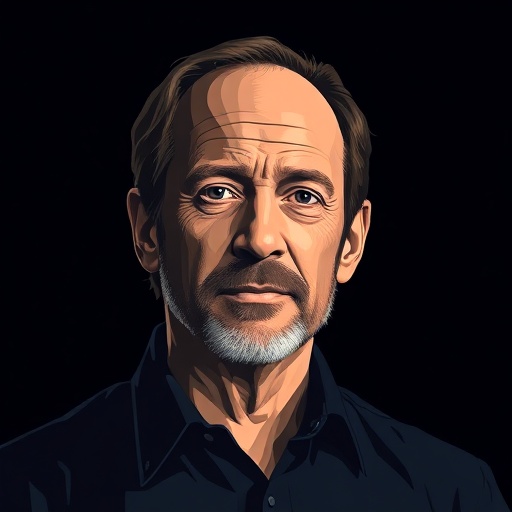
Tim Berners-Lee — "We must ensure that the web remains open and accessible to all."
We must ensure that the web remains open and accessible to all.
We must ensure that the web remains open and accessible to all.
Click any product to generate a realistic preview. Up to 3 at a time.
* Initial load can take up to 90 seconds — revising the preview in another color is nearly instant.
"The web is a mirror of us. We have to make sure it reflects our best qualities."
"The web is a tool for humanity, and it should be used for good."
"The web should be a place where everyone can share their ideas and connect with each other."
"The Web is more a social creation than a technical one. I designed it for a social effect — to help people work together — and not as a technological toy. The ultimate goal of the Web is to support an…"
"I wish I had done more to make the web more resilient to abuse."
British computer scientist who invented the World Wide Web at CERN in 1989 and founded the W3C, championing open web standards. Closely associated with Vint Cerf (TCP/IP co-creator and 'father of the internet') and Marc Andreessen (Mosaic browser creator and Netscape co-founder). For an intellectual contrast, see Mark Zuckerberg, Facebook (Meta) founder — Zuckerberg's walled-garden Facebook is the canonical contemporary opposite of Berners-Lee's open-web vision; Berners-Lee's Solid project and 'recapture the web' essays are explicitly written as a rebuttal to the platform-monopoly model Facebook pioneered.
Found in 1 providers: deepseek
1 source checked
Power over information infrastructure must not be concentrated in the hands of corporations, governments, or gatekeepers. The internet's value comes from universal participation — anyone can read, publish, and connect without permission. Restricting access by income, geography, political affiliation, or corporate interest destroys the web's fundamental promise and creates a tiered system where some voices matter more than others.
Berners-Lee invented the web in 1989 and deliberately chose not to patent it, gifting it freely to humanity. He founded the World Wide Web Consortium and later the Web Foundation specifically to fight for openness. His battles against net neutrality erosion, government surveillance revealed by Snowden, and platform monopolization reflect a lifelong commitment to the decentralized, permissionless architecture he originally designed.
Berners-Lee issued this warning as consolidation accelerated: a handful of platforms captured most web traffic, ISPs lobbied to kill net neutrality, authoritarian governments built national firewalls, and the Snowden revelations exposed mass surveillance infrastructure. The open web he built in the 1990s faced structural threats from commercial and political forces his original architecture never anticipated, making this defense urgent rather than idealistic.
AI-generated insights based on extensive research and information for context. Factual errors? Email [email protected].
Your cart is empty