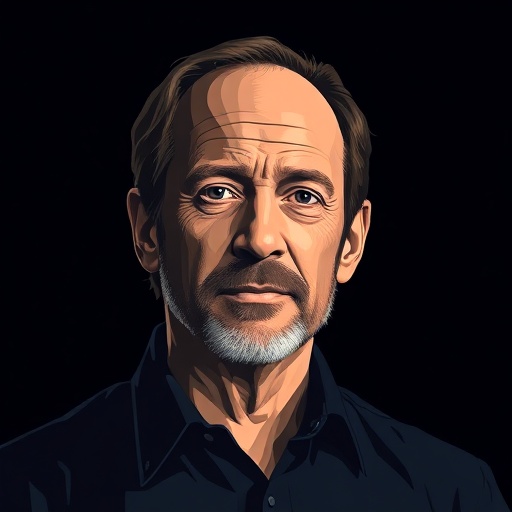
Tim Berners-Lee — "The web should be a place where everyone can share their ideas and connect with …"
The web should be a place where everyone can share their ideas and connect with each other.
The web should be a place where everyone can share their ideas and connect with each other.
Click any product to generate a realistic preview. Up to 3 at a time.
* Initial load can take up to 90 seconds — revising the preview in another color is nearly instant.
"The original idea of the web was that it should be a collaborative space where you can communicate and share knowledge. It wasn't meant to be a read-only medium. It was meant to be a read-write medium…"
"The web should be able to link to anything. You should be able to link to a picture, a video, a sound, a document. Anything."
"I'm not a guru. I'm just a guy who invented a technology."
"We must ensure that the web remains open and accessible to all."
"We need to educate people about the dangers of the web, as well as its benefits."
British computer scientist who invented the World Wide Web at CERN in 1989 and founded the W3C, championing open web standards. Closely associated with Vint Cerf (TCP/IP co-creator and 'father of the internet') and Marc Andreessen (Mosaic browser creator and Netscape co-founder). For an intellectual contrast, see Mark Zuckerberg, Facebook (Meta) founder — Zuckerberg's walled-garden Facebook is the canonical contemporary opposite of Berners-Lee's open-web vision; Berners-Lee's Solid project and 'recapture the web' essays are explicitly written as a rebuttal to the platform-monopoly model Facebook pioneered.
Found in 1 providers: grok
1 source checked
The internet should function as an open, democratic platform accessible to all people regardless of background or resources. Everyone deserves equal ability to publish ideas, access information, and form genuine connections online — not just those with technical skills, wealth, or institutional backing. Access and participation should be universal rights, not privileges reserved for the few.
Berners-Lee deliberately made the Web royalty-free in 1991, surrendering enormous personal wealth so no one would own it. He founded the World Wide Web Consortium to keep standards open and later the Web Foundation to fight for universal access. His lifelong advocacy against paywalled internet, surveillance capitalism, and platform monopolies directly embodies this belief in the Web as shared public infrastructure.
Berners-Lee proposed the Web in 1989 during Cold War's final chapter, when information flow was controlled by governments, corporations, and broadcasters. The early 1990s internet was dominated by academics and technologists. His vision countered centralized control at precisely the moment networked computing could democratize communication globally, arriving just as desktop computers were becoming affordable for ordinary households.
AI-generated insights based on extensive research and information for context. Factual errors? Email [email protected].
Your cart is empty