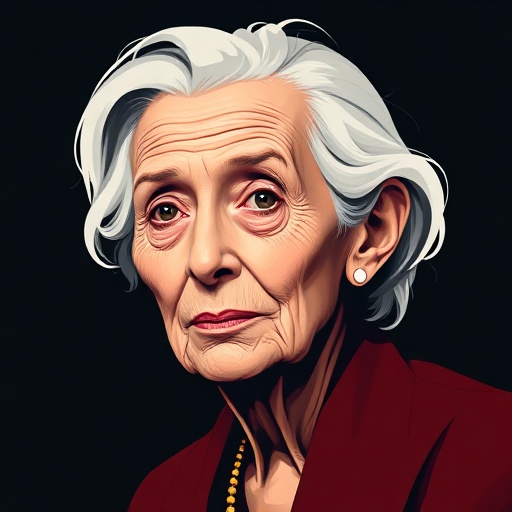
Jane Goodall — "We must never give up hope. We must continue to fight for what is right."
We must never give up hope. We must continue to fight for what is right.
We must never give up hope. We must continue to fight for what is right.
Click any product to generate a realistic preview. Up to 3 at a time.
* Initial load can take up to 90 seconds — revising the preview in another color is nearly instant.
"The greatest hope for the future is the power of individual action."
"I believe that we can overcome the challenges we face, if we work together."
"Until we learn to respect and live in harmony with the natural world, we will never truly be at peace."
"The greatest joy is to be out in nature."
"We have so far to go to realize our human potential for compassion, altruism, and love."
British primatologist who in 1960 began the longest-running wild primate study at Gombe Stream, transforming our understanding of chimpanzees. Closely associated with Dian Fossey (mountain-gorilla researcher) and Birutė Galdikas (orangutan researcher; together with Goodall and Fossey one of Louis Leakey's 'Trimates'). For an intellectual contrast, see Walter Palmer, American dentist who killed Cecil the Lion in Zimbabwe in 2015 — Palmer represents the trophy-hunting tradition Goodall's life's work has been organized against — the colonial-era hunter-naturalist worldview that treated primates and big game as specimens or trophies, which Goodall's Roots & Shoots and Jane Goodall Institute exist specifically to displace.
Found in 1 providers: grok
1 source checked
Surrendering hope is surrendering the future. This is a call to sustain both optimism and active effort even when circumstances feel insurmountable. Hope alone is passive; the second line insists on continued struggle for ethical causes. Together they describe a posture of resilient moral engagement—never becoming cynical or idle in the face of injustice, environmental destruction, or any fight that matters. Progress demands that people keep showing up.
Goodall began her career in 1960 studying chimpanzees at Gombe Stream, but witnessing deforestation and chimp population collapse transformed her into a full-time activist. She founded the Jane Goodall Institute and the Roots & Shoots youth program, dedicating decades to conservation even as conditions worsened. Her continued speaking and advocacy into her nineties despite environmental setbacks is a lived enactment of refusing to abandon hope or the fight.
Goodall's active decades span some of the most alarming environmental crises in recorded history: mass deforestation in Africa and the Amazon, accelerating species extinction, and the slow-moving emergency of climate change. Political will has repeatedly failed conservation goals—from stalled biodiversity treaties to Paris Agreement shortfalls. This makes her insistence on sustained hope and action a deliberate counterweight to the eco-grief and activist burnout that define modern environmental discourse.
AI-generated insights based on extensive research and information for context. Factual errors? Email [email protected].
Your cart is empty