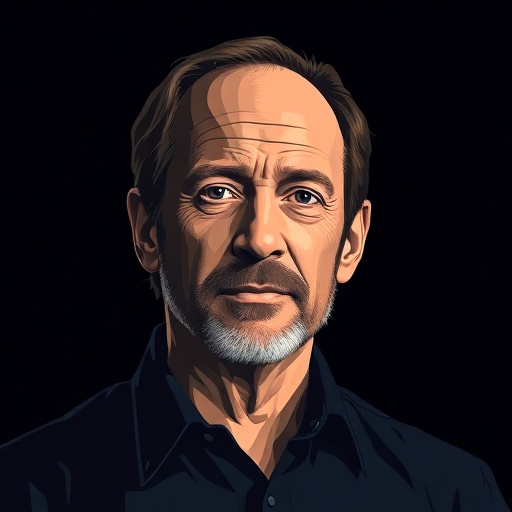
Tim Berners-Lee — "We need to make sure that everyone has access to the web. It's a basic human rig…"
We need to make sure that everyone has access to the web. It's a basic human right.
We need to make sure that everyone has access to the web. It's a basic human right.
Click any product to generate a realistic preview. Up to 3 at a time.
* Initial load can take up to 90 seconds — revising the preview in another color is nearly instant.
"I didn’t invent the web for people to waste time on it."
"My biggest hope for the web is that it will continue to be a tool for good, for collaboration, and for understanding."
"The future of the web is decentralized. It's about giving control back to the users."
"The original idea of the web was that it should be a collaborative space where you can communicate and share knowledge. It wasn't meant to be a read-only medium. It was meant to be a read-write medium…"
"The web should be a place where everyone can share their ideas and connect with each other."
British computer scientist who invented the World Wide Web at CERN in 1989 and founded the W3C, championing open web standards. Closely associated with Vint Cerf (TCP/IP co-creator and 'father of the internet') and Marc Andreessen (Mosaic browser creator and Netscape co-founder). For an intellectual contrast, see Mark Zuckerberg, Facebook (Meta) founder — Zuckerberg's walled-garden Facebook is the canonical contemporary opposite of Berners-Lee's open-web vision; Berners-Lee's Solid project and 'recapture the web' essays are explicitly written as a rebuttal to the platform-monopoly model Facebook pioneered.
Found in 1 providers: grok
1 source checked
The quote argues that internet access is not a privilege for the wealthy or developed nations but a fundamental entitlement for every human being. It calls for deliberate action—policy, investment, infrastructure—to close the digital divide. Framing web access alongside rights like education and clean water elevates it from a convenience to a necessity for participation in modern civic, economic, and social life.
Berners-Lee invented the World Wide Web in 1989 at CERN and deliberately declined to patent it, ensuring it remained free and open. He founded the World Wide Web Foundation specifically to advance universal access. His lifelong advocacy for net neutrality, open standards, and a Contract for the Web all stem from this conviction: the web's power is only realized when it belongs to everyone, not just the privileged.
By the 2010s–2020s, roughly half the world still lacked internet access, the gap falling hardest along lines of poverty and geography. The COVID-19 pandemic catastrophically exposed this divide—remote work, schooling, and healthcare suddenly demanded connectivity. Simultaneously, UN bodies began debating internet access as a human right. Governments and tech giants faced pressure to fund rural broadband and subsidize devices, making Berners-Lee's framing politically urgent and widely debated.
AI-generated insights based on extensive research and information for context. Factual errors? Email [email protected].
Your cart is empty