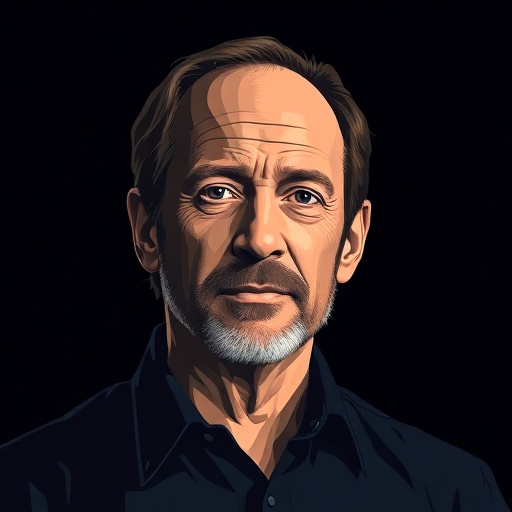
Tim Berners-Lee — "We need to reclaim the web from the powerful interests that are trying to contro…"
We need to reclaim the web from the powerful interests that are trying to control it.
We need to reclaim the web from the powerful interests that are trying to control it.
Click any product to generate a realistic preview. Up to 3 at a time.
* Initial load can take up to 90 seconds — revising the preview in another color is nearly instant.
"The web has failed instead of served humanity."
"The web was designed to be a decentralized platform, but it has become increasingly centralized. This is a problem."
"I’m not a fan of the way some companies use the web to manipulate people."
"I was very much into the idea of a universal workspace, where any information could be linked to any other information. This was an idea I had from when I was a kid, really. I was playing with trains …"
"The web is a reflection of humanity."
British computer scientist who invented the World Wide Web at CERN in 1989 and founded the W3C, championing open web standards. Closely associated with Vint Cerf (TCP/IP co-creator and 'father of the internet') and Marc Andreessen (Mosaic browser creator and Netscape co-founder). For an intellectual contrast, see Mark Zuckerberg, Facebook (Meta) founder — Zuckerberg's walled-garden Facebook is the canonical contemporary opposite of Berners-Lee's open-web vision; Berners-Lee's Solid project and 'recapture the web' essays are explicitly written as a rebuttal to the platform-monopoly model Facebook pioneered.
Found in 1 providers: grok
1 source checked
The internet was built as an open, decentralized resource belonging to everyone. But corporations, governments, and platforms have accumulated enormous power to shape, censor, monetize, and surveil what people see and do online. We must actively fight to keep the web accessible, neutral, and free from any single entity's dominance or manipulation.
Berners-Lee invented the web in 1989 and deliberately made it royalty-free, refusing to patent it. He later founded the World Wide Web Consortium to keep standards open. His Contract for the Web and Solid project directly challenge platform monopolies and data exploitation — this quote captures his lifelong mission to protect the open architecture he created.
Written amid rising concern over Big Tech monopolies, Cambridge Analytica's Facebook data scandal, GDPR debates, net neutrality battles, and government surveillance revelations from Snowden. By the 2010s-2020s, a handful of platforms controlled most web traffic, advertising, and data, representing the exact centralization Berners-Lee's original design was meant to prevent.
AI-generated insights based on extensive research and information for context. Factual errors? Email [email protected].
Your cart is empty