Grace Hopper — "We're all going to be replaced by a computer. You'll be sitting around and the c…"
We're all going to be replaced by a computer. You'll be sitting around and the computer will say, 'Oh, I'm sorry, you're not needed today.'
We're all going to be replaced by a computer. You'll be sitting around and the computer will say, 'Oh, I'm sorry, you're not needed today.'
Click any product to generate a realistic preview. Up to 3 at a time.
* Initial load can take up to 90 seconds — revising the preview in another color is nearly instant.
"You don't manage people; you manage things. You lead people."
"I noticed he always said no to things the first time. So the next time I went in to suggest something I said 'let's pretend this is the second time I'm presenting this'. I said, 'you always say no the…"
"You manage things; you lead people."
"It's a beautiful thing, a computer. It's a wonderful thing."
"I'm not a computer scientist. I'm a mathematician. I just happen to work with computers."
Found in 1 providers: grok
1 source checked
This expresses the fear that automation will eventually make human workers obsolete. Hopper imagines a future where machines make workforce decisions, dismissing people with polite indifference. It captures anxiety about technology displacing jobs — not through violence or drama, but through quiet, bureaucratic efficiency. The darkly humorous tone suggests replacement would be mundane rather than dramatic, making it more unsettling than any science-fiction dystopia.
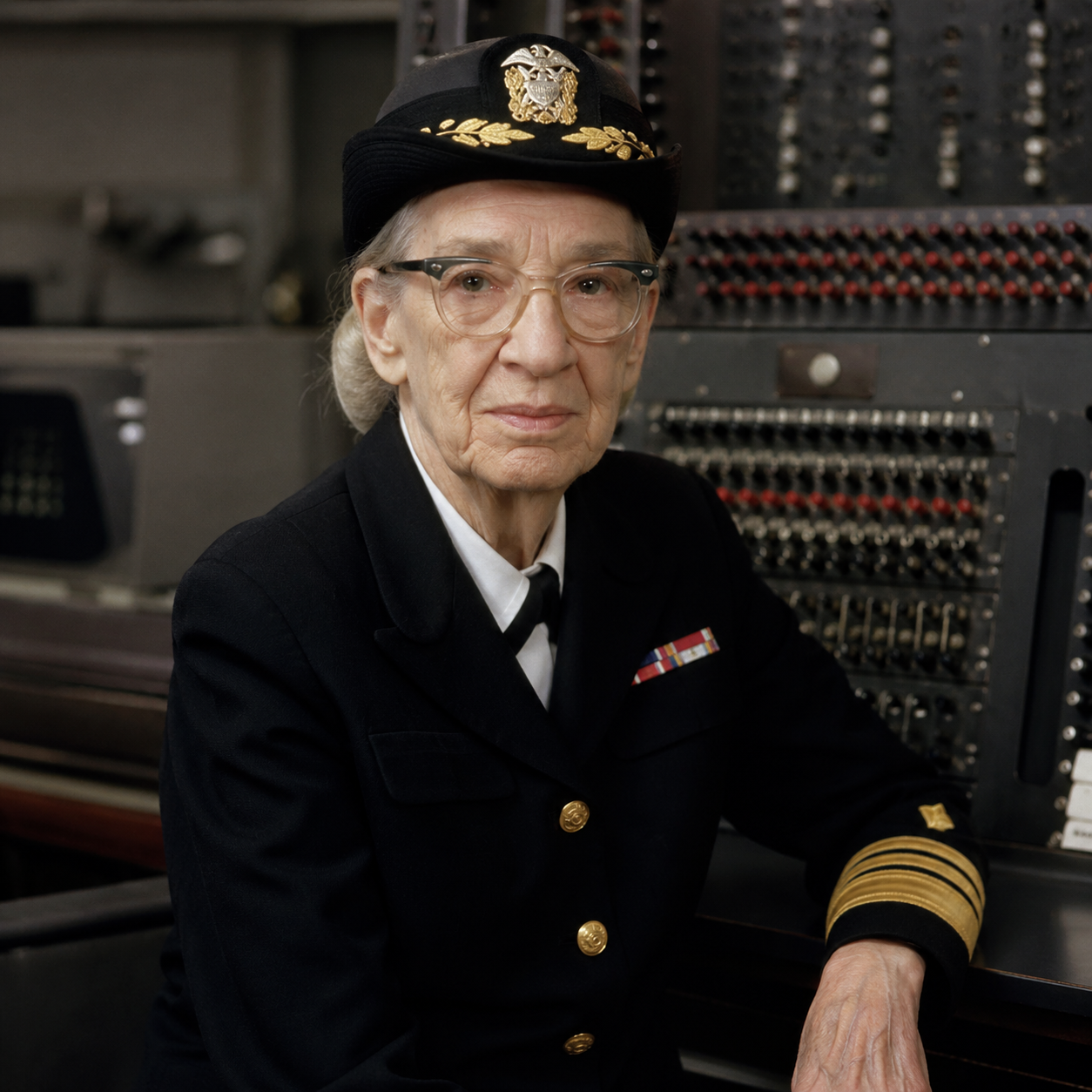
Grace Hopper pioneered computer programming, co-developed COBOL, and invented the first compiler — she literally built the tools that would automate human work. Her warning carries unique credibility: she knew better than anyone what computers could do. Hopper spent decades in the U.S. Navy pushing for standardized, human-readable programming languages to expand computing's reach, making her both architect of automation and its most informed prophet.
Hopper spoke during the mid-20th century rise of mainframe computing, when businesses first automated payroll, inventory, and clerical work. The 1950s–1970s brought widespread fear that machines would eliminate white-collar jobs, not just factory labor. Cold War investment poured billions into computing research, rapidly accelerating capabilities. Her comment reflected a genuine societal debate about whether technological progress would liberate workers or render them permanently redundant.
AI-generated insights based on extensive research and information for context. Factual errors? Email [email protected].
Your cart is empty