Siddhartha Gautama (Buddha) — "What is the world? It is a fleeting show, a transient dream. What is life? It is…"
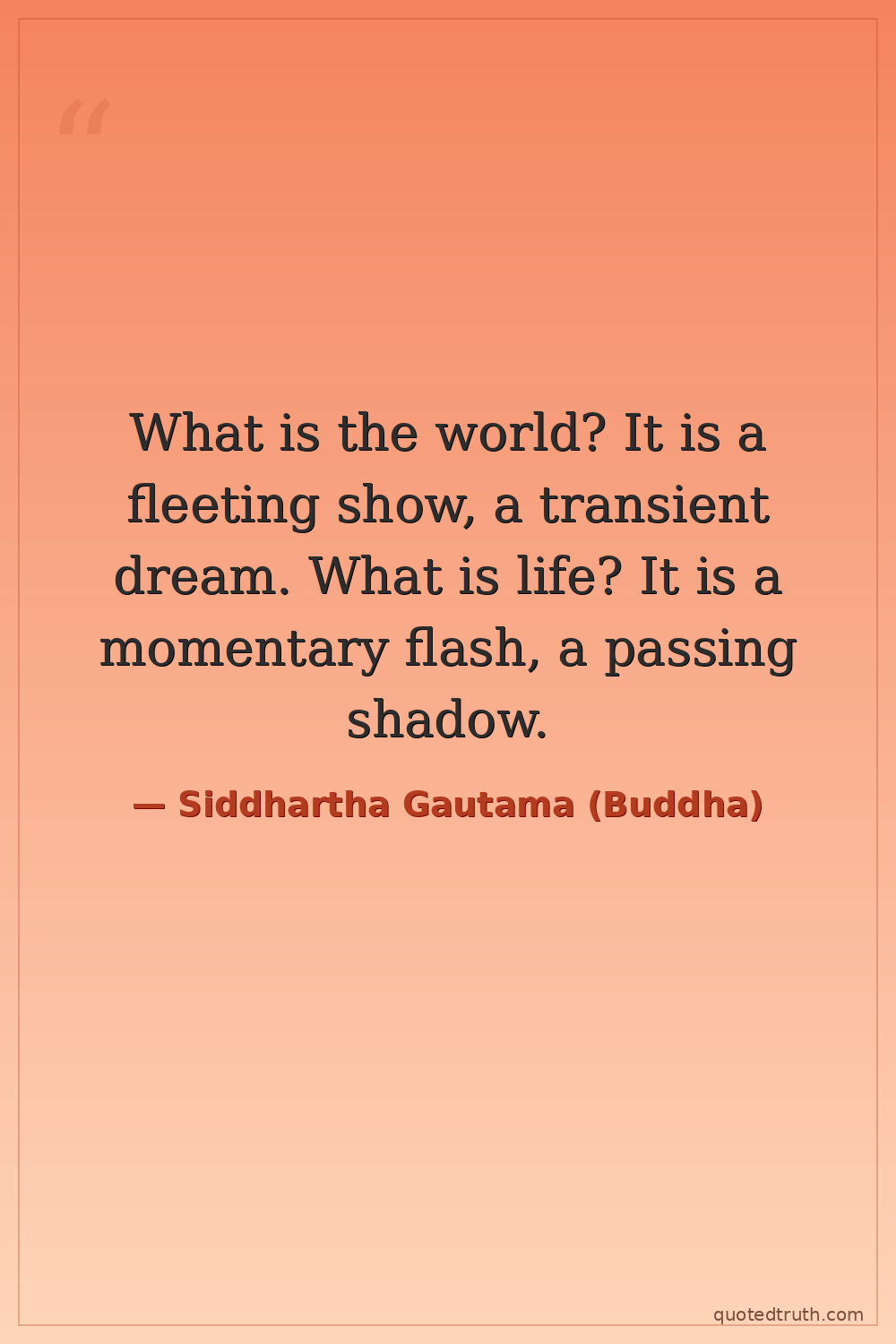
What is the world? It is a fleeting show, a transient dream. What is life? It is a momentary flash, a passing shadow.
What is the world? It is a fleeting show, a transient dream. What is life? It is a momentary flash, a passing shadow.
Click any product to generate a realistic preview. Up to 3 at a time.
* Initial load can take up to 90 seconds — revising the preview in another color is nearly instant.
"All conditioned things are impermanent — when one sees this with wisdom, then one turns away from suffering."
"What you are is what you have been, and what you will be is what you do now."
"A jug fills drop by drop."
"Just as a mother would protect her only child with her life, even so let one cultivate a boundless love towards all beings."
"No one saves us but ourselves. No one can and no one may. We ourselves must walk the path."
A poetic summary of anicca (impermanence), not a direct quote.
Date: c. 5th century BCE
GeneralFound in 1 providers: grok
1 source checked
The quote describes reality as temporary and insubstantial. The world we perceive as solid and permanent is actually constantly changing, like watching a performance that ends or waking from a dream. Life itself lasts only a brief moment, appearing and disappearing like a flash of light or a shadow moving across a wall. Nothing we cling to stays. Recognizing this impermanence is the first step toward not suffering when things inevitably change or end.
Impermanence, anicca, sits at the heart of what the Buddha taught after leaving his palace and witnessing sickness, aging, and death. Born a prince around 563 BCE, he abandoned wealth precisely because he saw how fleeting comfort and pleasure were. His entire framework, the Four Noble Truths, rests on accepting that attachment to transient things produces suffering. This quote distills that realization into a single image a student could remember and meditate on while walking the Middle Way he charted.
The Buddha taught across northern India during the sixth and fifth centuries BCE, a period scholars call the Axial Age when thinkers from Greece to China questioned inherited religion. The Vedic tradition emphasized ritual sacrifice and caste-bound duty, while wandering ascetics, the shramanas, experimented with radical alternatives. Kingdoms were consolidating, trade was expanding, and urban life created new anxieties about meaning and mortality. A message that reframed worldly permanence as illusion spoke directly to people watching old certainties dissolve around them.
AI-generated insights based on extensive research and information for context. Factual errors? Email [email protected].
Your cart is empty