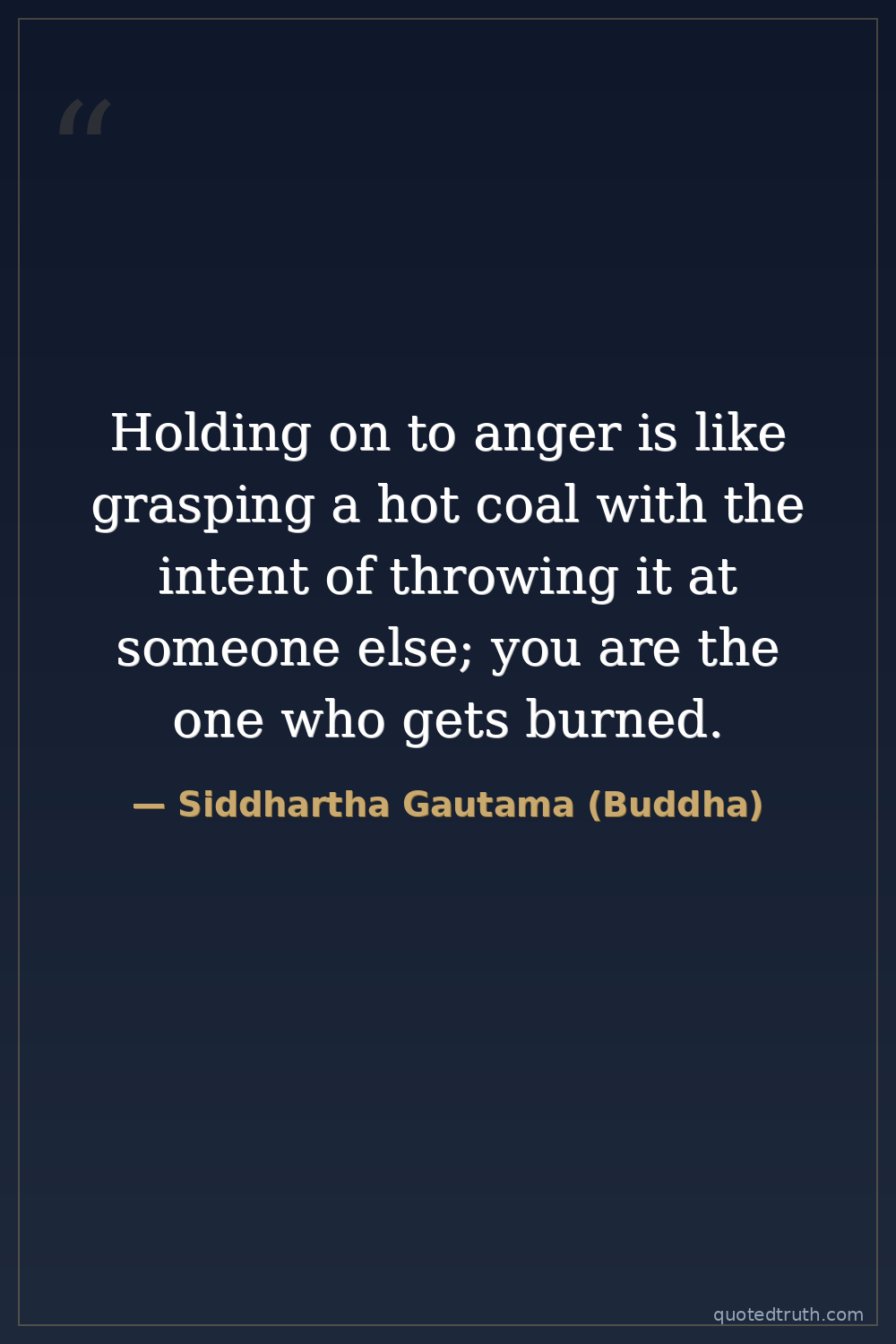
Siddhartha Gautama (Buddha) — "Holding on to anger is like grasping a hot coal with the intent of throwing it a…"
Holding on to anger is like grasping a hot coal with the intent of throwing it at someone else; you are the one who gets burned.
Holding on to anger is like grasping a hot coal with the intent of throwing it at someone else; you are the one who gets burned.
Click any product to generate a realistic preview. Up to 3 at a time.
* Initial load can take up to 90 seconds — revising the preview in another color is nearly instant.
"The virtues, like the Muses, are always seen in groups. A good principle was never found solitary in any breast."
"Just as a tree, though cut down, sprouts up again if its roots are undamaged and strong, in the same way, if the root of craving is not wholly uprooted, suffering springs up again and again."
"Just as a mother would protect her only child with her life, even so let one cultivate a boundless love towards all beings."
"Ardently do today what must be done. Who knows? Tomorrow, death comes."
"The way is not in the sky. The way is in the heart."
Attributed, often cited in various Buddhist texts and teachings.
Date: c. 5th century BCE
WisdomFound in 1 providers: grok
1 source checked
Clinging to anger hurts you more than the person you're angry at. When you hold onto resentment, you're the one carrying the pain, stewing in bitterness, and suffering the physical and emotional damage. The other person may not even know or care. Anger is self-inflicted harm disguised as a weapon against someone else. Letting go isn't about excusing them; it's about releasing yourself from the ongoing burn.
The Buddha built his entire teaching around ending suffering, and he identified the three poisons—greed, hatred, and delusion—as its root causes. After leaving his royal life to seek liberation, he concluded that inner turmoil, not external circumstances, imprisons people. This saying reflects his core insight that hatred harms the hater first. His path of mindfulness, compassion, and non-attachment was designed precisely to dissolve such self-consuming emotions.
In 5th-century BCE northern India, caste rivalries, tribal feuds, and honor-based retaliation were normalized responses to insult or injury. Vedic rituals emphasized outward purity, but the Buddha's era saw a wave of shramana thinkers questioning whether external action could address inner suffering. Against a backdrop of constant social conflict and warrior ethics that prized vengeance, teaching that anger damages its holder more than its target was a radical reframing of strength and harm.
AI-generated insights based on extensive research and information for context. Factual errors? Email [email protected].
Your cart is empty